UG Interior Architecture - Year 3
TUTORS: Andrea Placidi, Helene Gullaksen, Michael Spooner
GUEST CRITICS: Orit Sarfatti, Fiammetta Buckley
STUDENTS: Esha Ahmed, Alexa Andrievschi, Maddie Boissier, Millie Colegrave, David Corcoran, Alana Crease, Will Davis, Will Esson, Amélie Fleming, Lottie Grimshaw, Molly Grist, Indigo Hancock, Holly Haxworth, Liya Hutchful, Hannah Luyen, Iza Nistor, Grac Patterson, Liss Rose, Max Shippey, Lily Short, Kaylei Strydom Nosella, Sude Turut, Lina Utterman, Millie Webb
Oxford Children Library - The Oxford Retreat Pub rehabilitation / Fishers Row
The studio brief for the Year 3 studio required comprehensive design proposals for Children Libraries not simply as reductive versions of a Public Library, but as welcoming, empowering, and ‘magical’ environments, where young inhabitants of Oxford aged from 3 to 12 could find a dedicated place of learning, playing, and imagination. Accessory functions were added to create a multifaceted structure to promote an active involvement:
- Story-telling and dedicated corners for role play (books’ activity packs)
- Creative workshops equipped to draw, make, and practice crafts
- Good quality video collections, video editing and photo equipment
- Open cooking facilities (under supervision) to stimulate food benefits
- Gentle physical training, flexible yoga spaces, soft reading positions
- Sensory spaces and ‘day-dreaming’ opportunities with views over nature
- Small and large groups seminar spaces, for debate and engagement
This year the Interior Architecture design studio (BA+MA), have investigated and discussed the role of libraries as repositories of knowledge and collections of useful resources, and their social function for empowering individuals and organisations from different backgrounds.
Public libraries are among the remaining strongholds of the endangered welfare state. In an age of privatised and disappearing civic space, they are precious open-access sites for reflection, slowness, and open-ended inquiry. As more public venues close, libraries have become shared community spaces hosting events, exhibitions, workshops, and offering a form of intellectual sanctuary. They are democratic in principle and practice, where access to knowledge is not determined by social status or wealth. In this sense, public libraries embody the aspiration of knowledge as a collective resource. When thoughtfully displayed, their collections invite comparison, critique, reinterpretation, and spark curiosity. A well-curated collection is never static; it is an active site of engagement, where meanings evolve

Indigo Hancock
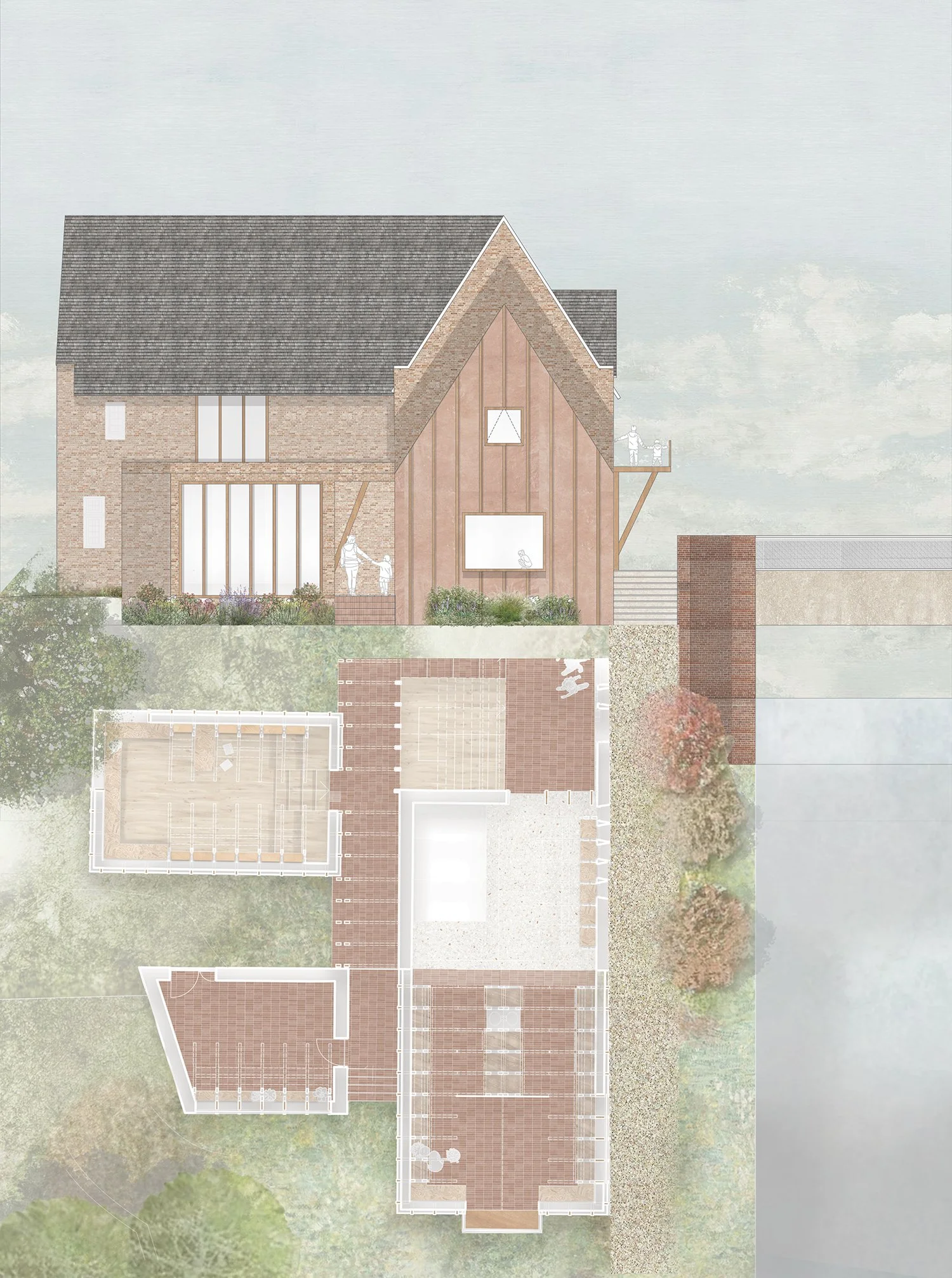
Rewilding Childhood - Oxford Children's Library
“Through this project, I explored how architecture can address environmental responsibility through reconnecting children with everyday wildlife. By encouraging children to read about, support and observe ecological systems, the proposal aims to instil long-term care for the natural world and promote positive environmental change through education and exploration. ”
Across the UK, wildlife is vanishing. Since 1970, populations of many native species have dropped by over half, and one in six species is now at risk of extinction (State of Nature Report 2023). The loss is not only ecological but emotional, where there is a fading connection between children and the living world.
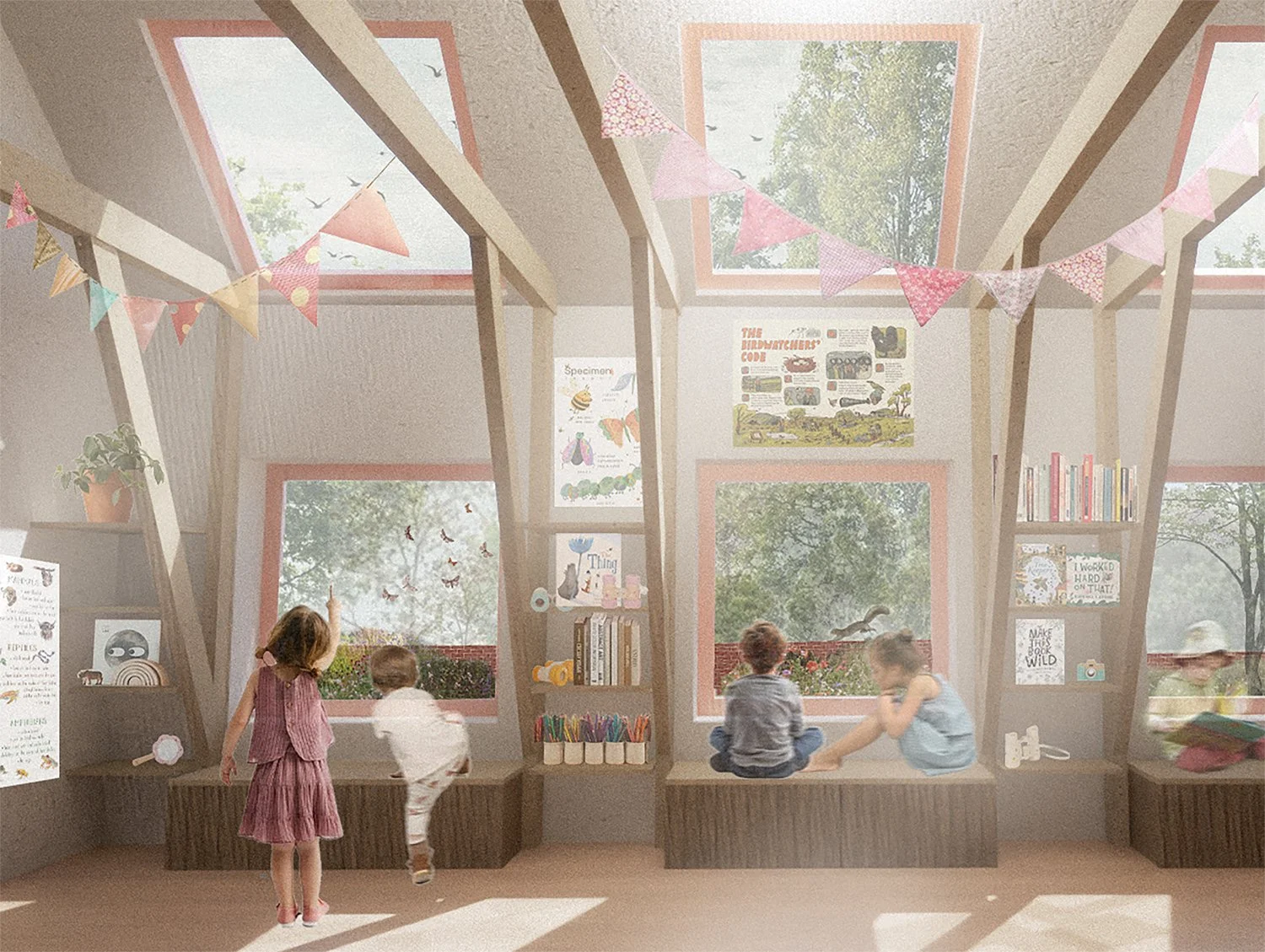
There is a profound lack of understanding of animals that causes people to be disconnected and lack empathy for the wildlife. The library's job is to teach and instil compassion for nature within the children, through observation, teaching, reading, storytelling, and making. This project begins from that urgency: to rewild both the land and the human imagination.
The ecological crises we face; biodiversity loss, climate change, habitat destruction, all stem from an anthropocentric worldview that treats nature as a resource rather than a community of living systems. The library embraces an animistic worldview, where non-human entities; animals and plants are recognised as active participants in the learning environment. This positions children as co-inhabitants rather than dominators of their environment. By reshaping how children perceive their relationship to the living world, the project helps cultivate a generation prepared to care for, rather than control, the planet, creating a space of ecological consciousness.
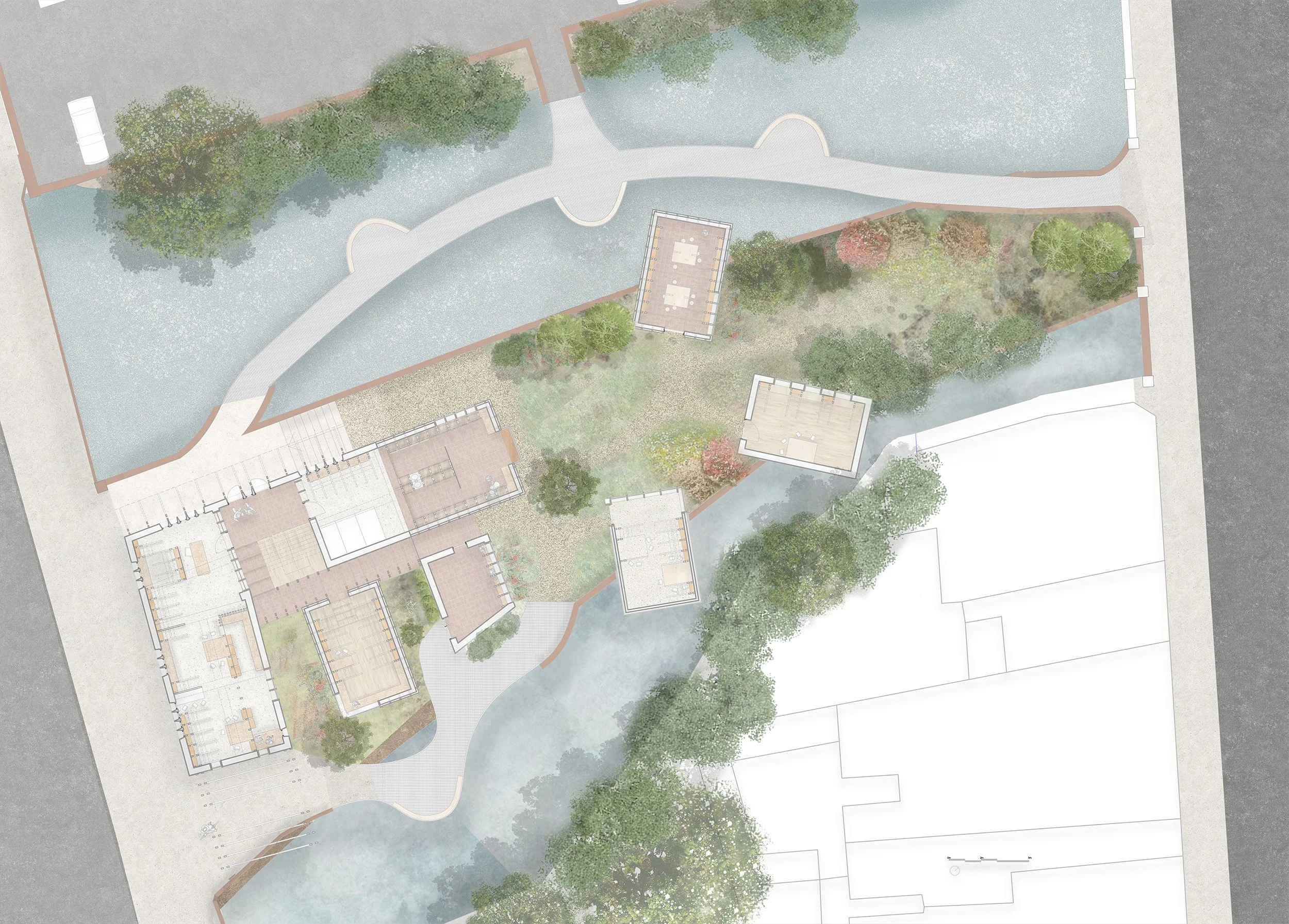
Rewilding in this project is about giving children everyday contact with nature in a city where many grow up without gardens or outdoor space. For children living in flats, the natural world is often something distant or unknown, which can lead to a lack of care or understanding of its importance. The library therefore acts as a shared ‘back garden’ within the city, where plants, insects and animals are part of daily routines of reading, play and learning. By spending time in these spaces, children begin to see nature as something familiar rather than separate, and something they have a role in looking after. This regular contact helps build emotional connection and responsibility, encouraging more thoughtful attitudes towards the environment as they grow up.
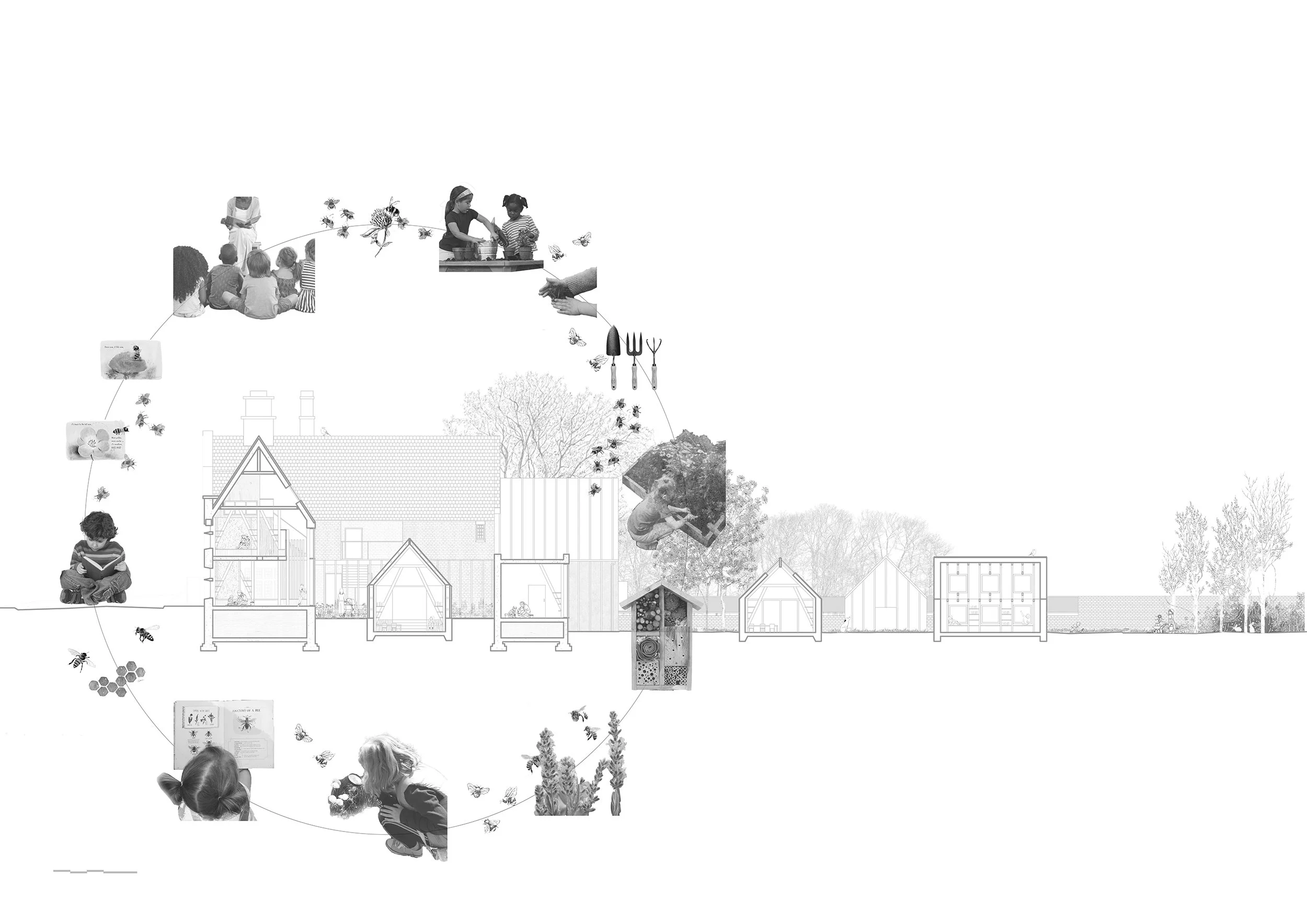
The library establishes a continuous cycle of ecological learning, where children move from reading to action, observation and reflection. Knowledge gained through books directly informs planting and making, with outcomes observed in the landscape. These experiences are then recorded and reinterpreted, deepening understanding and reinforcing the relationship between learning, environment and care.
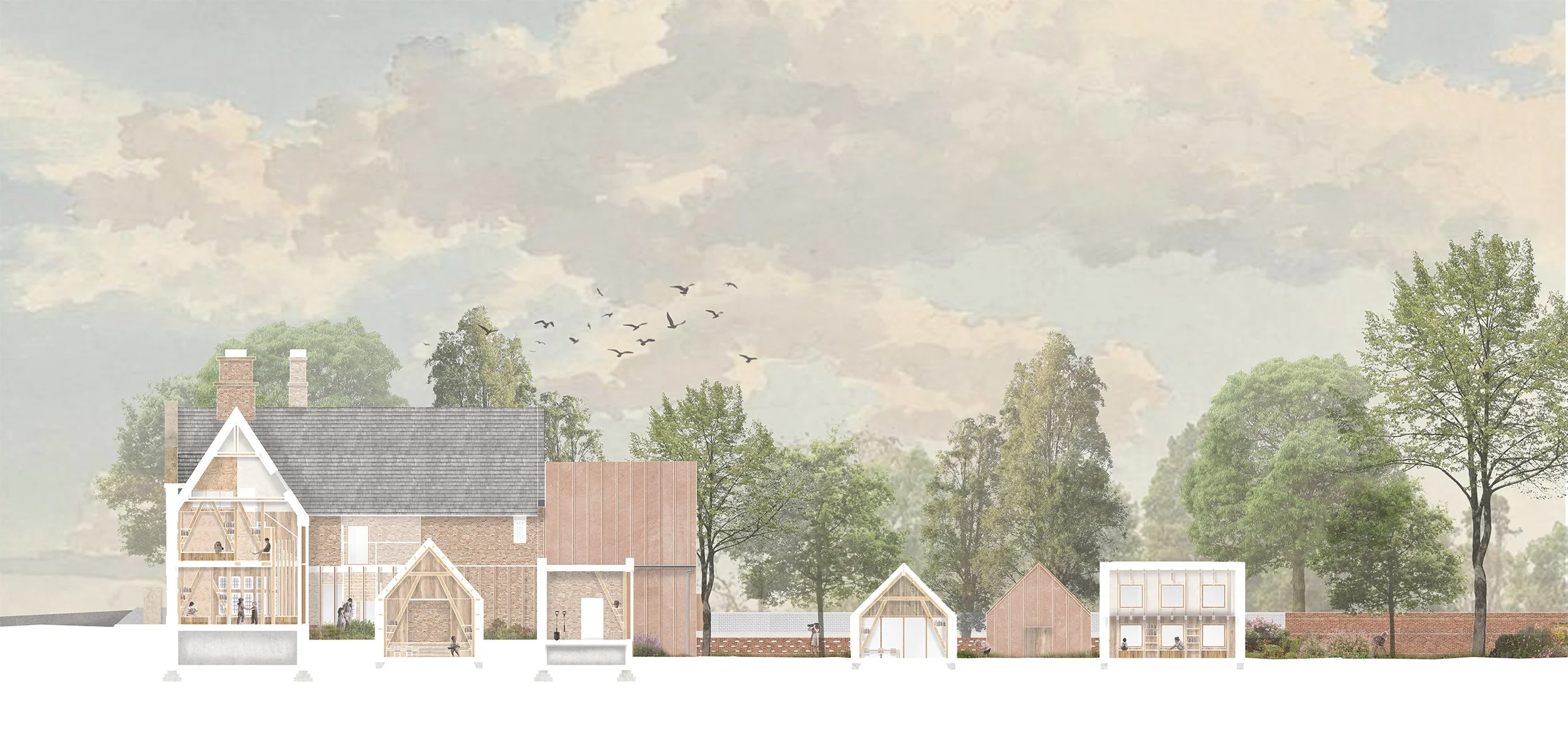
1-100 section rendered
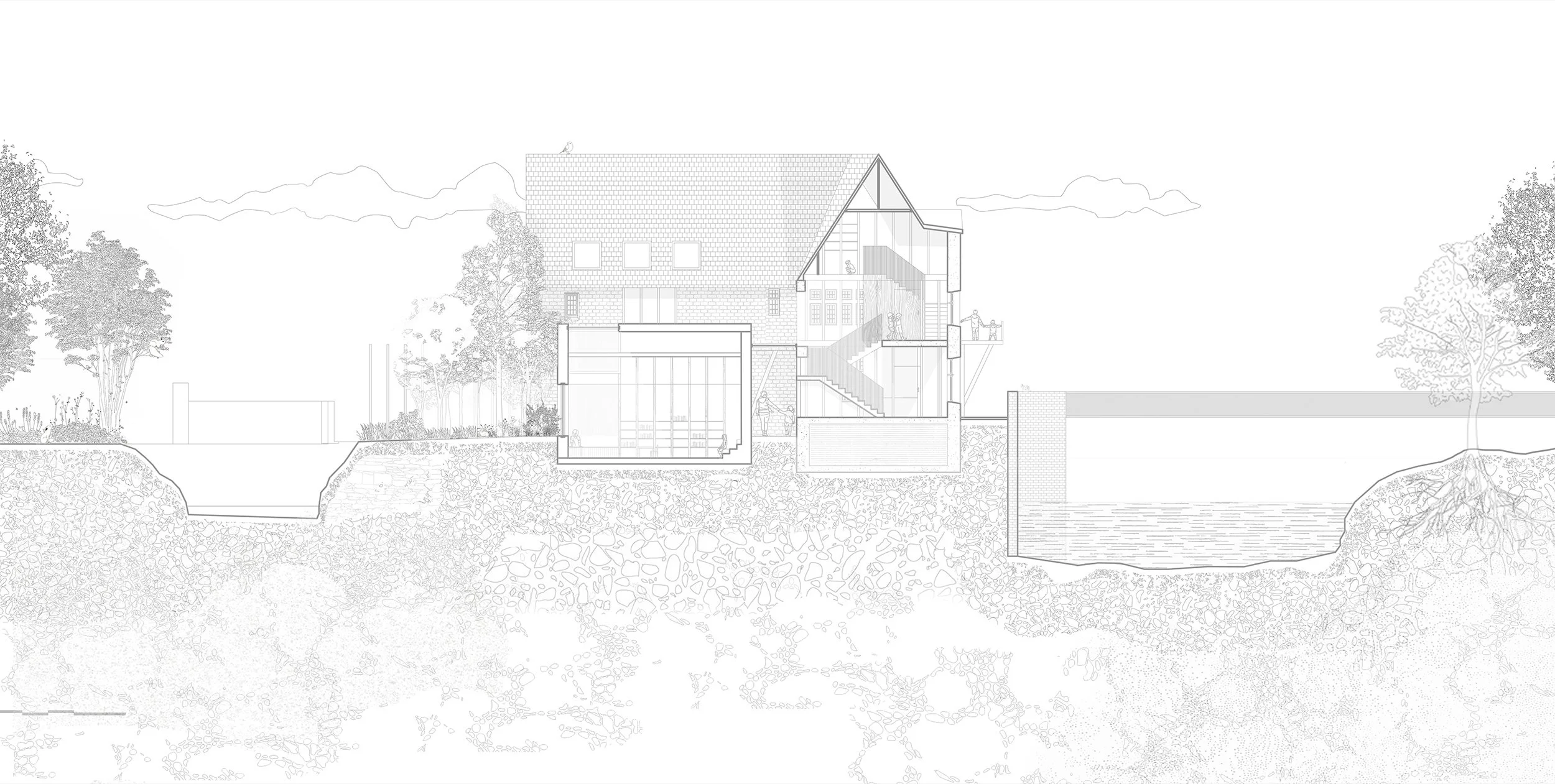
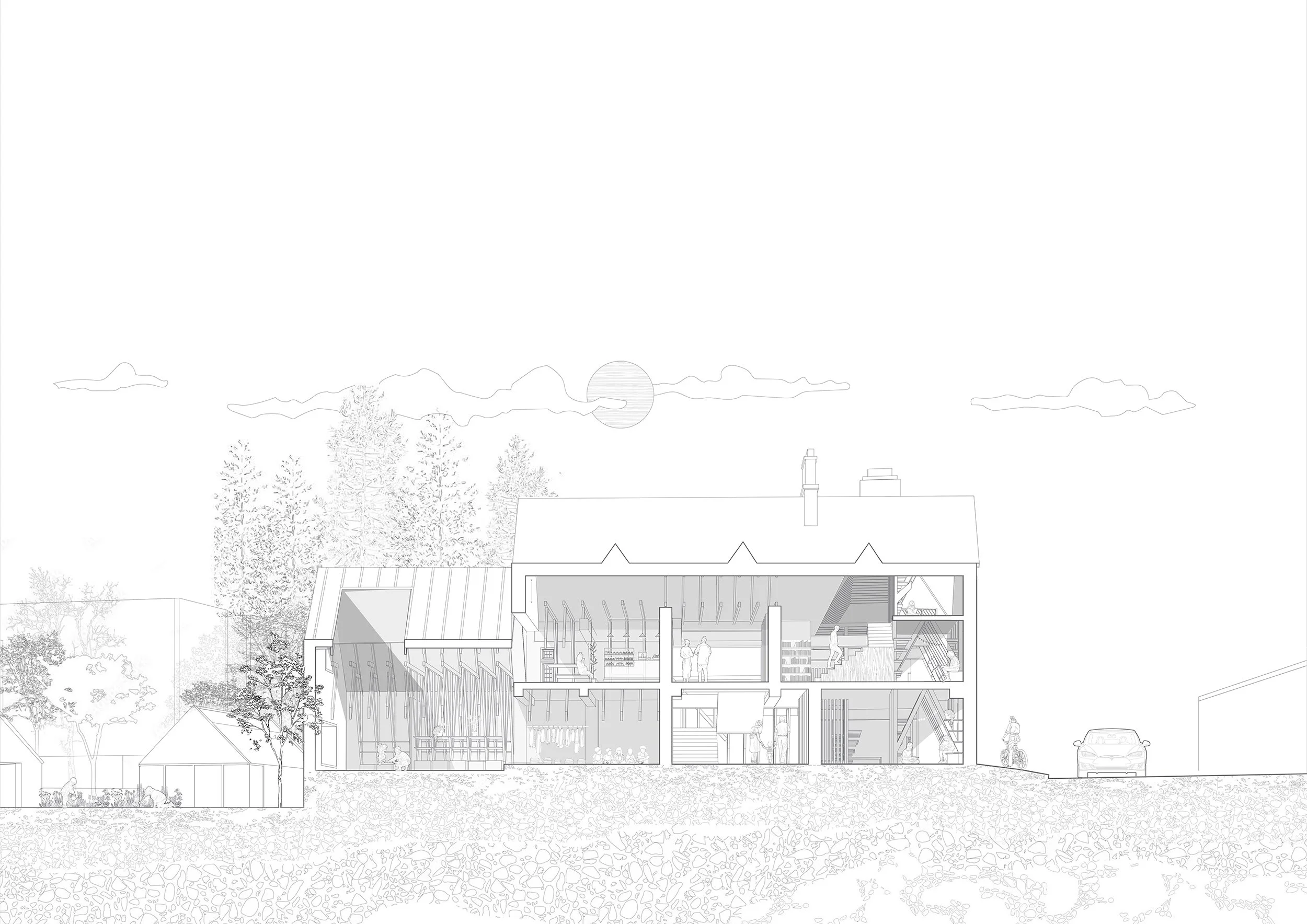
B+W section B
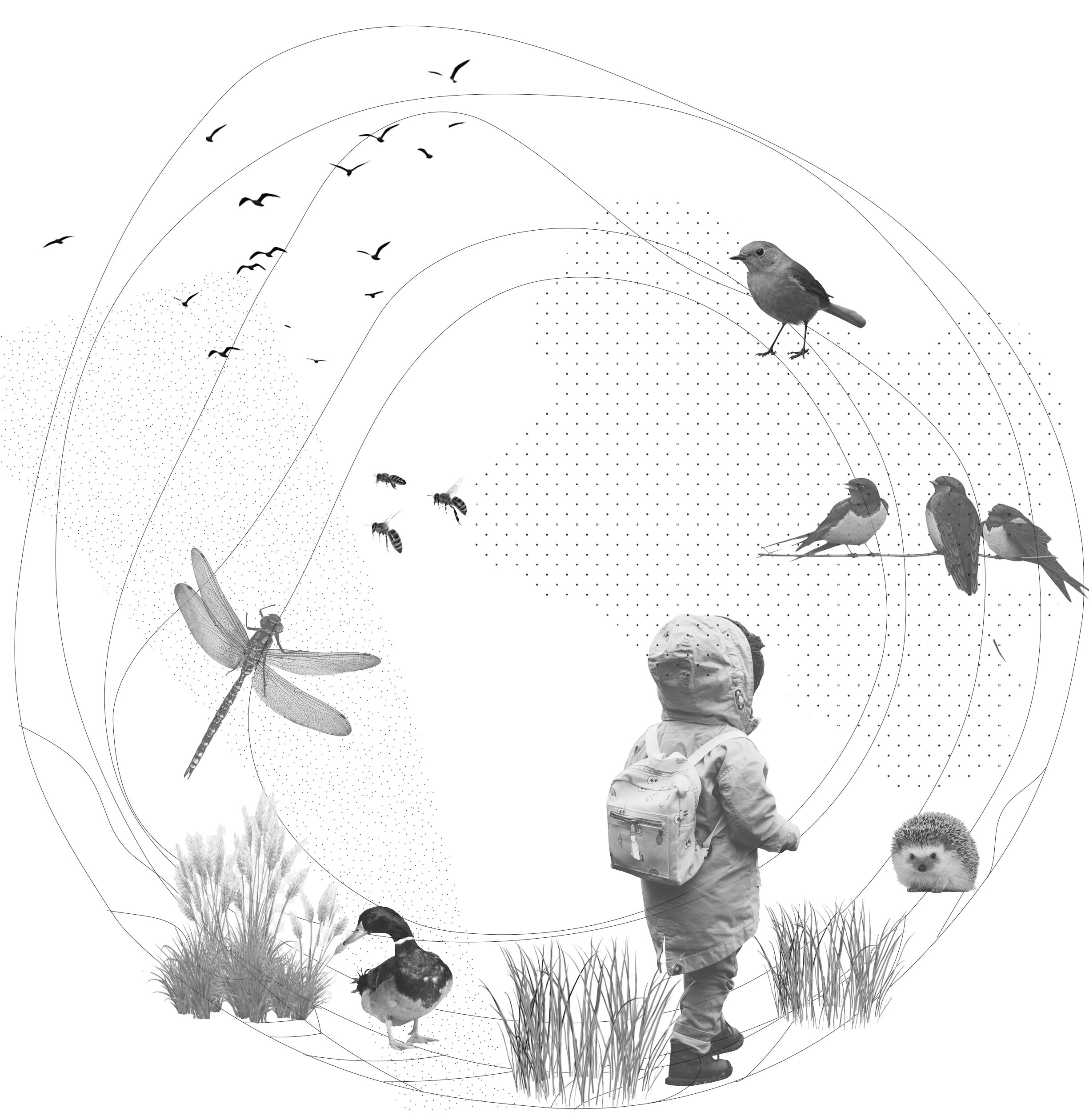
Co exist - user anmal circle
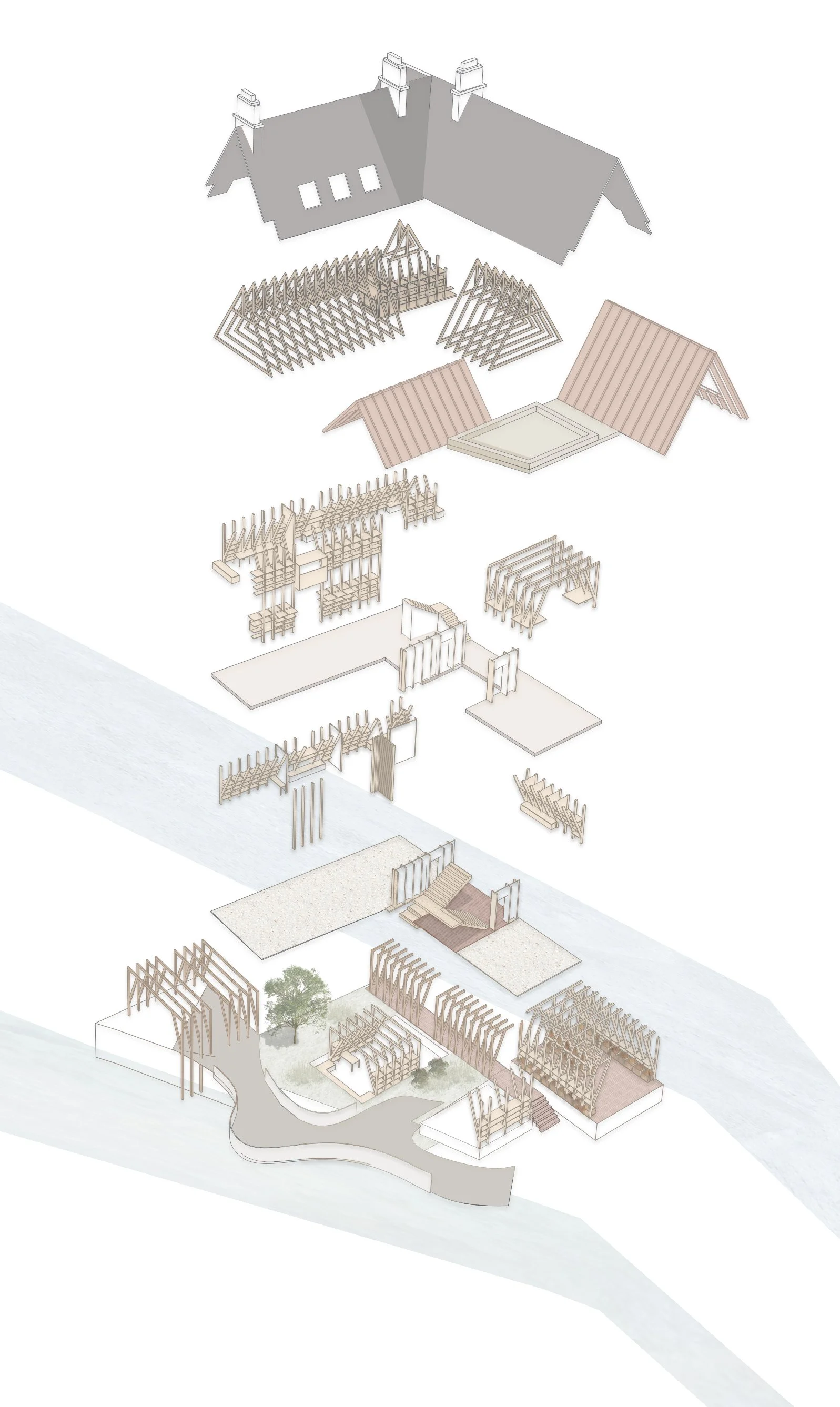
Exploded Axo
Greenhouse render
Ground Plan 1-100 colour render
Lifecycle of building
Observation pavillion render
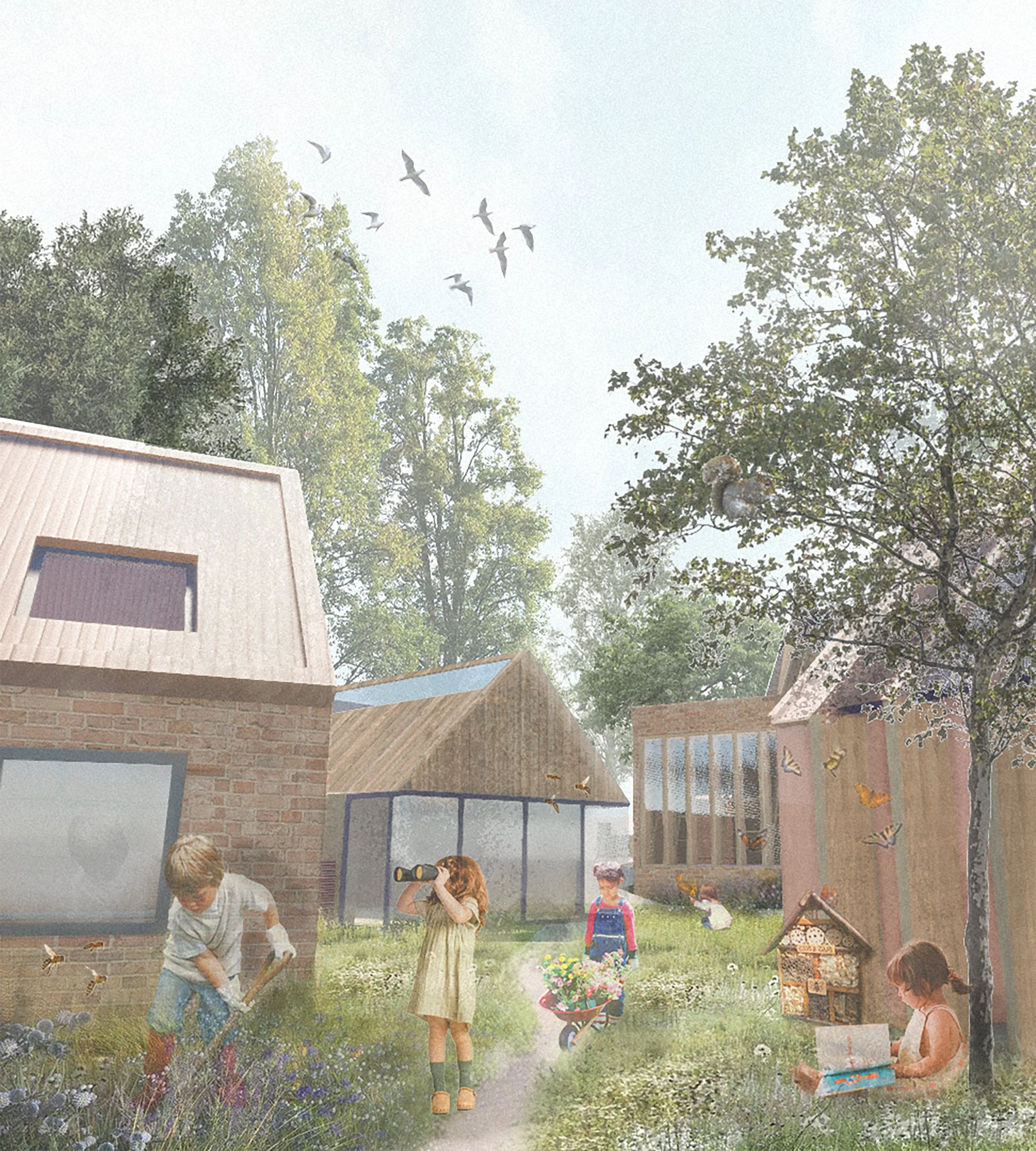
Render of 3 pavilions
Two point perspective render with ground
Hannah Luyen
The Halfway Library
“Throughout this project, I wanted to show that architecture has the responsibility to support the people who are often overlooked. Rather than designing another library, I explored how interior spaces can reduce social isolation, promote equality of access and give children a stronger sense of belonging within Oxford. The process reinforced my belief that socially responsible design begins with understanding people’s everyday lives and creating environments that genuinely improve them.”
The Halfway Library transforms the Oxford Retreat on Hythe Bridge Street into Oxford's first dedicated children's library, reimagining an underused riverside building as a place for learning, play and social connection. While Oxford is renowned for its universities, few civic spaces are designed specifically for children. The proposal responds by creating a welcoming third space between home and school, where children can read, socialise and develop confidence beyond formal education.
The project addresses growing social deprivation among children by balancing domestic comfort with the openness of a public library. During school hours, the library supports home-schooled children through structured programmes that encourage social interaction and ease transitions back into mainstream education. After school, it becomes a shared community destination where reading, workshops and play foster friendships and a sense of belonging.
The architectural strategy introduces a series of house-shaped reading pods inserted within the existing building, creating intimate places for retreat and concentration. These are connected by an inhabitable bookshelf that becomes the social spine of the library, combining reading, climbing, storytelling and gathering within a single piece of 'furnitecture'. Beyond the building, a collection of reading pavilions extends learning into the surrounding landscape, encouraging children to reclaim public space through everyday use.
The proposal adopts an adaptive reuse approach, retaining the historic structure while introducing lightweight, low-impact interventions that minimise embodied carbon. Natural daylight, passive ventilation, sustainable materials and flexible interior spaces support both environmental performance and children's wellbeing, demonstrating how interior architecture can create socially inclusive and culturally meaningful civic environments.
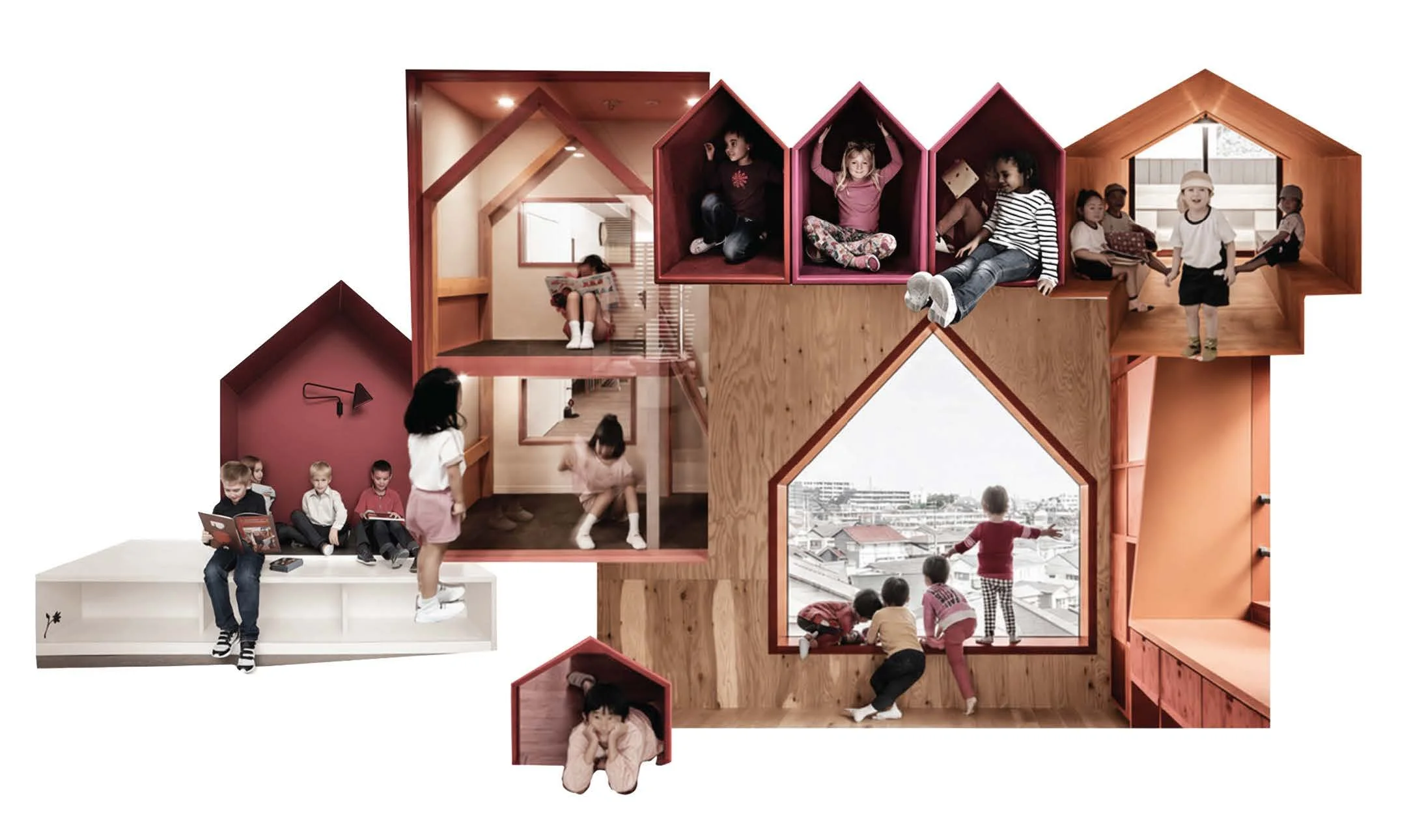
Collage
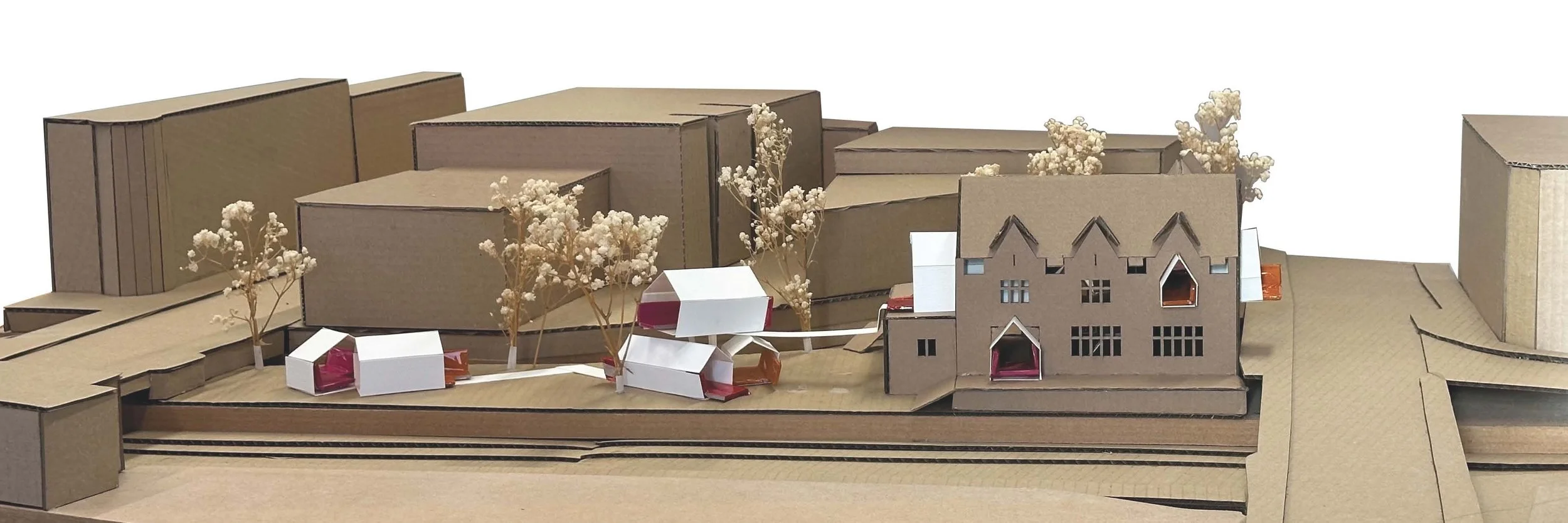
Elevation
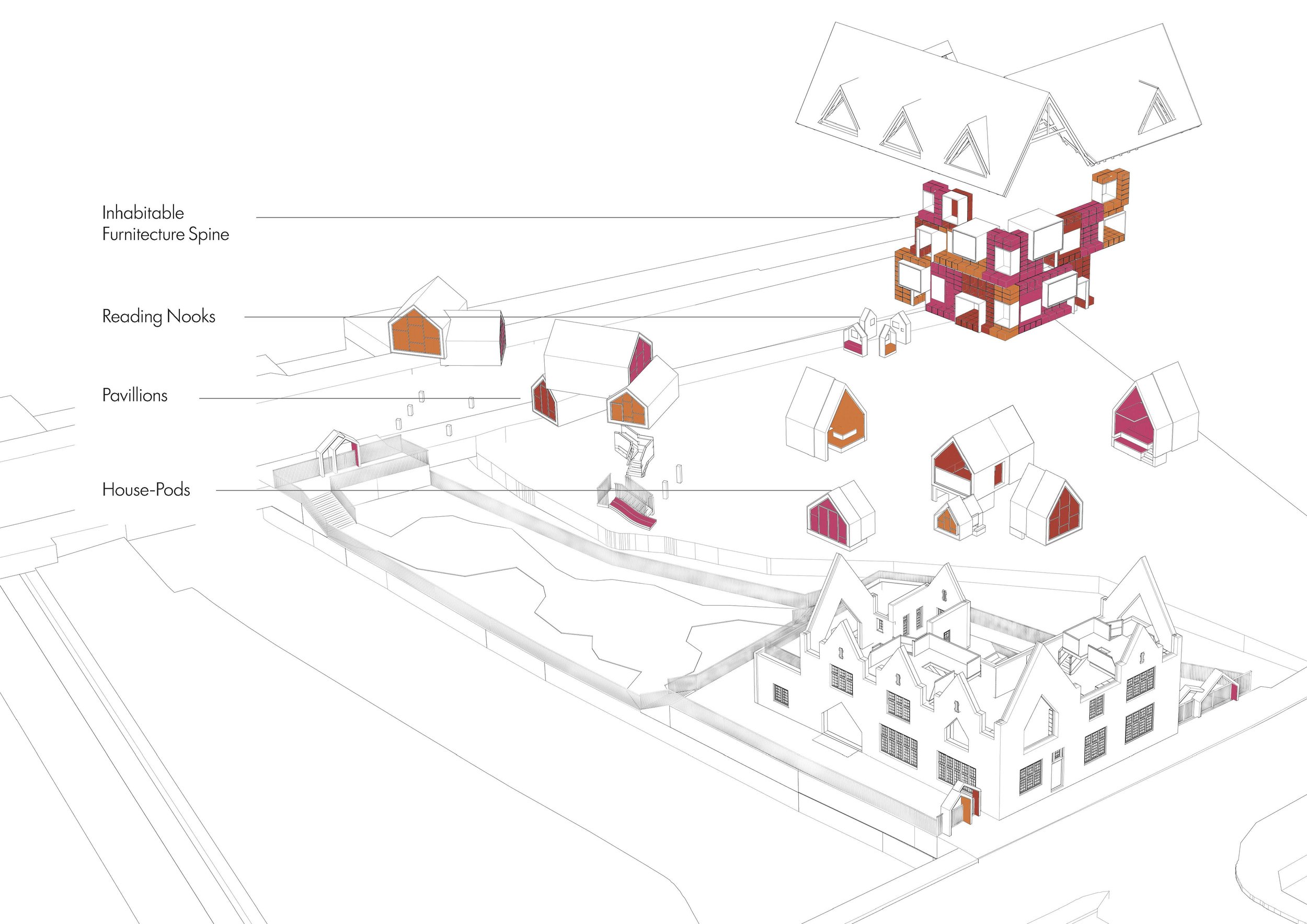
Exploded Axonometric
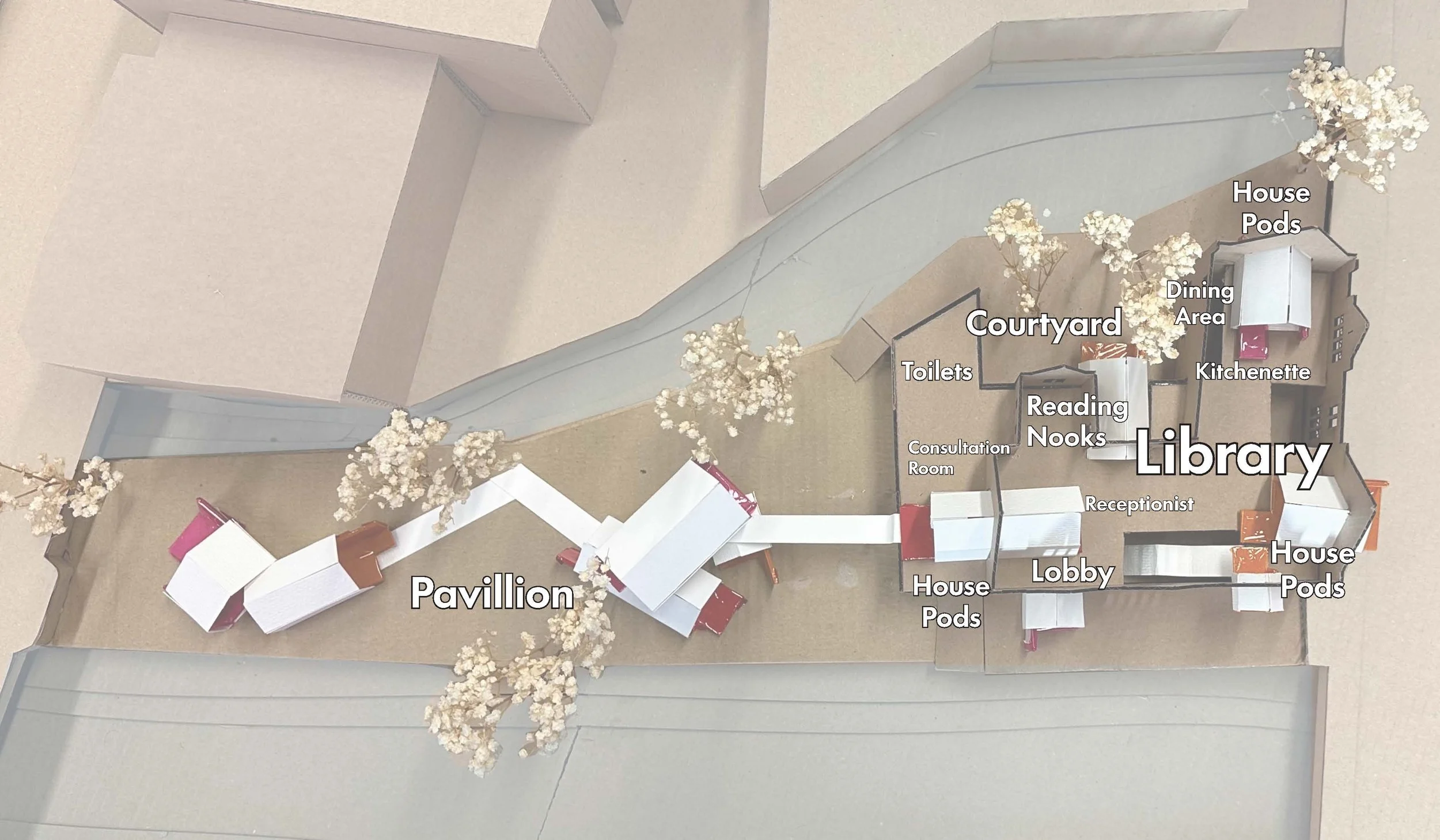
Functional Diagram
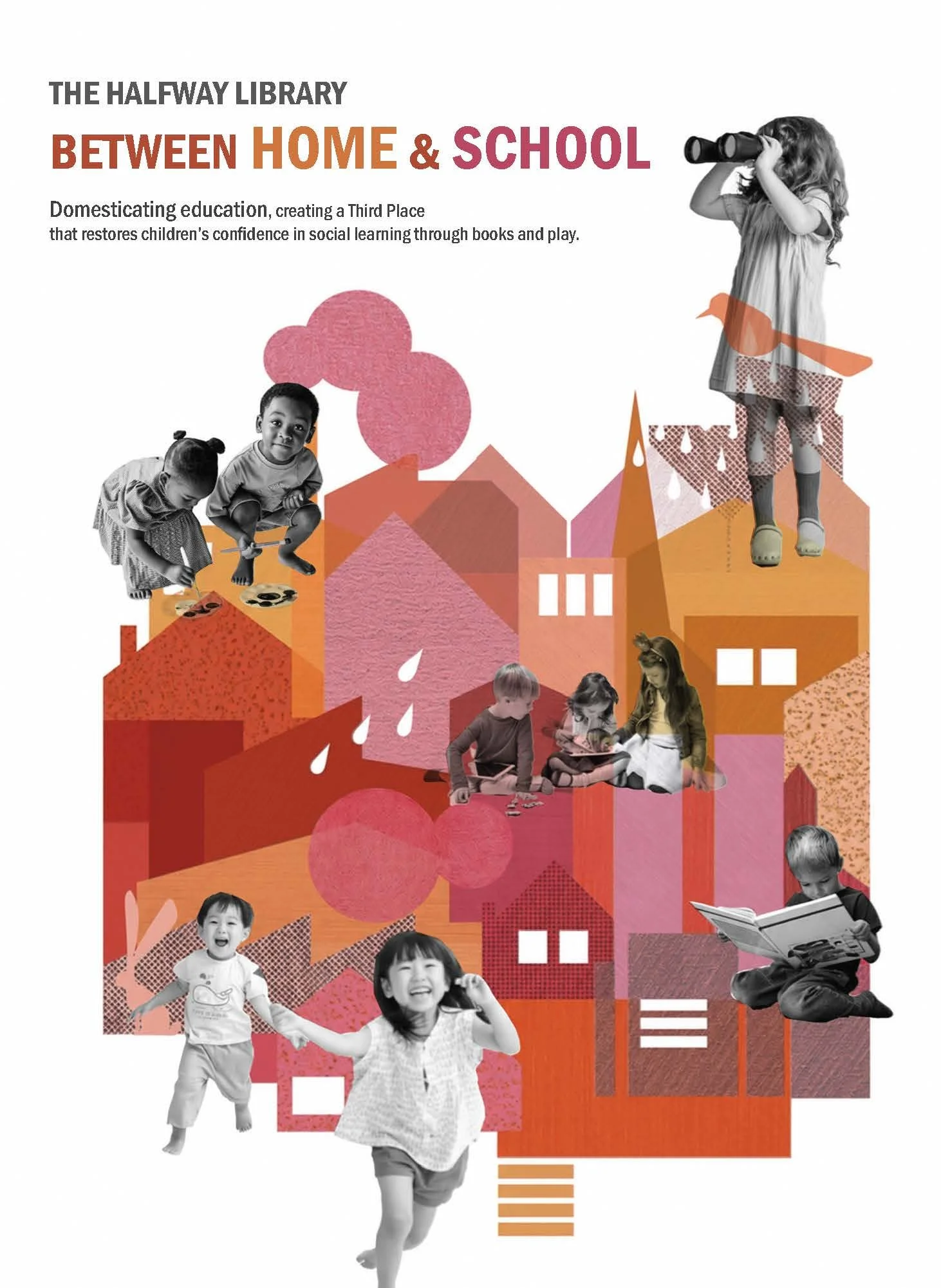
Halfway Library Poster
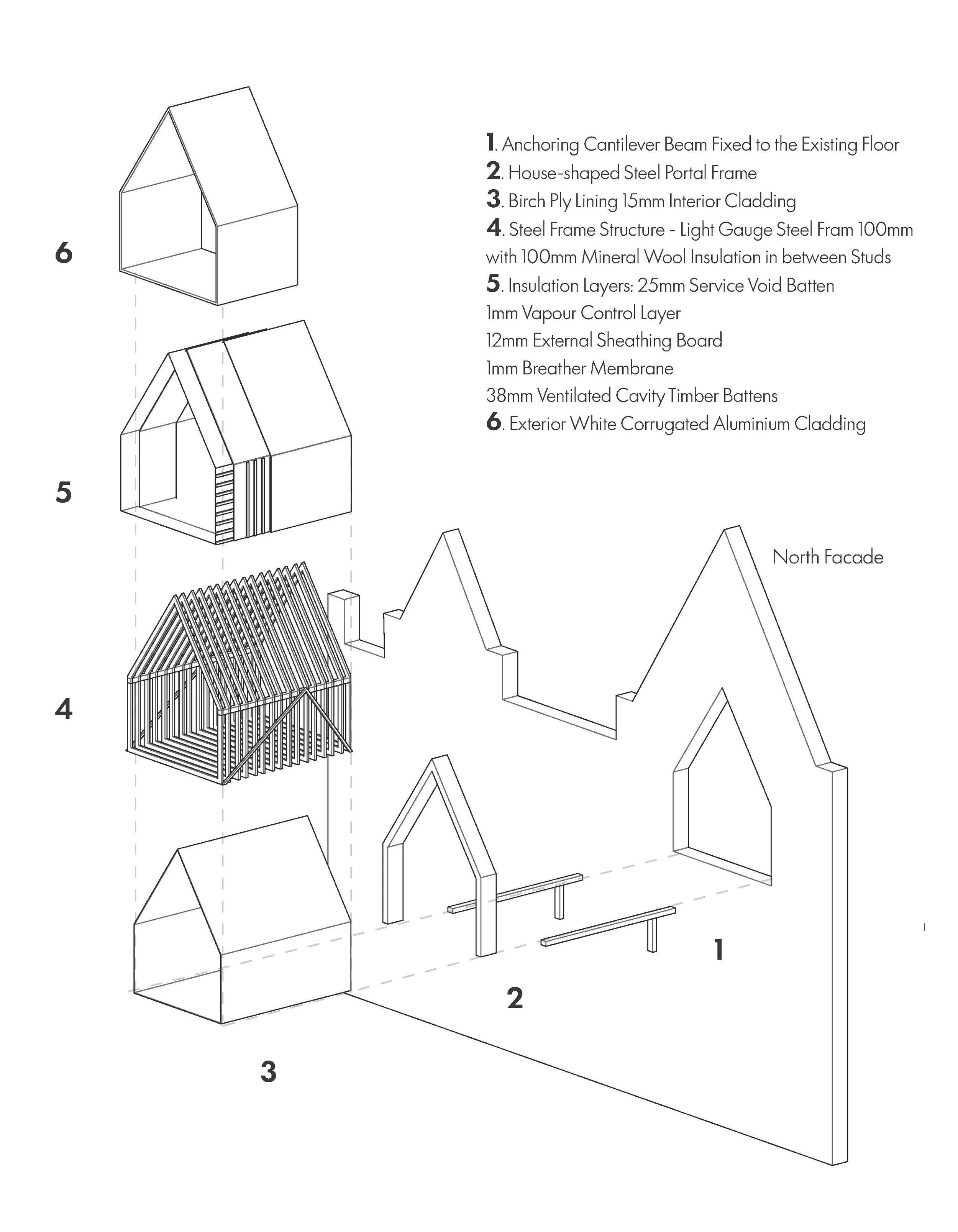
House Pod Exploded Axonometric
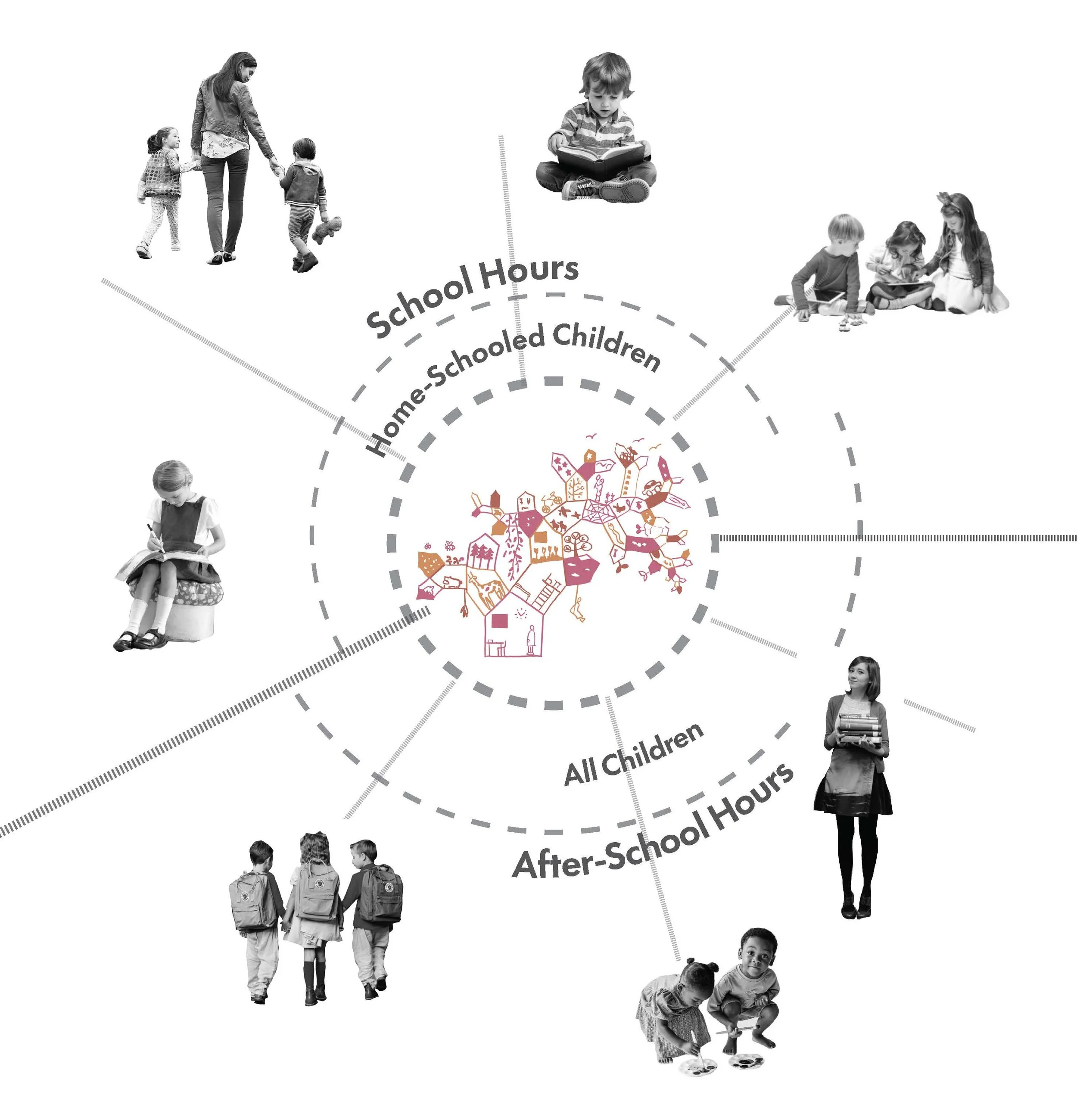
Programme
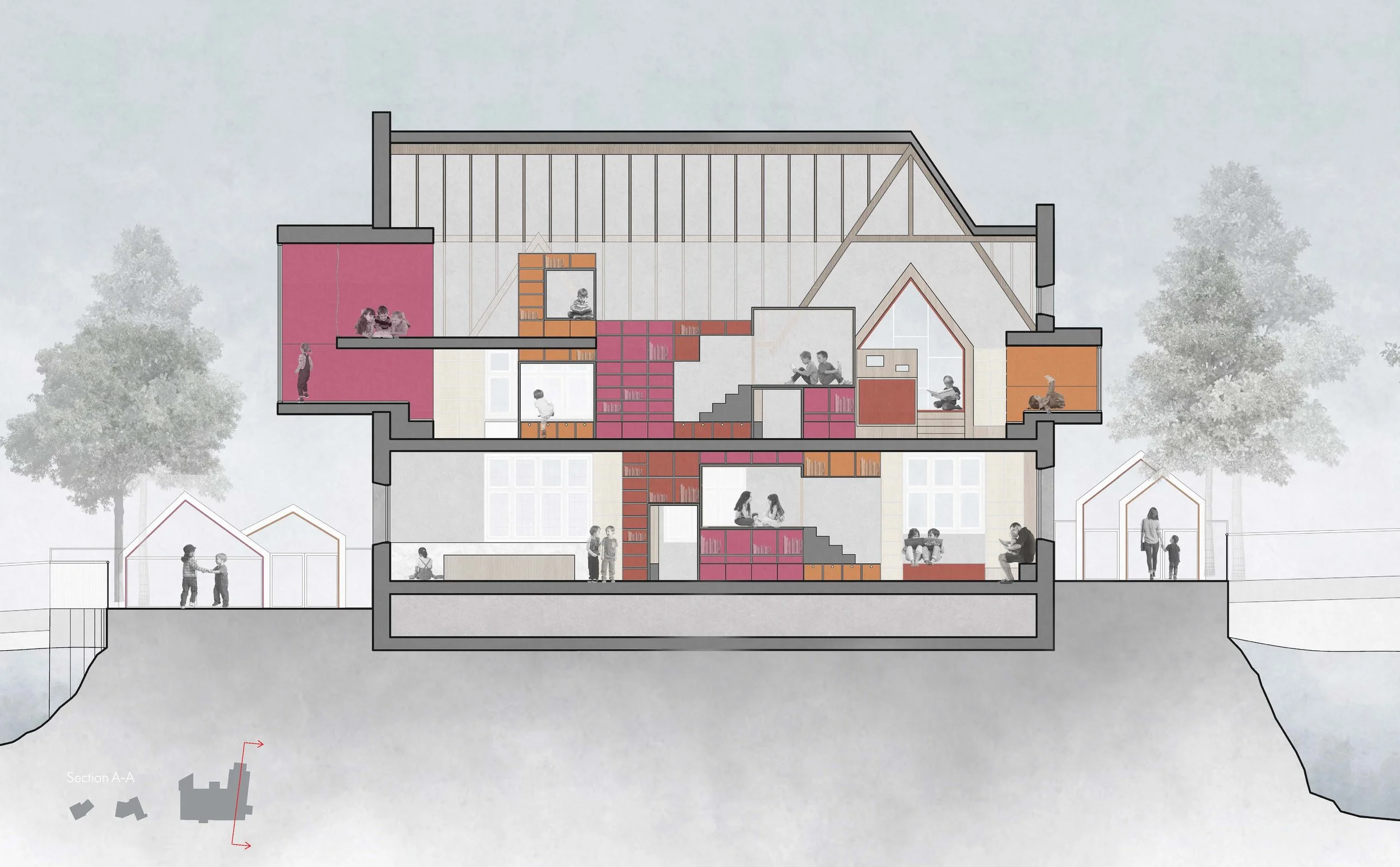
Section A-A
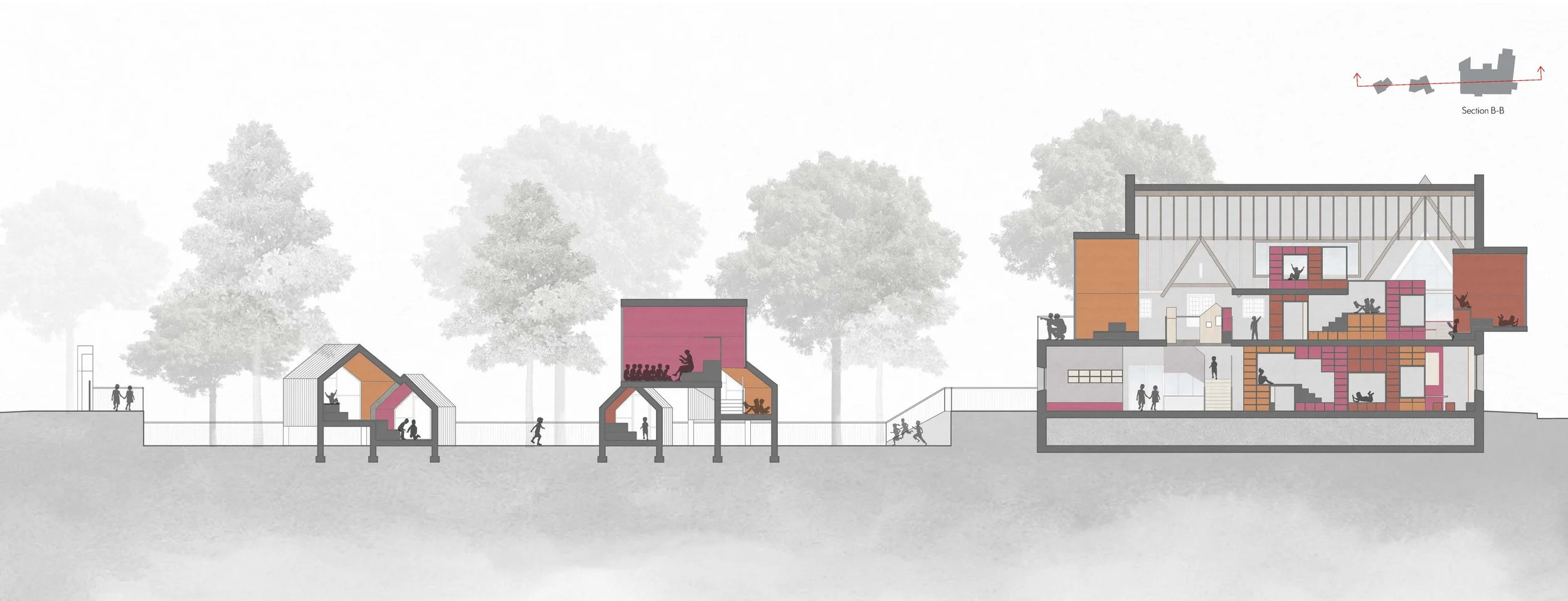
Section B-B
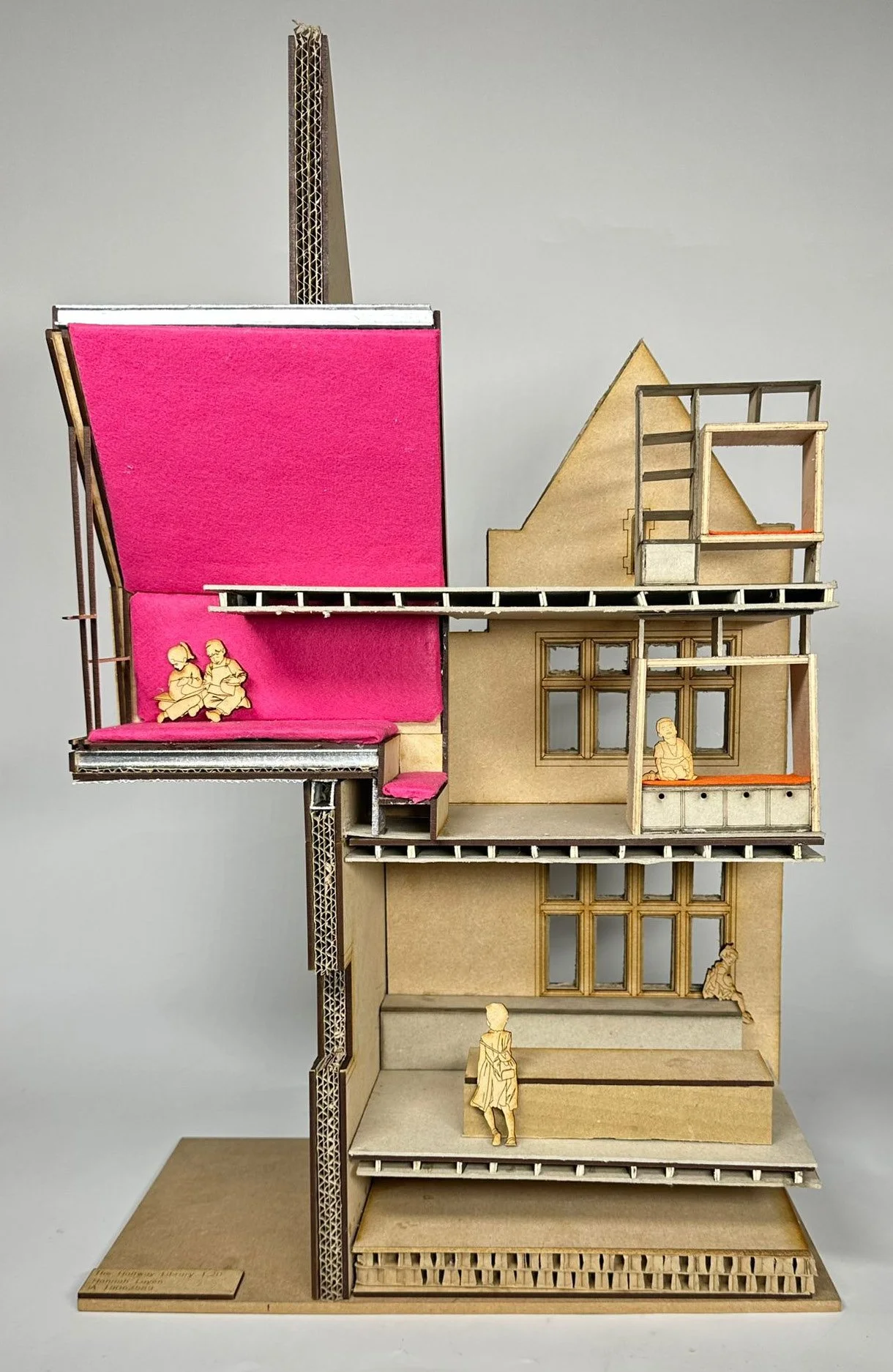
Tech Model
Amélie Fleming
Mind in Motion
“This project was one of the most interesting I’ve worked on because it pushed me to understand the people I was designing for before thinking about the architecture itself. I spent a lot of time researching how children learn, develop, and experience space, particularly hyperactive children, and that completely changed the direction of the project. It made me realise that good design isn’t just about creating beautiful spaces, but about understanding how architecture can genuinely improve everyday experiences.
Working with such a unique site was also a challenge. I wanted to make the most of its landscape, waterways, and role as an important pedestrian link through Oxford without losing what already made it special. Finding a balance between creating something new, respecting the existing character, and keeping the site open and welcoming to the public became a key part of the design process.
Looking back, I think this project reflects many of the values the school encourages. It combines research, experimentation, and technical design with a strong social purpose. More than anything, it taught me that meaningful architecture starts with taking the time to understand people, their needs, and how thoughtful spaces can make a positive difference in everyday life.”
Before words, before books, children learn through movement, touch, and physical interaction. Mind in Motion reimagines the children’s library as a space where learning is embodied. Responding to the separation of physical and intellectual activity within contemporary education, the project creates a spatial sequence that guides children from collective engagement toward individual focus. Through inhabitable circulation, reading spaces, moments of pause, and activities, the architecture supports embodied learning and self-regulation. The library positions movement as a means of developing attention and awareness, creating a richer and more inclusive learning environment.
Situated on an island between two streams of the Oxford Canal, the library occupies a unique position surrounded by water, vegetation, and urban movement. The site forms part of a wider network, acting as an important link through the city. The journey begins in the public realm, where a playful and interactive landscape draws children into the library. Organised as a sequence rather than a collection of rooms, the project moves through courtyards and circulation spaces to learning environments, and places for reflection, each supporting a different mode of occupation. The book corridor acts as a connective spine between active and quieter programmes, while the social staircase provides a shared space for pause, reading, and encounter. As children move through the building, spaces gradually shift from collective and physical engagement toward more intimate environments for concentration and self-directed use, allowing each child to navigate the library according to their own needs.
The social staircase forms the heart of the library, anchoring the scheme within the existing building and linking the active ground floor to the spaces above with two sets of stairs. More than a circulation element, it activates the transition spaces, and functions as a place to read, gather, observe, and pause. Inhabitable steps and façade niches encourage occupation, softening transitions between activities and creating opportunities for both individual and collective use. A layered façade of timber and glass balances light, privacy, and views across the surrounding landscape. Natural light enters through the full height of the space, while timber flooring and seating surfaces introduce warmth and encourage children to linger. The resulting atmosphere is both open and sheltered, strenghtening connections between floors.
The soffit is a continuous architectural element linking spaces and experiences. It descends to form shelving, seating, and tables, while openings create views and visually guide movement through the building. Rather than separating rooms, it creates gradients of enclosure. By adapting to the needs of each space, it transforms circulation into inhabitation, activating transition spaces and strengthening the relationship between the children and the architecture. Constructed from laminated veneer lumber, the soffit is designed as a lightweight prefabricated system. Its modular construction allows it to adapt to different spatial requirements while maintaining a continuous architectural language throughout the library. The timber construction also introduces warmth and tactility, creating a more inviting environment for children to occupy.
Collage
Elevation
Exploded Axonometric
Functional Diagram
Halfway Library Poster
House Pod Exploded Axonometric
Programme
Section A-A
Section B-B
Tech Model
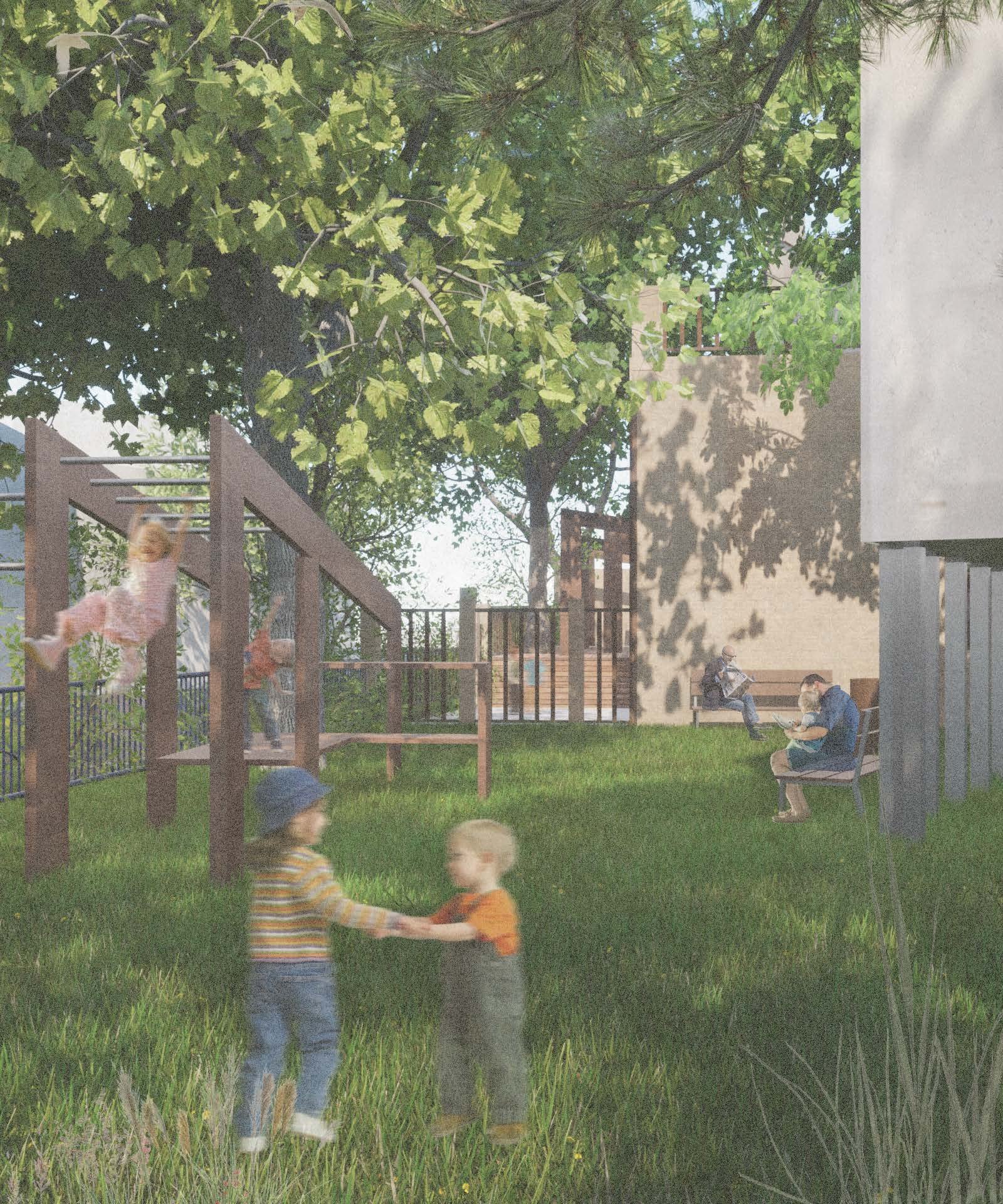
Courtyard-Render
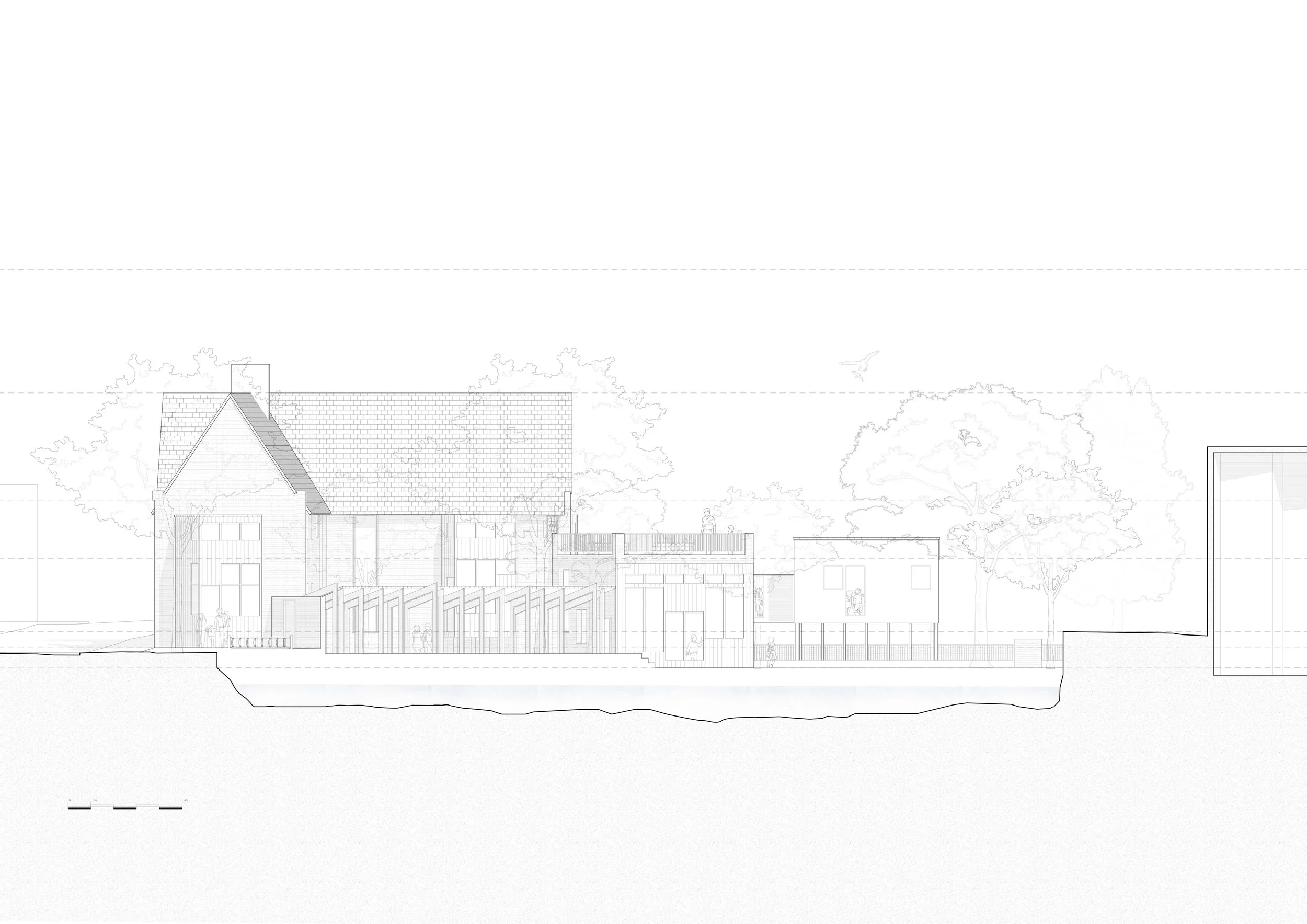
Elevation
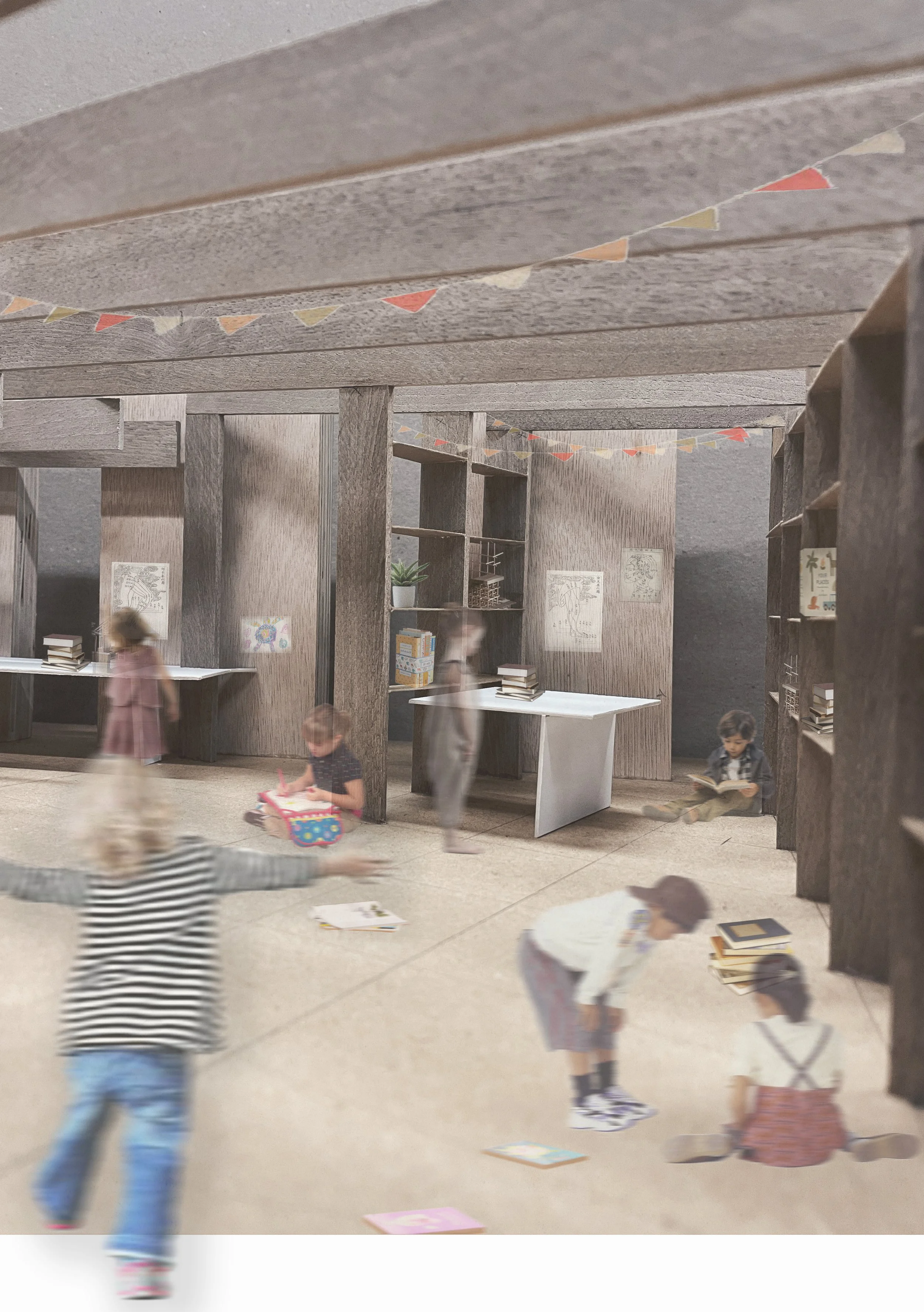
Model Collage
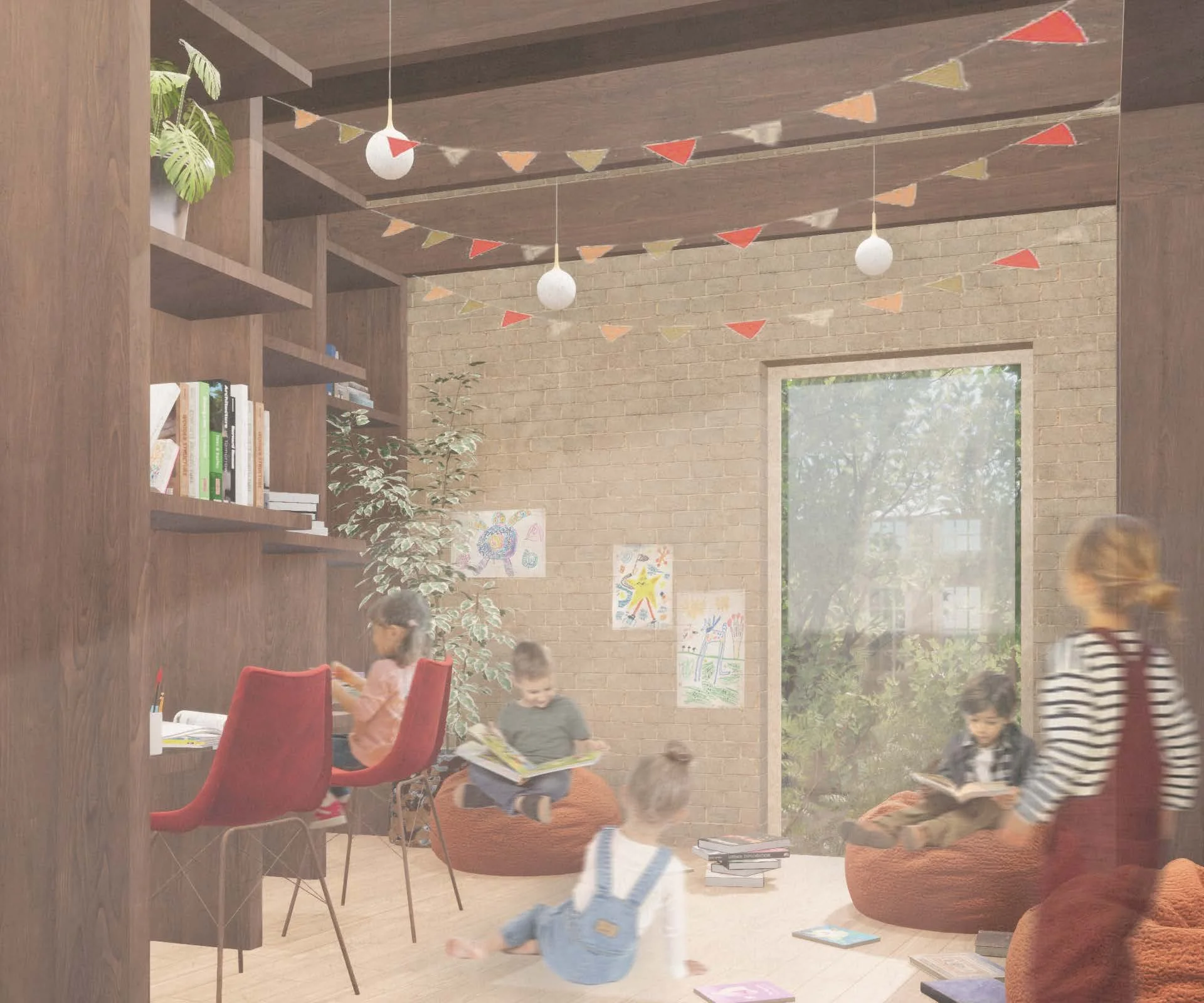
Reading Render
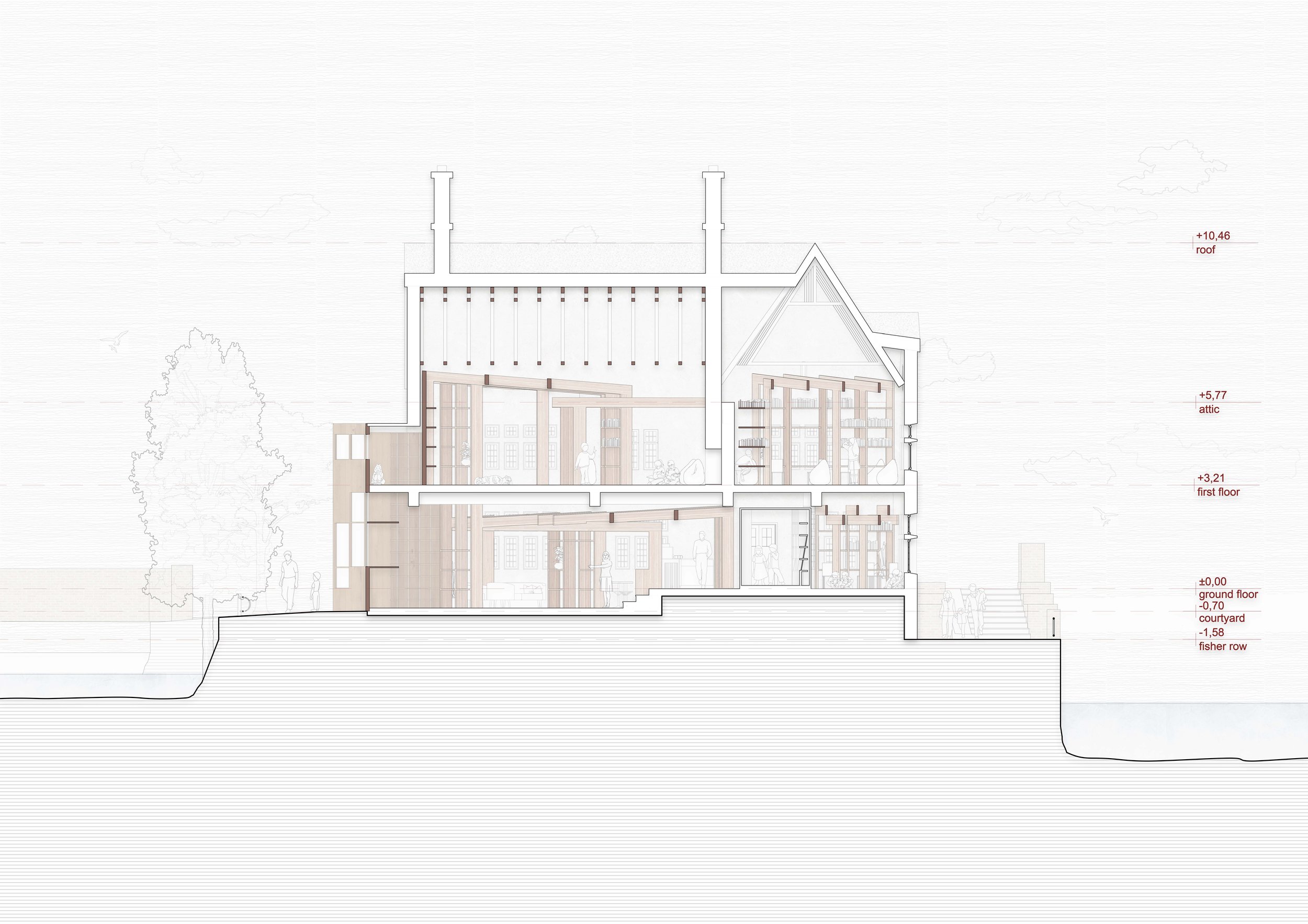
Section-A
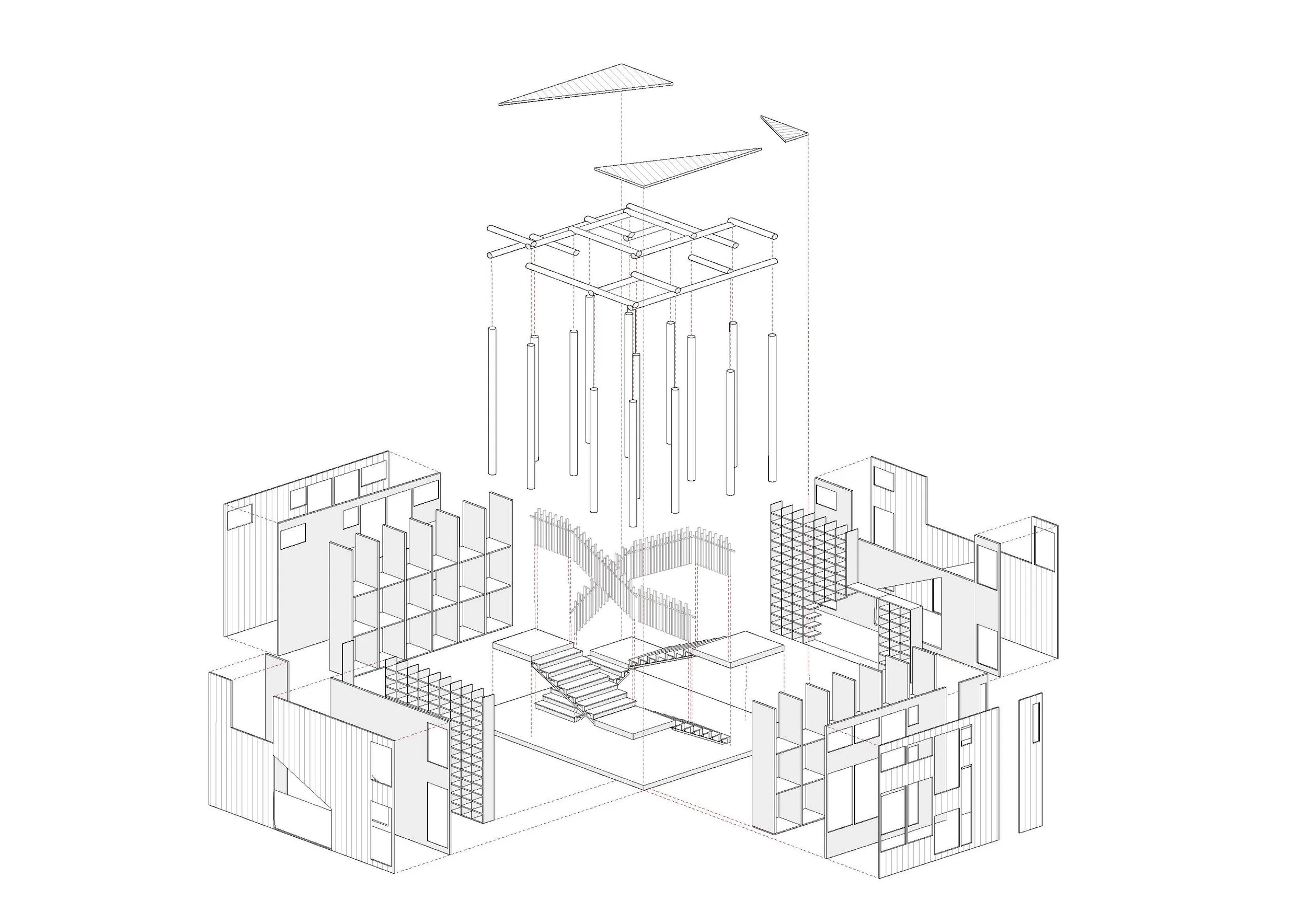
Staircase-Assembly
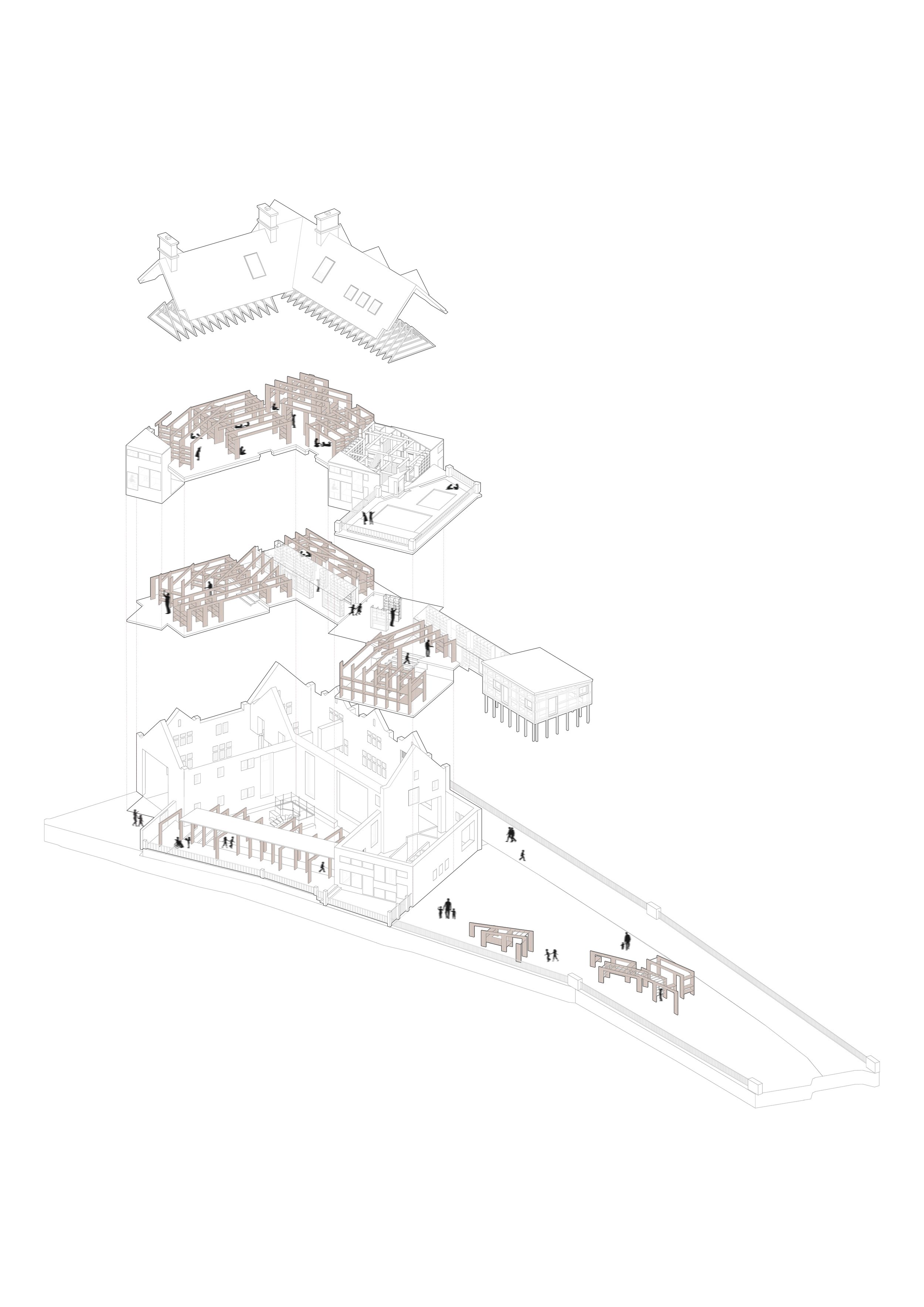
Axonometric
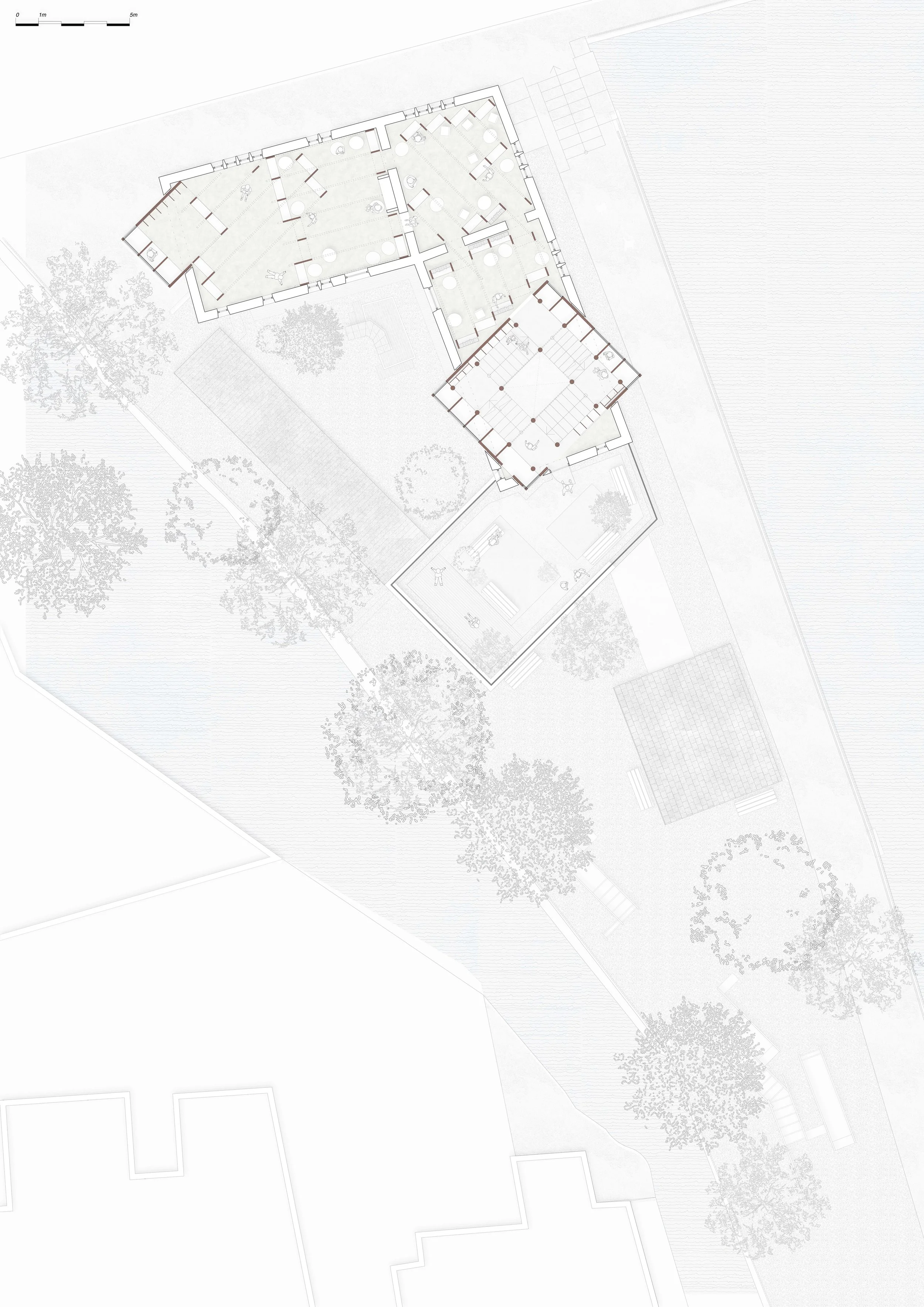
First-Floor-Plan
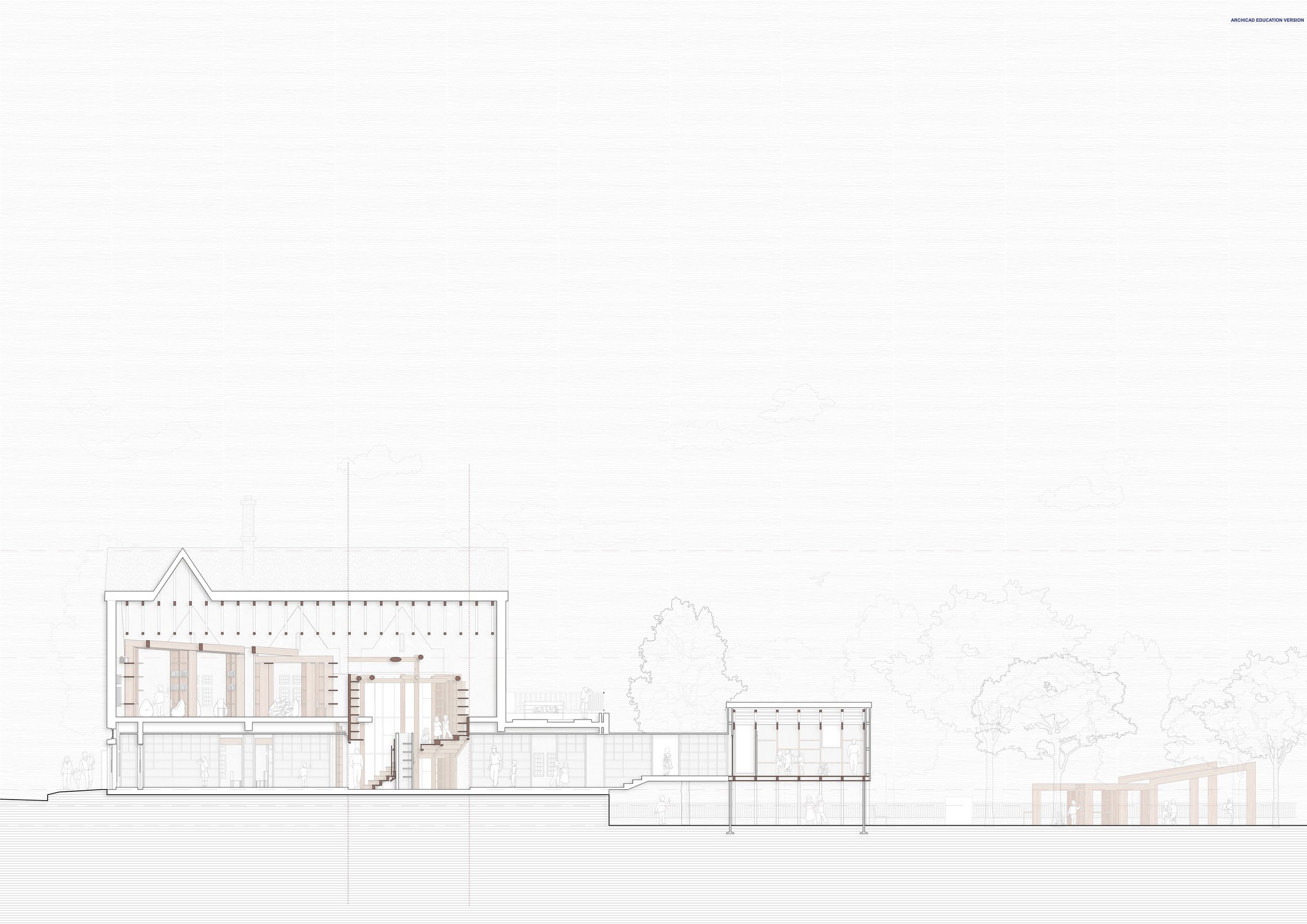
Section-B
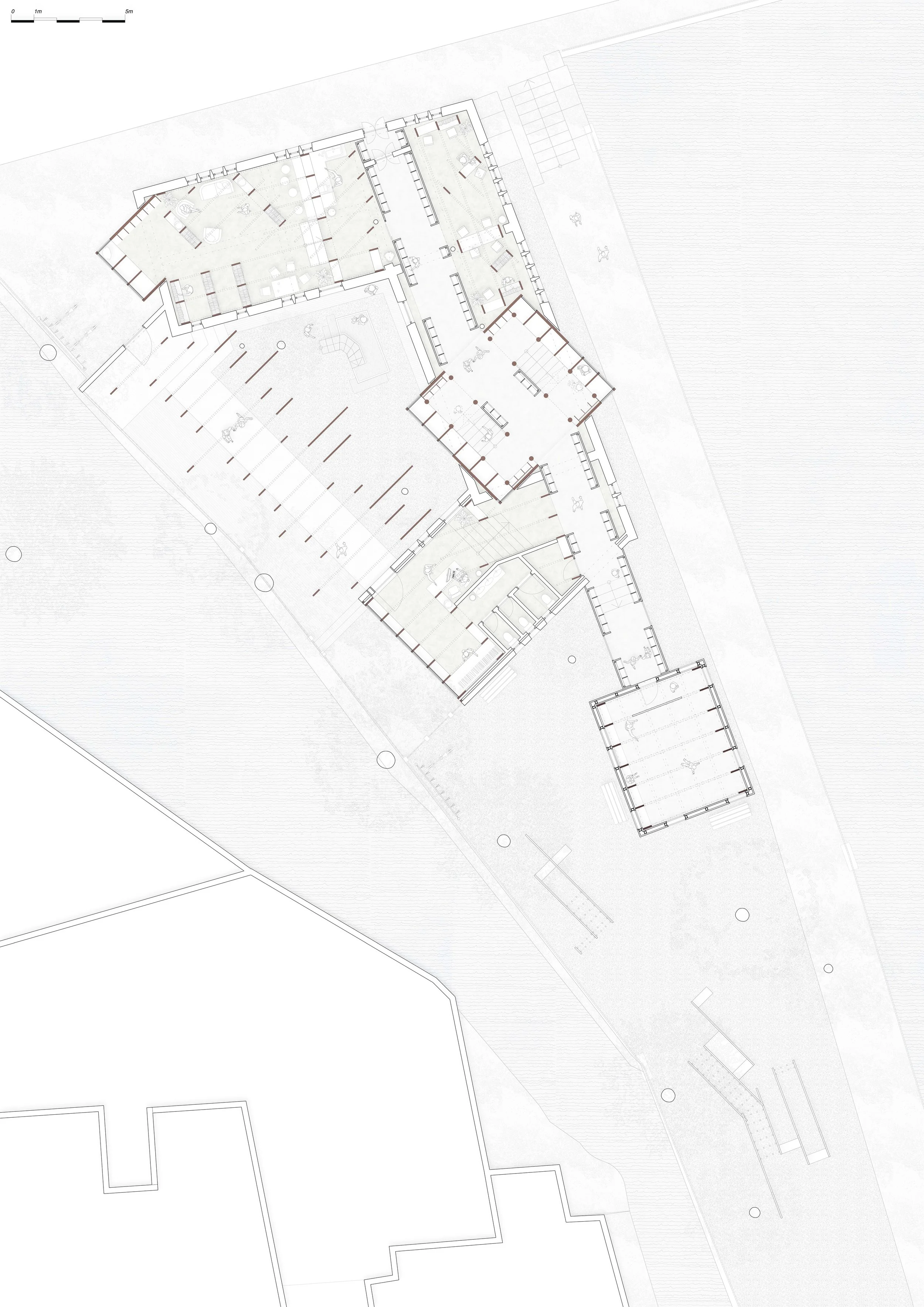
Ground-Floor-Plan