DS05
TUTORS: Studio Lead – Raha Farazmand, Studio Tutor – Kiril Kuzmanov & Marko Milovanovic, Tech/Structures – Marko Milovanovic (Tech) Eugenie Sentucq (Structure)
STUDENTS: Nur Rasyidah Mohd Nizam, Chania Coombs, Lilli Osborne, Satwik Gadanayak, Keny Patel, Patthakarn Polakla, Anthony Amune, Lakshmi Dath, Ege Ersoy, Ayesha Sosan, Su Ugurlu
DS5 | Between Matter and Myth: Navigating Flux Along London’s River Lea
DS5 investigated the multidimensionality of layered urban landscapes, recognising the flux between the included and excluded, the visible and the hidden. Approaching spaces as material networks and imagined communities, the studio asked: how do existential and transgressive experiences shape the values we construct, affirm, or negate?
The site of investigation was London’s River Lea—a fragmented, polluted waterway where ecological, industrial, and social histories intersected with collective imaginaries. Using parallax as a conceptual and experimental tool, DS5 utilised moving images to examine spatial and temporal fragmentation, exploring how spaces shape—and are shaped by—unconscious desires and fears. By prioritising negotiated "use" over rigid "function," the studio resisted neoliberal neutrality and redefined sustainability through its social, cultural, and ethical dimensions.
Method
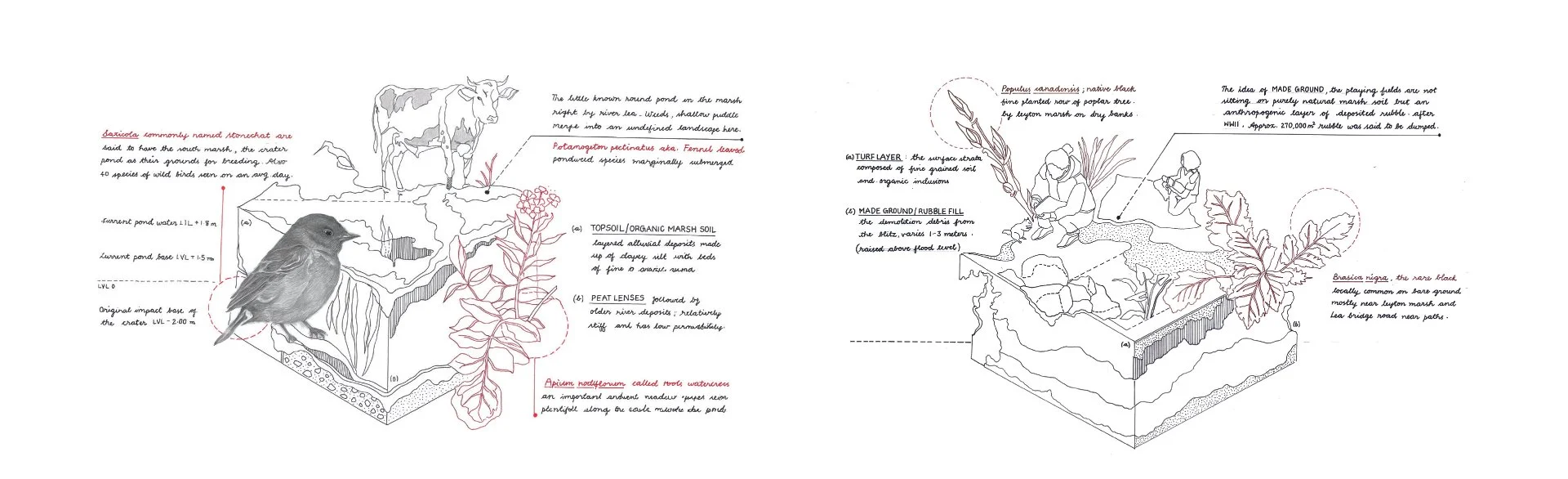
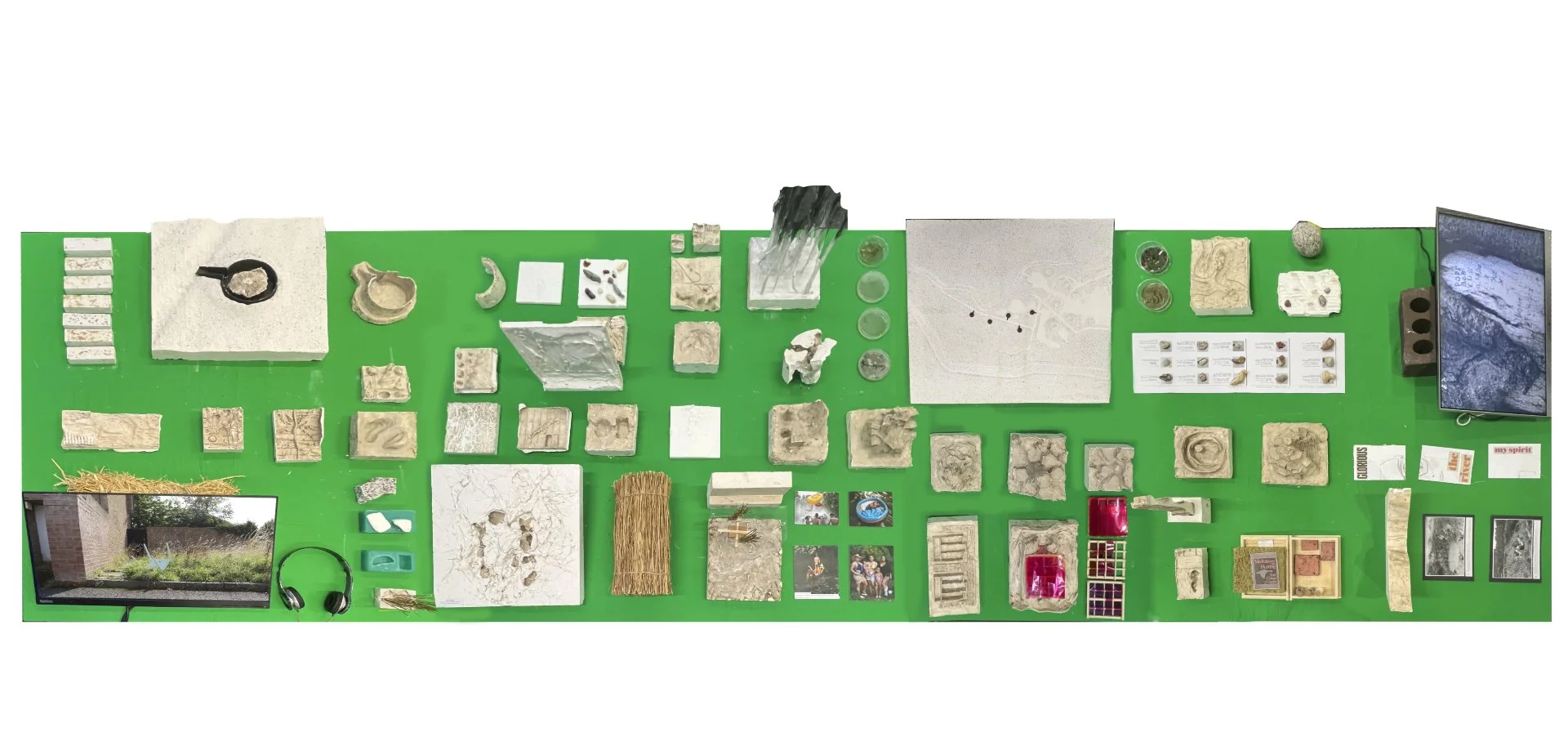
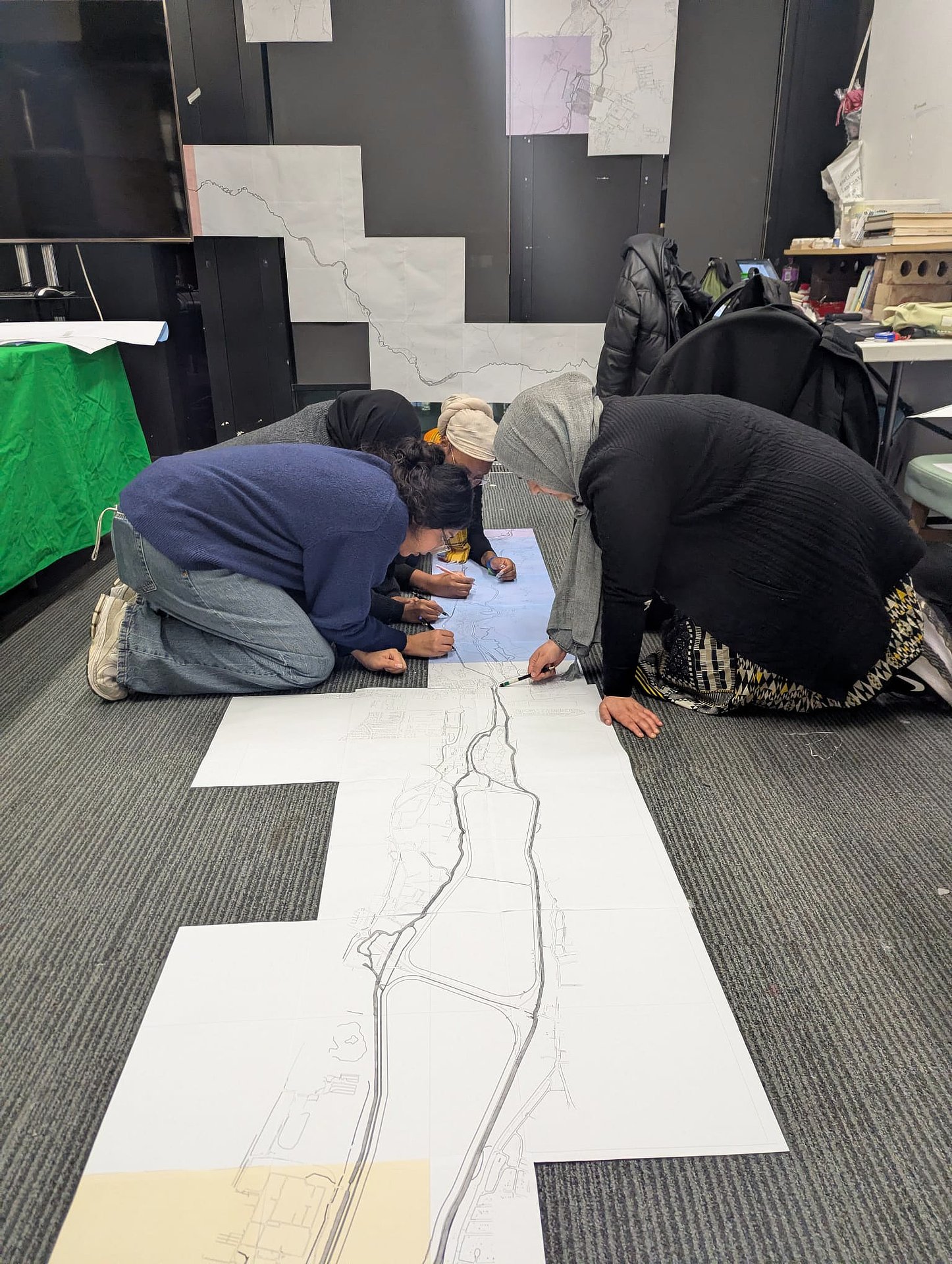
The process employed editing, montaging, cutting, and pasting to reconfigure fragments into transformative interventions, treating the River Lea as both site and medium. Through workshops, DS5 practised translation—converting moving image fragments into drawings, collages, and objects to analyse surface, geometry, material, and energy.
This produced a personal, subjective Archive—a process-oriented agent tracing an individual's lived relationship with the terrain across time, flows, and networks.
Finally, aligning with Walter Benjamin's three steps of prose—musical (composition), architectonic (construction), and textile (weaving)—spatial interventions progressed from gathering visual fragments to weaving them into new forms. DS5 integrated these creations into the urban fabric, transforming spaces into arenas for resistance and change rather than compliance.


Keny Patel
MUNITIONS. MONUMENT. MYCELIUM.
“I have been trapped in contradiction: identifying the consequence of industrial intervention in river systems, then being asked to intervene again. The central question was never really about mycoremediation, it was simpler and more uncomfortable than that. How much is too much? At what point does remediation become another act of management, another attempt to control a system that has spent decades resisting exactly that? The design moved from a heavily engineered aquaponic proposal toward something more tolerant of the river’s own variability, not because the simpler system does more, but because it demands less. Every design decision was a negotiation between competing goods, neither fully achieved. That tension, between the ambition to repair and the humility to leave well alone, is what the project is actually about. How deliberately, and how lightly, human intervention can be made to sit within a natural system that has its own logic. And whether architecture can learn to follow that logic rather than replace it.”
Retired gunpowder mills and their waterways appear again and again across England. This project speculates on the potential of that peculiar yet obvious relationship. Industry came to the river because the river was useful. The river and it's inhabitants have been carrying the cost of that usefulness ever since.
This project is a speculation on what that proximity now mean, and on the responsibility these industrial sites carry toward the rivers that made them possible.
The project takes place at the Waltham Abbey Royal Gunpowder Mills, a 175-acre industrial heritage site on the River Lea in Essex, currently managed as a part-time visitor attraction by the WARGM Charitable Trust.
The site is an island, its boundaries defined by the branching channels of the River Lea. It sits within the Lee Valley Regional Park, yet operates almost entirely outside it: geographically central but largely inaccessible to the public.
The central argument is that the site should not be preserved as a static monument, but reanimated as a living system. The traverses — circular earthen blast walls that once defined the spatial logic of the entire industrial landscape — are the primary territory of architectural investigation. They were never meant to be looked at, they were built to contain, this project asks what they might do now.
The intervention reactivates the canal network as ecological and civic infrastructure, using the site's surviving guncotton drying stoves as incubation chambers for a mycoremediation biofiltration system along the River Lea. The architecture does not over impose, control or sit alongside the biological process. It is the biological process, a single node in an existing system.
Five of the site's fourteen surviving circular traverses are brought back into use as sequential filtration nodes. Mycelium is cultivated inside each traverse within a freestanding steel scaffolding frame. Inoculated straw substrate colonises in the darkness of the traverse interior, then is packed into hessian sacks and deployed into the canal using a tethered pole mechanism. Floating at the surface, the sacks filter hydrocarbons, E. coli, and organic pollutants from the water over a two-week cycle before being retrieved and replaced.
The spent substrate does not go to waste. Pressed into moulds and dried on shelves within a dedicated production traverse, it becomes mycelium composite brick, lightweight, structurally reliable, and produced entirely from the system's own biological cycle. The bricks can be sold to generate income for the struggling Trust, or used directly in the repair of the site's hundreds of unmaintained ruins: conservation funded by the process of remediation.
The system is designed to leave no permanent mark on the Scheduled Ancient Monument it inhabits. The scaffolding is reversible. The traverses are unchanged. The only evidence of the intervention is the river, gradually getting cleaner, measured not by instruments alone, but by the return of the fish.
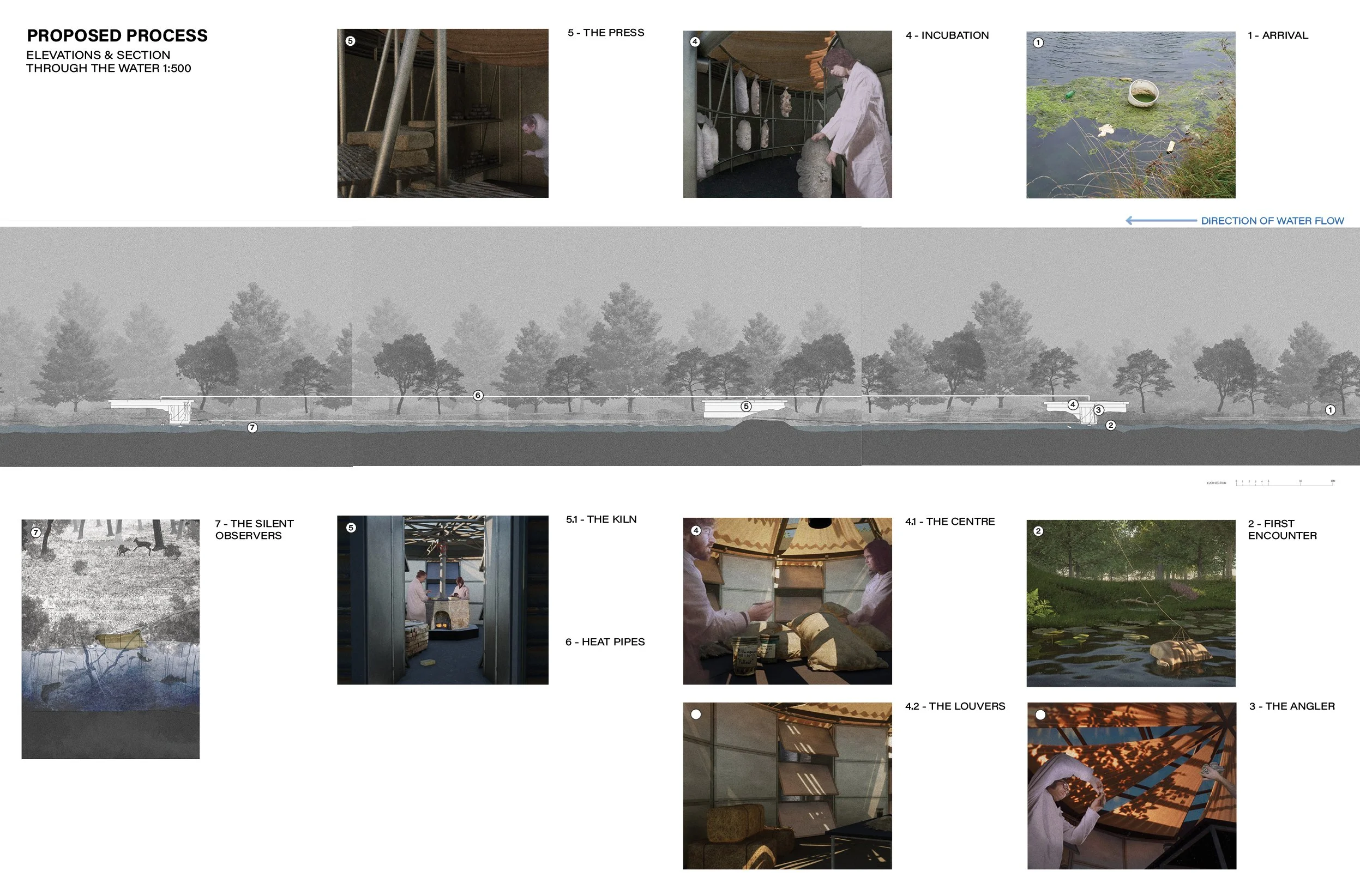
Long Section & Process
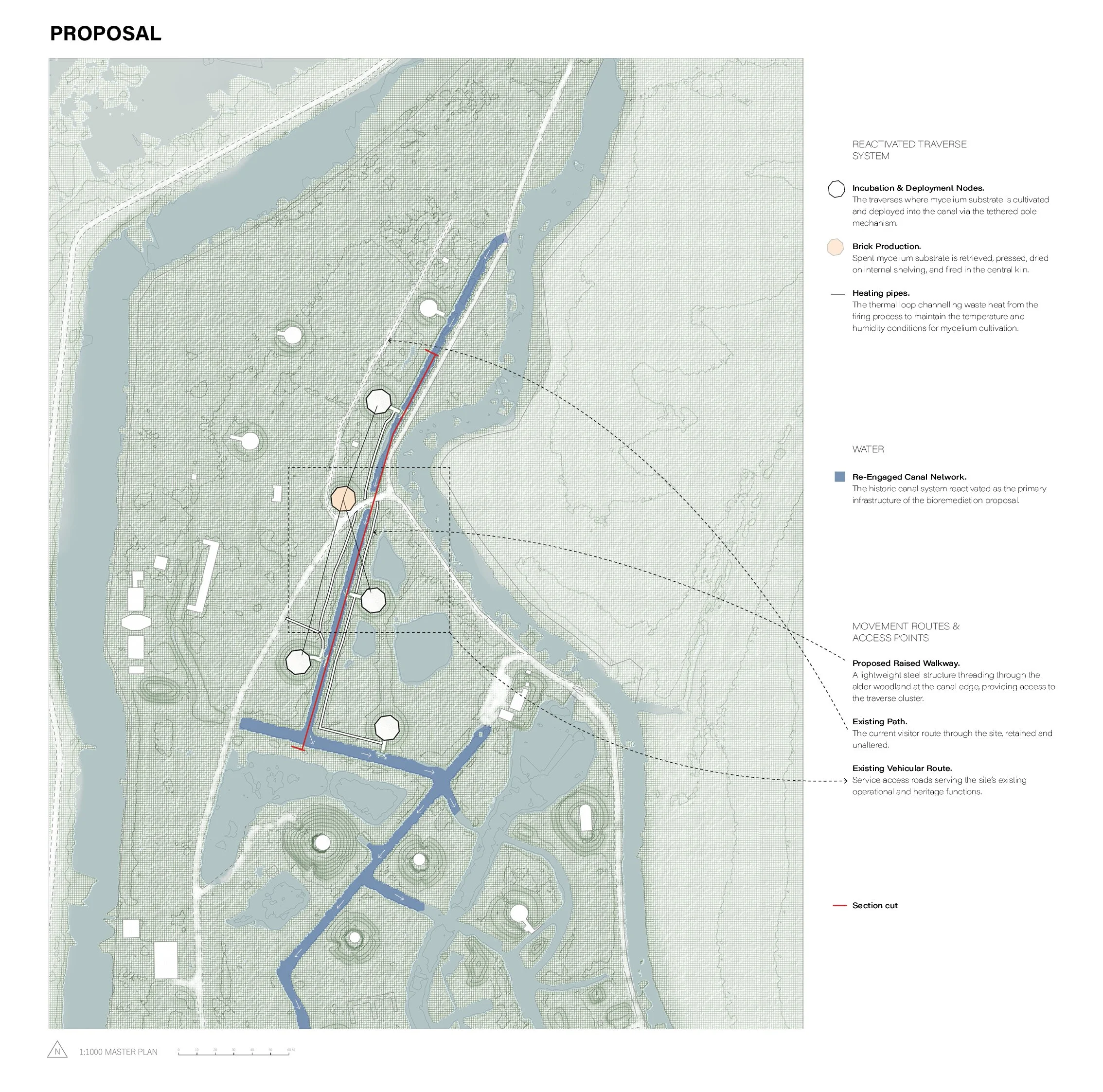
Masterplan
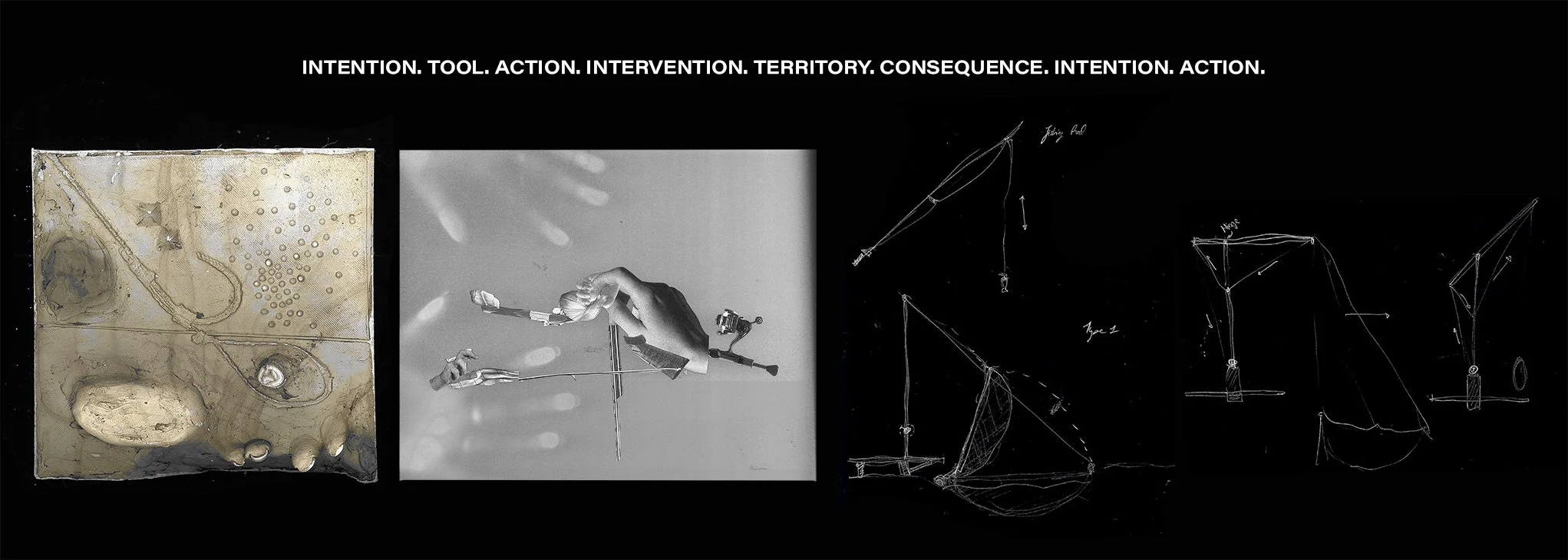
Process
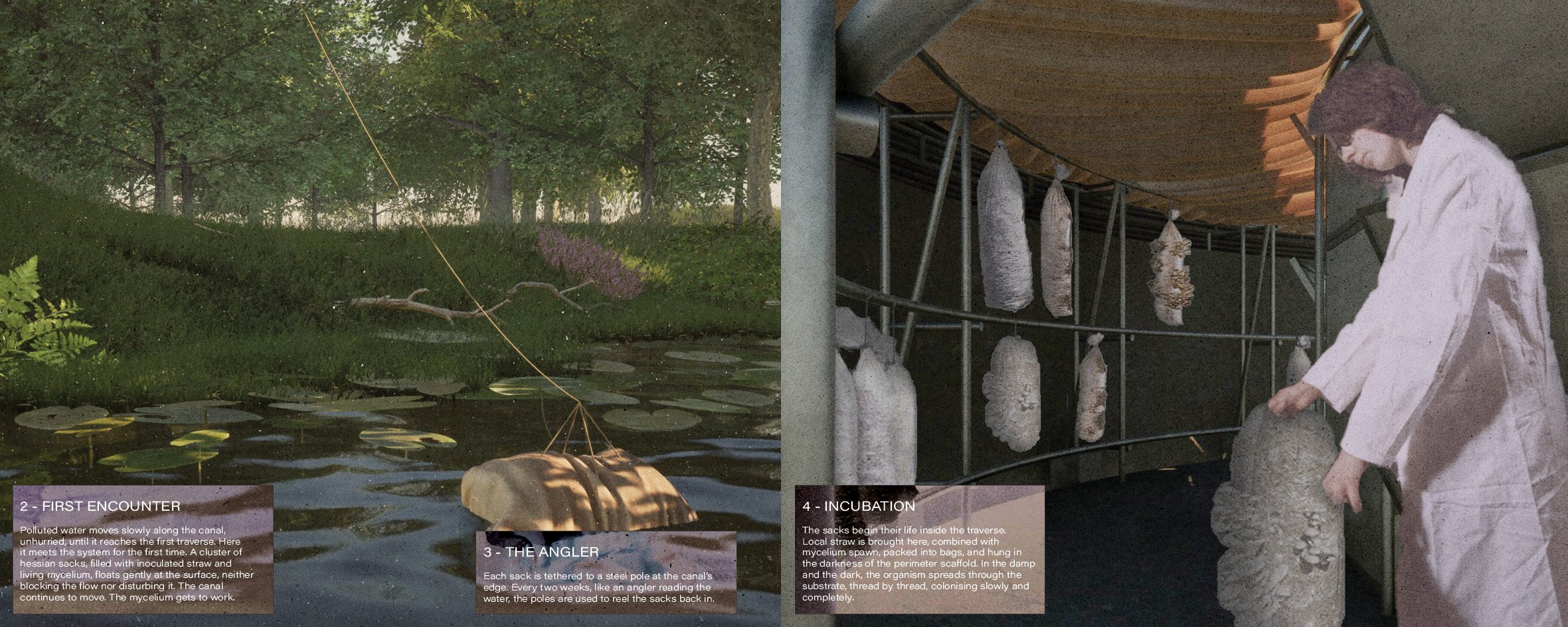
Render
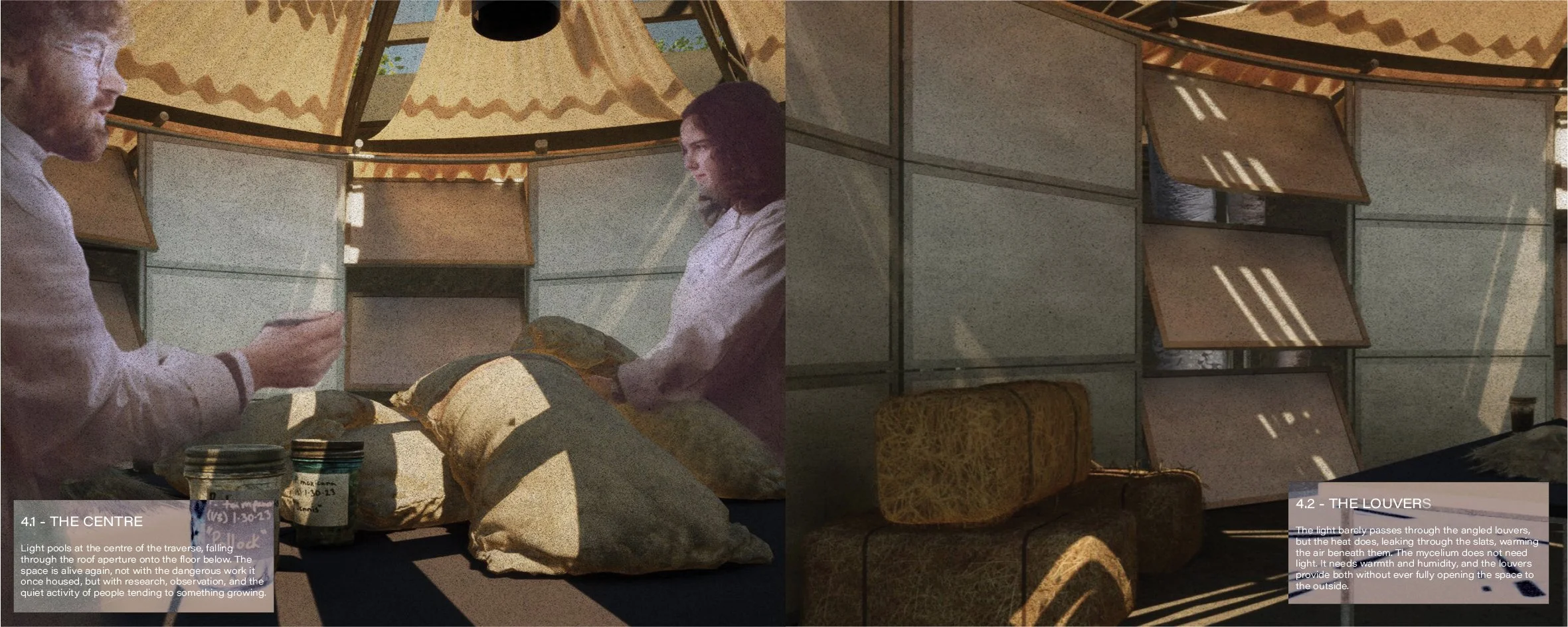
Render
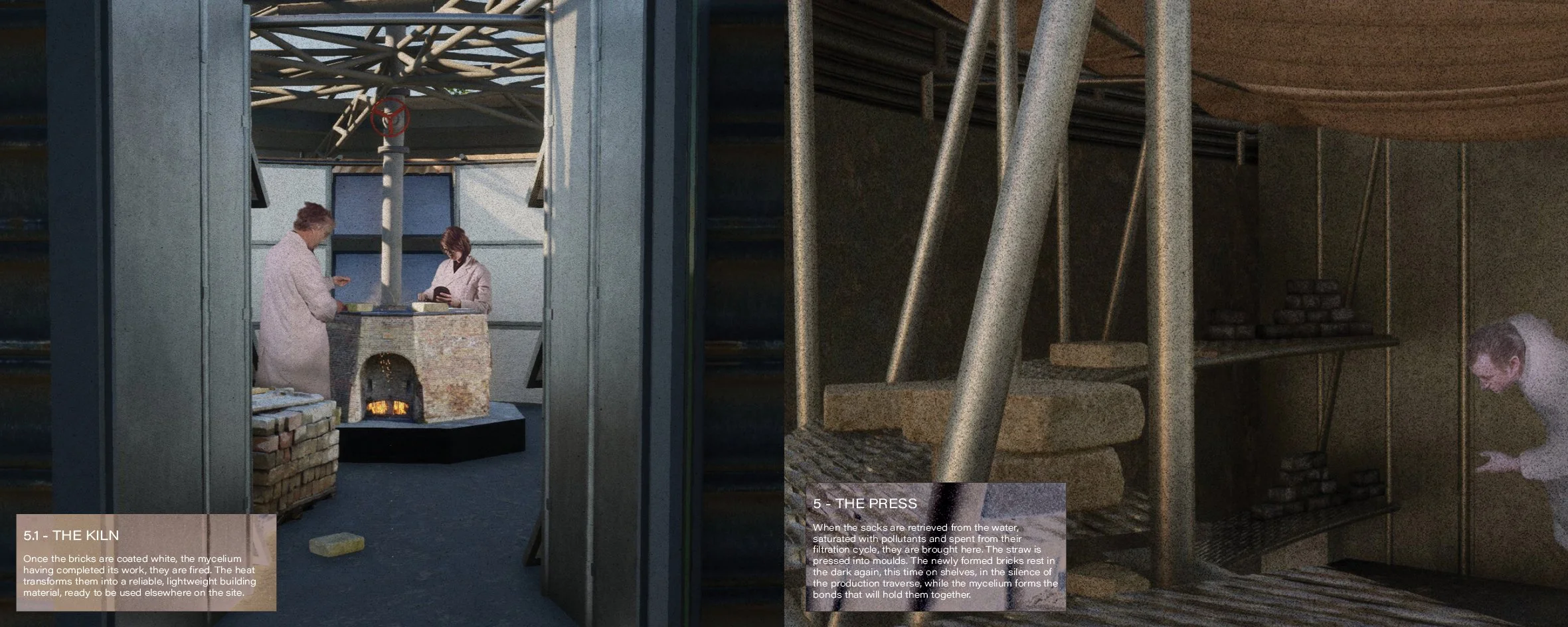
Render
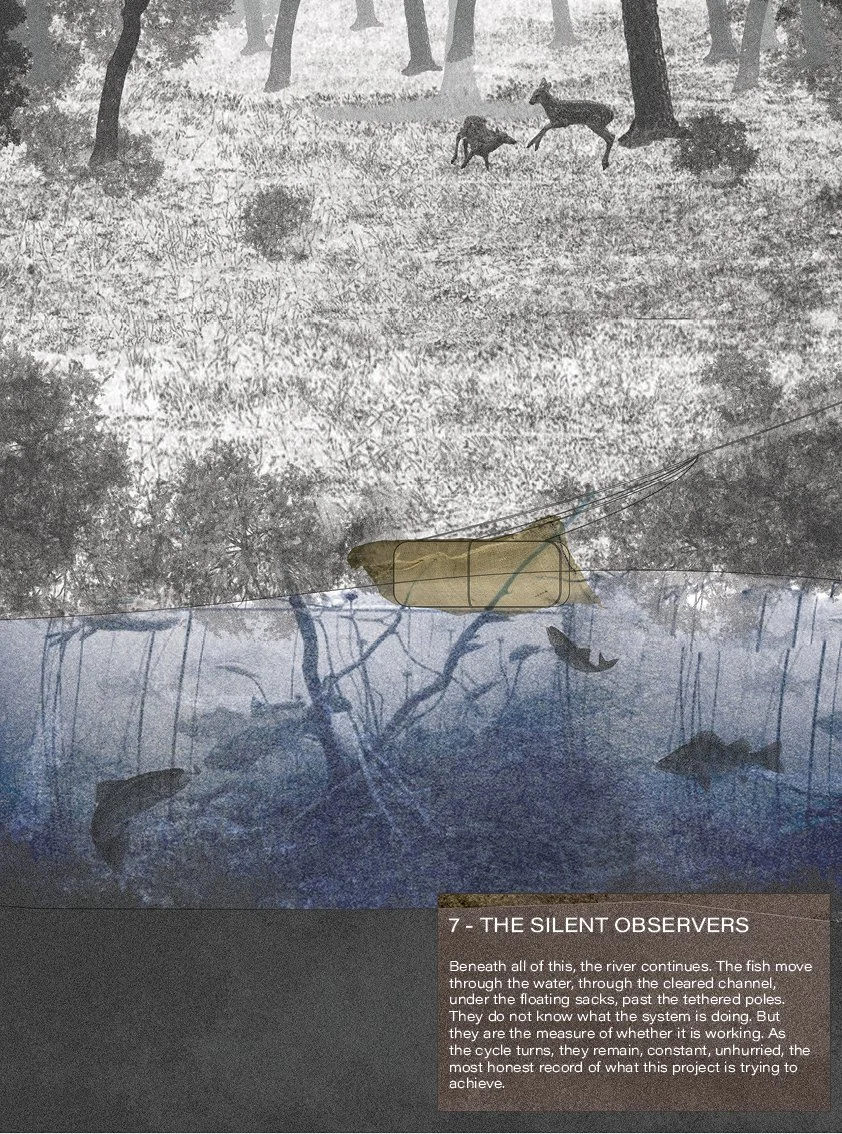
Render
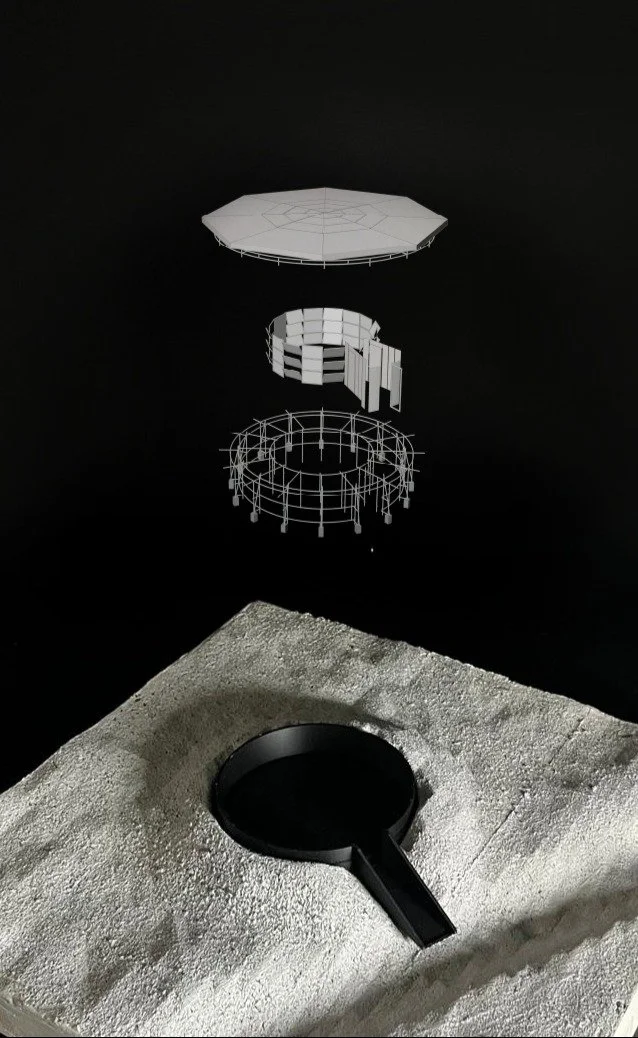
Structural Model
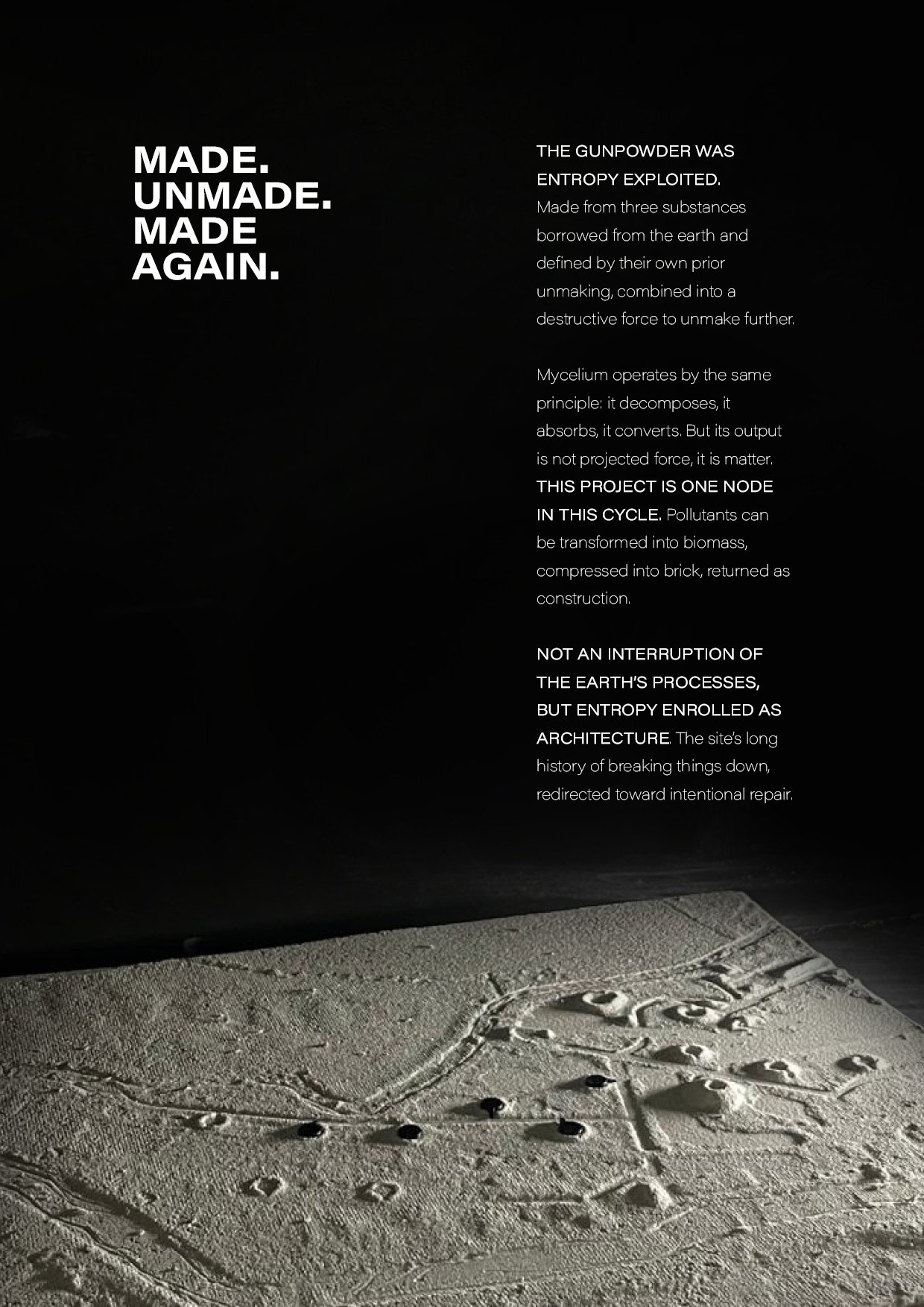
Topo Model
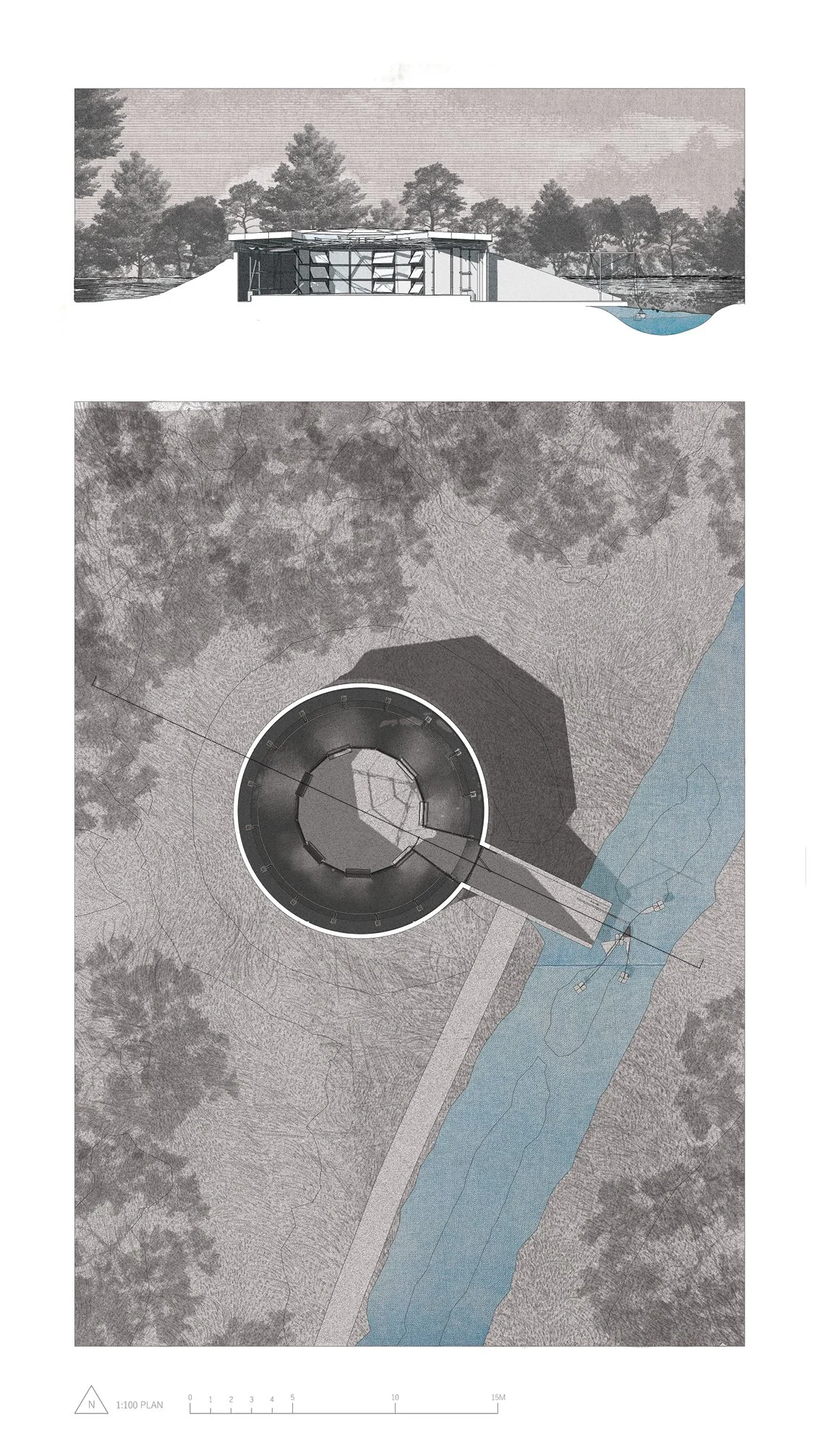
Traverse Node Plan & Section
Nur Rasyidah Mohd Nizam
Found without any Instruction: (Re)Mediating Conflict and Displacement in the River Lea
“The studio’s experimental, multi-media methodology allowed me to approach the project through multiple lenses. Through this process, I’ve realised that our obsession with human-first design often displaces other species, leaving the land itself to bear the brunt of our waste. To address critical environmental and sustainability challenges, we need to be more responsible for the materials we discard and learn to ‘Design from the end’. Ultimately, this project allowed me to address these urgent issues, successfully shifting my approach from anthropocentric design to ecological responsibility.”
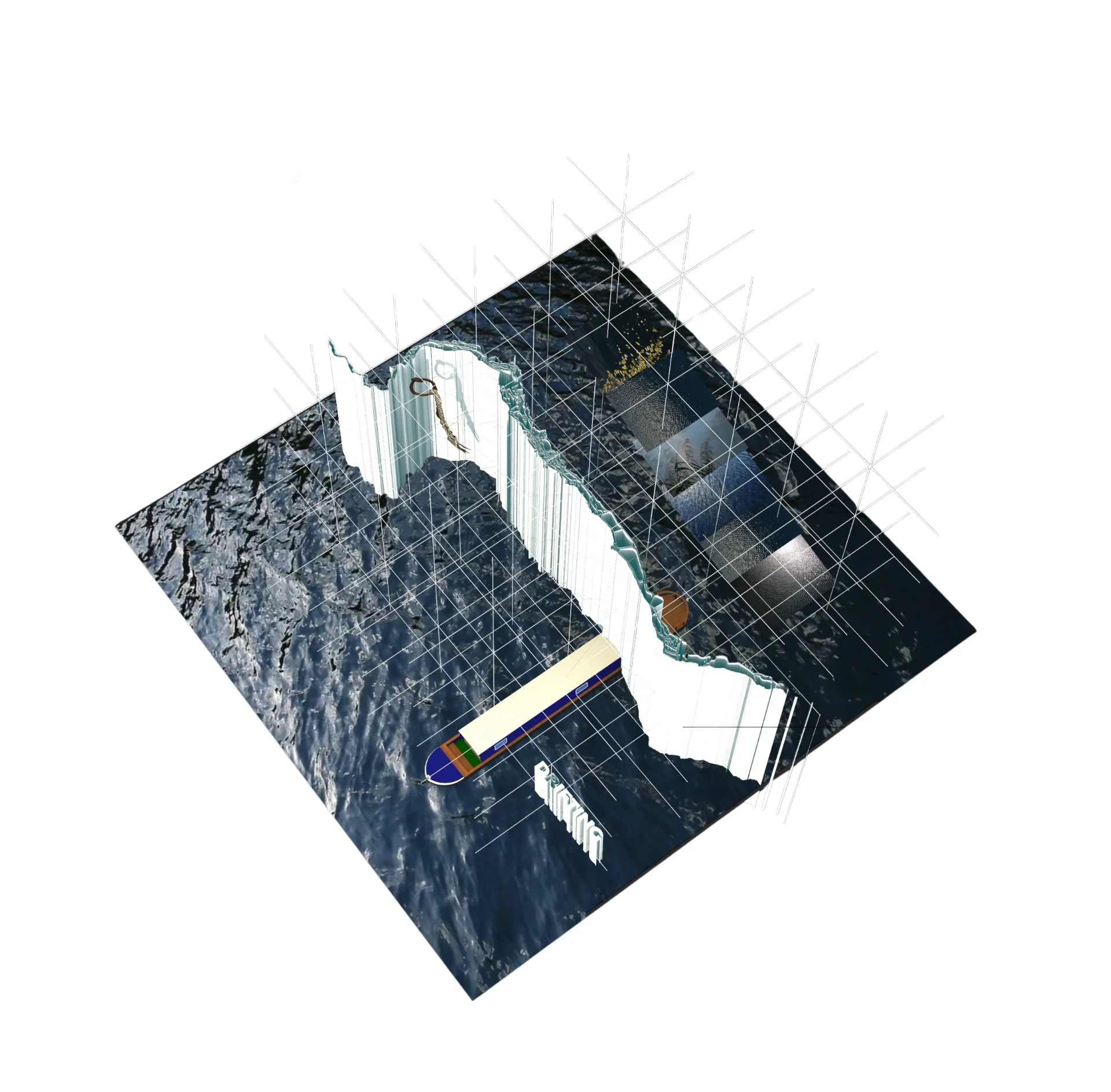
The project defines the entire 98km stretch of the River Lea—a landscape shaped by a shifting network of ecological and industrial pasts—as a singular intervention territory. Historically exploited for conflict, the river has become a repository for lost things, from displaced World War ruins to inorganic contaminants that leach as they degrade. Following the studio’s methodology of investigating the concept of parallax through the lens of historical stories archived along the River Lea, the process revealed that the river has been used as a medium to create conflict and what remains today are these remnants of the past: stone ruins scattered around the riverbanks and a heavily contaminated river, the direct result of intense industrial activity along its stretch.
The River Lea is now one of the most polluted rivers in the UK, to the point where the origins and scale of the problem feel too massive to fully comprehend. Timothy Morton encompasses this phenomenon well in calling it a Hyperobject, where the phenomena are so massively distributed in time and space that they go beyond human comprehension. Because they are too vast and long-lasting to perceive all at once, remediating the river requires a systemic approach that intervenes directly at the key nodes where these conflicts began.
The project serves as a speculative solution, exploring what happens when rising sea levels driven by climate change impact the site. The act of revealing water across the site demonstrates how the fragmented landscape around the River Lea could be repurposed into filtration cells, revealing hidden marshlands, floodplains, and wetlands that can be integrated into a larger, functional ecological system. Ultimately, this project directly confronts that cycle by shifting the role of the architect to a facilitator of ecological remediation.
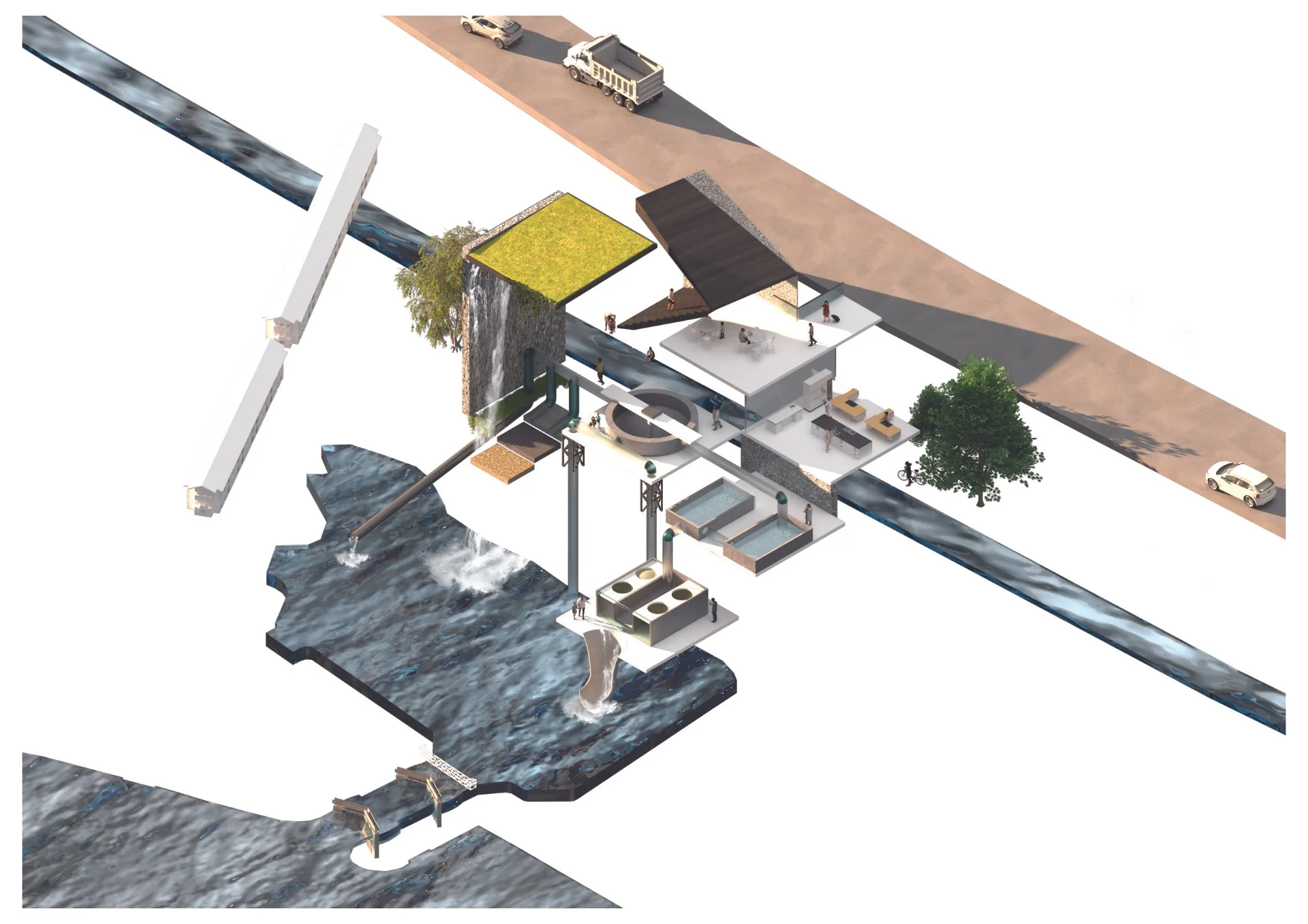
This strategy is realised through the deployment of a modular kit of parts derived from salvaged industrial remnants and species found along the riverbank. These modular structures function as mini-wetlands, filtering industrial runoff, sewage, and contaminated water to reveal and remediate the river’s lost ecology for human and non-human cohabitation. The design integrates the principles of Design for Disassembly (DfD), demanding that materials be easily recovered and reused, cycling through use and reuse indefinitely. Most importantly, the system is designed with foresight of its own decay and redeployment. The project argues for an intervention that does not just occupy a site, but also introduces an instruction for reassembly into the structure itself, archiving its past and providing a flexible manual for its ecological future. By repurposing construction waste and neglected on-site objects, the project shifts the perspective from high-cost, overly engineered solutions toward affordable, locally sourced, and accessible design, demonstrating greater feasibility for real-world application.
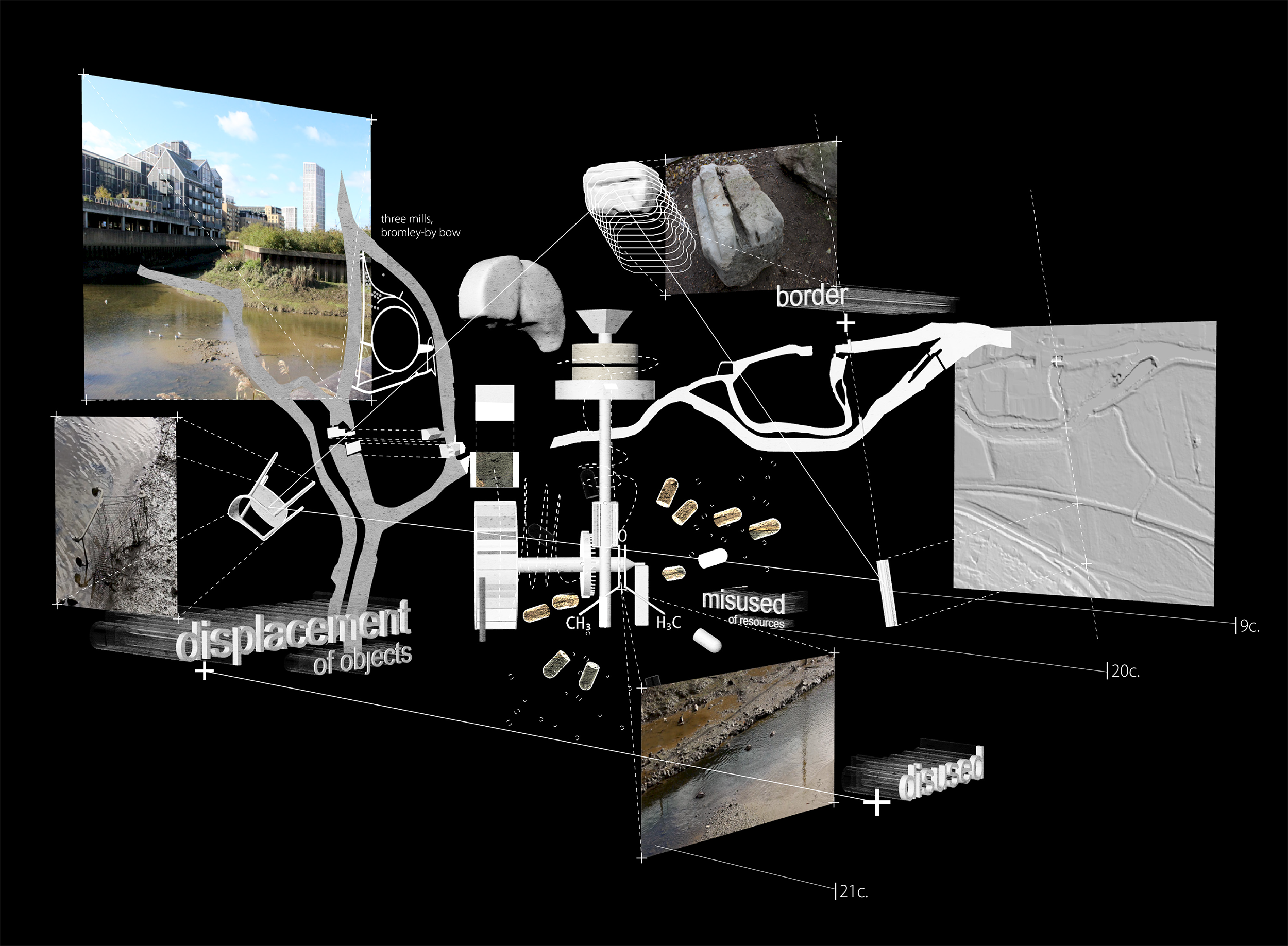
Physical Manifestation of Key Archives

Spatial Temporal Mapping of Ruins

Resource mapping on site

Mapping of Source of Contamination and Land Use Conflict throughout River Lea

Chan Seng Koh & Rasyidah Nizam_Stone Prototype Making in Grymsdyke Farm - Rasyidah Mohd Nizam

Sedimentation Berm and Node 2_Floating Reedbed Island

Swimming Node at Hackney Riviera
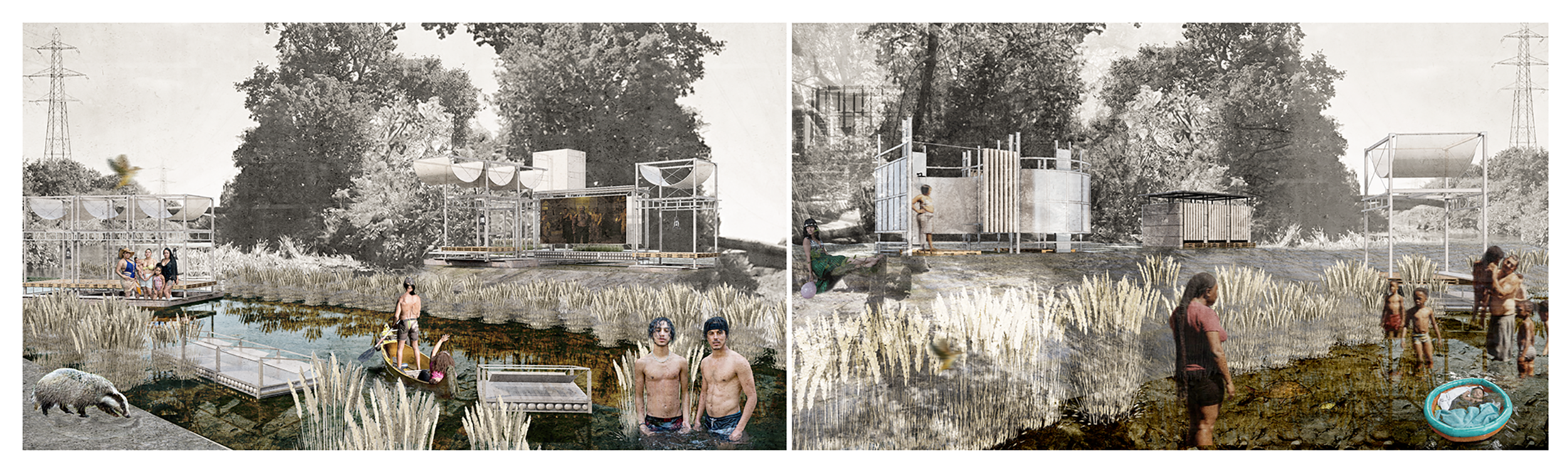
Moment of Intervention at Hackney Riviera

Adaptation and cohabitation with non-human species
Lilli Osborne
Rave Riot Ritual: Bringing Collective Joy Back to Marsh Farm
“Focusing specifically on my studio’s exploration of parallax and the interconnectedness of socio-cultural factors, I feel my final project investigates the relationship between rioting, raving, and historic ritualistic practices that have occurred at Marsh Farm across centuries. Through drawing, collaging, filmmaking, photography, and developing a digital archive throughout the year, I explored these concepts through an ever evolving creative process.
By examining these seemingly disparate forms of collective assembly through the socio-cultural context of the 21st century, my project seeks to address contemporary issues of social division, inequality, and belonging through an experimental architectural framework centred on collective joy, participation, and sustainable community infrastructure. Through this project, I explored architecture as a tool for social and environmental responsibility, challenging perceptions of Marsh Farm while proposing new forms of collective gathering, sustainability, and community empowerment.”
This project follows a line of inquiry focused on the source of the River Lea, located at Waulud's Bank in Marsh Farm, Luton. The site is known for its distinct sense of energy, perhaps linked to the Neolithic significance of the D-shaped henge from which Waulud's Bank takes its name. A surprising experience within this landscape, given the public perception of Marsh Farm and, within a broader context, Luton as a whole. The site also holds a layered social history, including its association with raving, with those held by the Exodus Collective throughout the 1980s and 90s, and the Marsh Farm Riots of 1995, both of which remain embedded in its memory.
Whilst researching Marsh Farm and the wider context of the River Lea, Lilli Osborne's family history had a direct correlation to almost every aspect of the project. Generations lived adjacent to the River Lea, tracing a lineage through Tottenham, Hackney, and Hertford. Further discoveries revealed connections to Marsh Farm, where Lilli Osborne's uncle had been attending police officer at the Marsh Farm Riots.
This project strives to establish a permanent civic infrastructure for collective joy at the source of the River Lea, designed to mitigate increasing risks of division and segregation among young people. Collective assembly has not disappeared from Marsh Farm; rather, it is often expressed through forms stigmatised as 'antisocial' and 'undesirable'. BMX tracks etched into the forest floor, remnants of small fires, graffiti carved into ancient trees, and echoes of earlier rave gatherings linked to the Exodus Collective all point towards an enduring desire for connection and gathering.
In response, the proposal seeks to reframe these behaviours within a healthier and more sustainable route to connection, mutual understanding, and friendship. At a time when online cultures of division and damaging narratives surrounding Luton continue to shape perceptions, the project argues for social reintegration through collective experience, creativity, and joy.
Central to this ambition are two interconnected interventions: the Marsh Farm Algae Production Facility and Marsh Farm's Nocturnal Commons.
Located adjacent to Marsh House Community Centre, the Algae Production Facility would produce biofuel to support the centre's energy needs while creating opportunities for employment, training, and fabrication. Using bioluminescent algae, the building would emit a magenta glow each evening, establishing a new civic landmark. Alongside energy production, the facility would manufacture biodegradable algae-based sheeting for use in public installations.
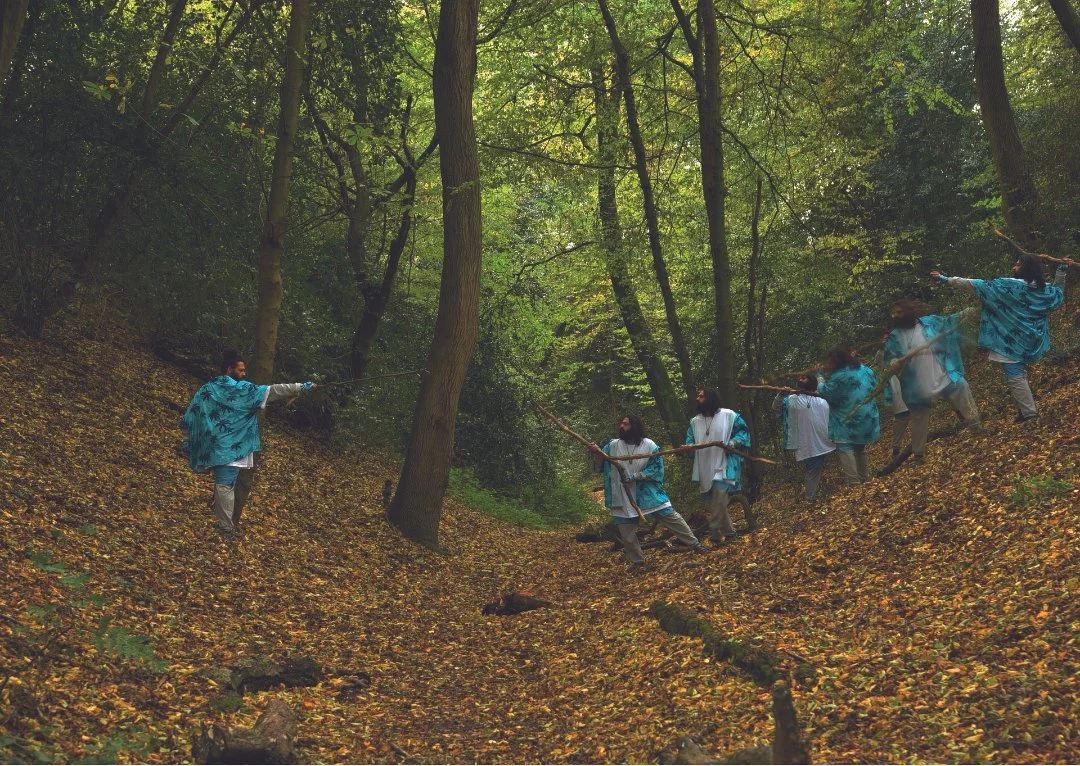
These materials would be used to construct the Nocturnal Commons, a temporary architecture of collective assembly inspired by both the history of ritualistic practice at Waulud's Bank and Marsh Farm's history of rave culture. Through the fabrication and assembly of biodegradable panels, young people would participate in a year-long process culminating in moments of celebration, gathering, music, and connection. As the structures gradually biodegrade back into the landscape, they establish a cyclical process of making, gathering, and renewal. Rather than proposing a static monument, the project advocates for a dynamic intervention that restores Marsh Farm's position as a site of positive interaction, cultural production, belonging, and collective joy.

1:500 Site Plan

Algae Production Facility Interior View at Night

Final Digital Collage
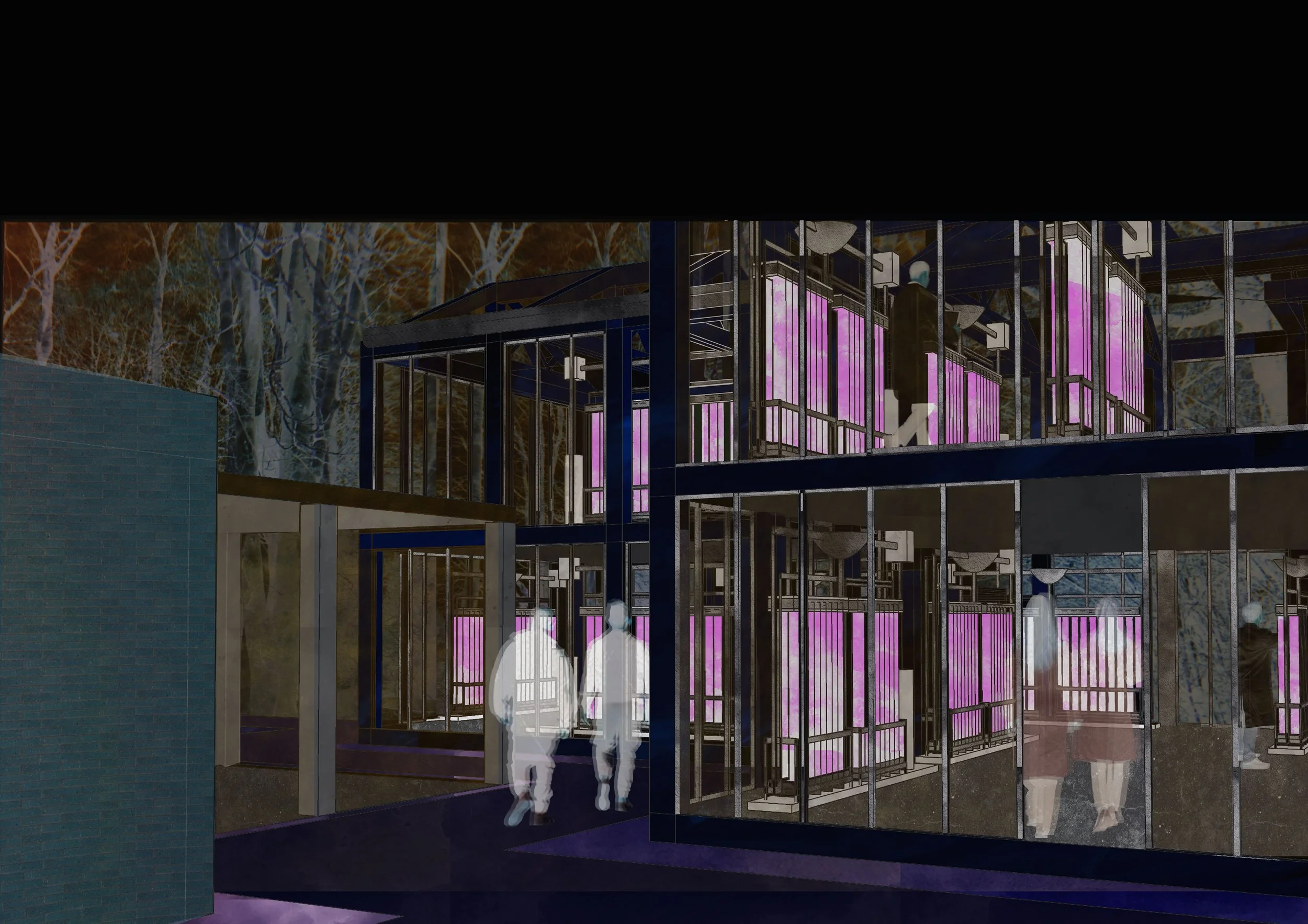
Algae Production Facility External View at Night

Algae Production Facility Floor Plans

Algae Production Facility Floor Plans

Algae Production Facility Section A

Bespoke Algae System Prototype

Nocturnal Commons Day Scene

Nocturnal Commons Night Scene