DS01
TUTORS: Elle Tallowin, Mike Halliwell
THANKS: Maria Faraone
STUDENTS: Josh Marriner, isha Binti Abdul Hay, Leon Sen, Cindy Zhang, Isabel Chapman, Lauren Pickard, Divya Sekar Ponraj, Ava Dale, Divya Brahma, Nok Him YAU, Nina MacDonald, Swara Raghavendra Bharadwaj, Katie Spratley
Creative Process
Following a ‘Research-Led Design' methodology, DS1 students fixate on a personal interest to lead their design process in year 2.
This interest or combination of interests may come from a year 1 specialisation, an existing personal fascination, an arts practice or hobby inside or outside of architecture, a previous project, theme or unexplored idea, an experience from practice or a theory that they’ve always wanted to address or return to but never had the time. The time is now.
The studio gives them a chance to complete their academic education by joining the dots which make them unique as a creative person. A chance to develop a final portfolio that represents how they work and think as an individual designer and practitioner.
The possibilities are endless. There is freedom to explore any theme, idea or agenda and to push the creative process and passion to the limit.
But with freedom comes responsibility.
The studio asks students to work systematically throughout the year as they would in professional practice. This means making firm decisions at key points, taking ownership of those decisions, and delivering defined packages of work regularly, communicating work in progress to others.
This year DS1 students explored their research interest and a site of their choice somewhere in or around Oxford.
Aisha Hayy
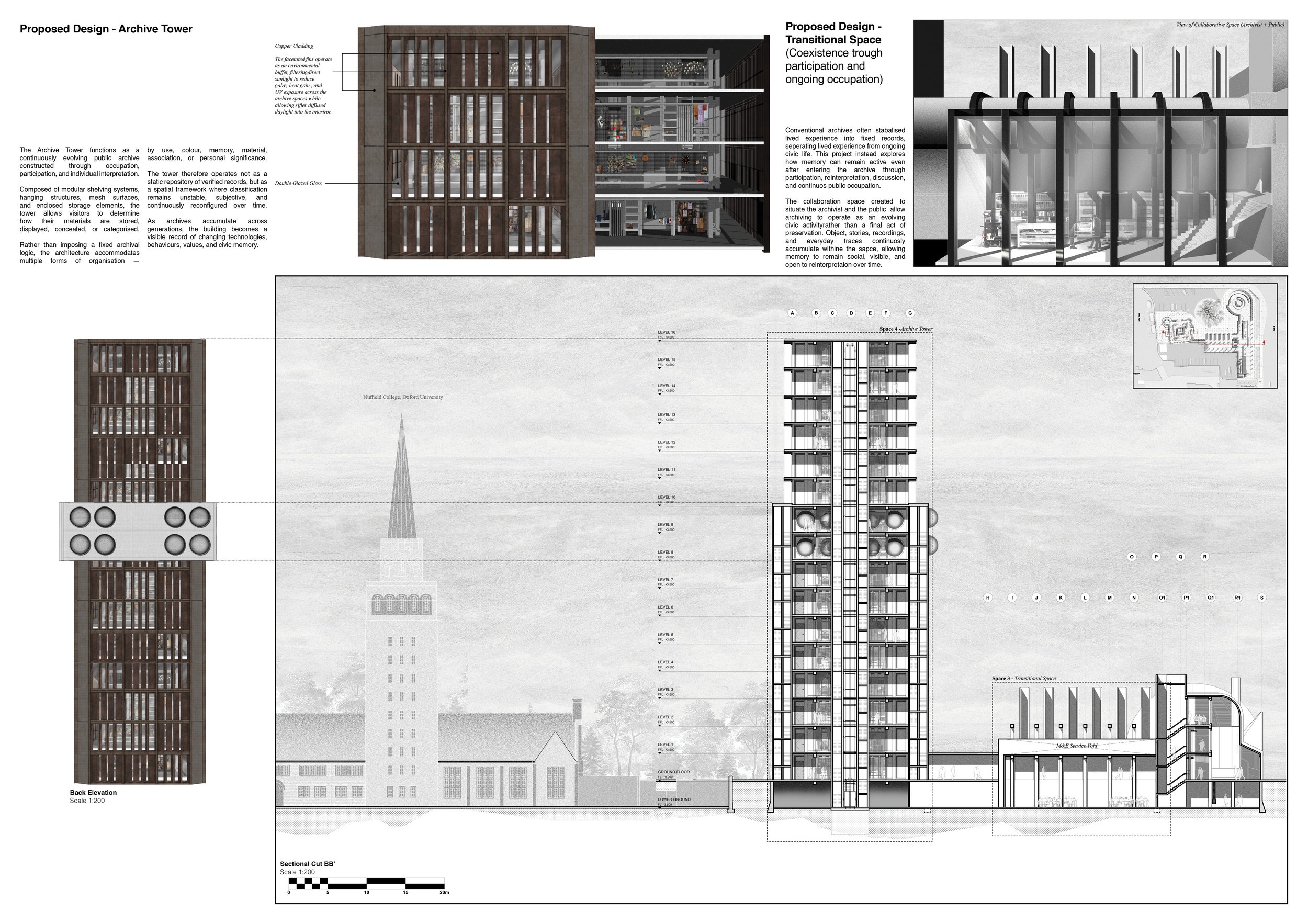
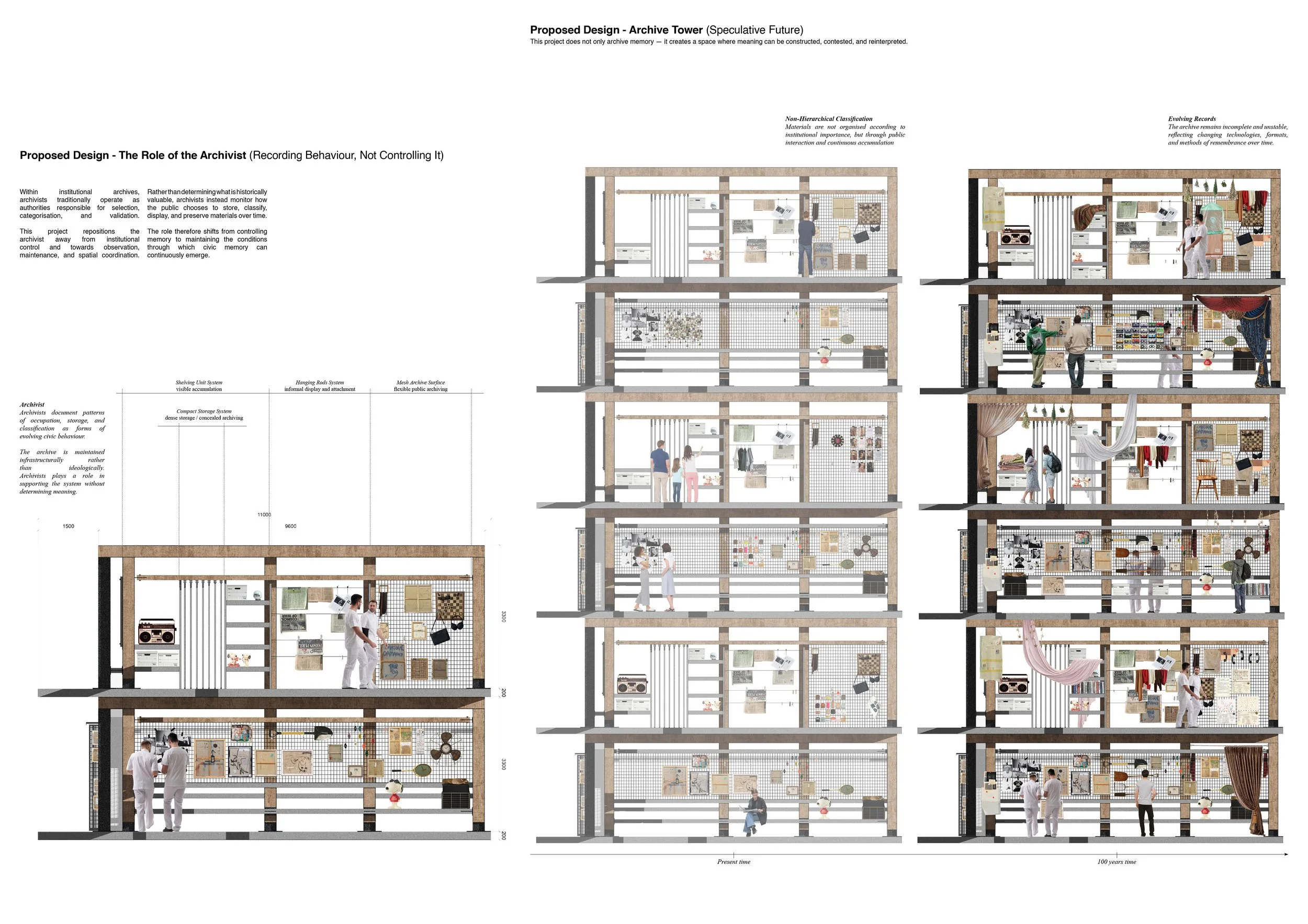
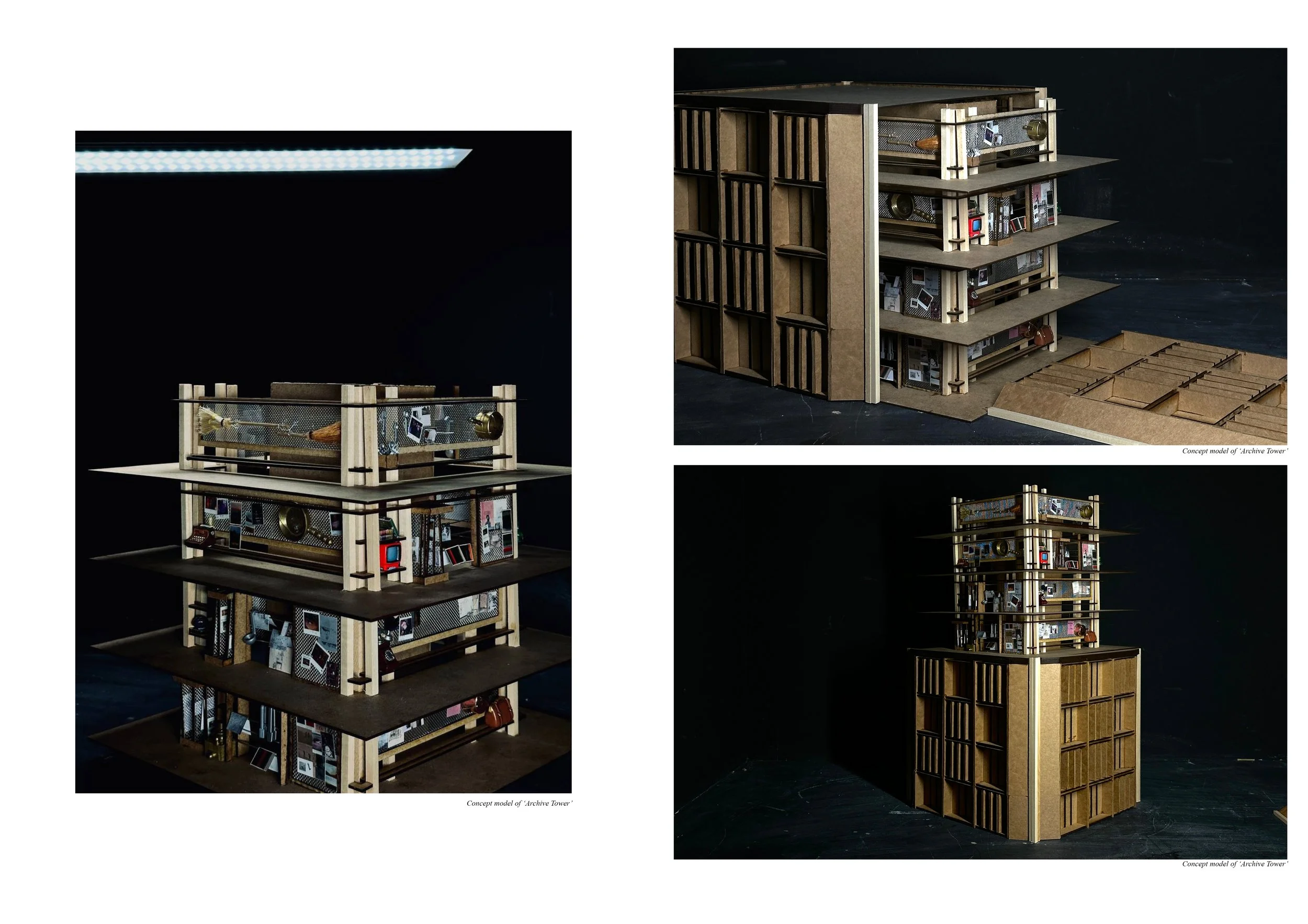
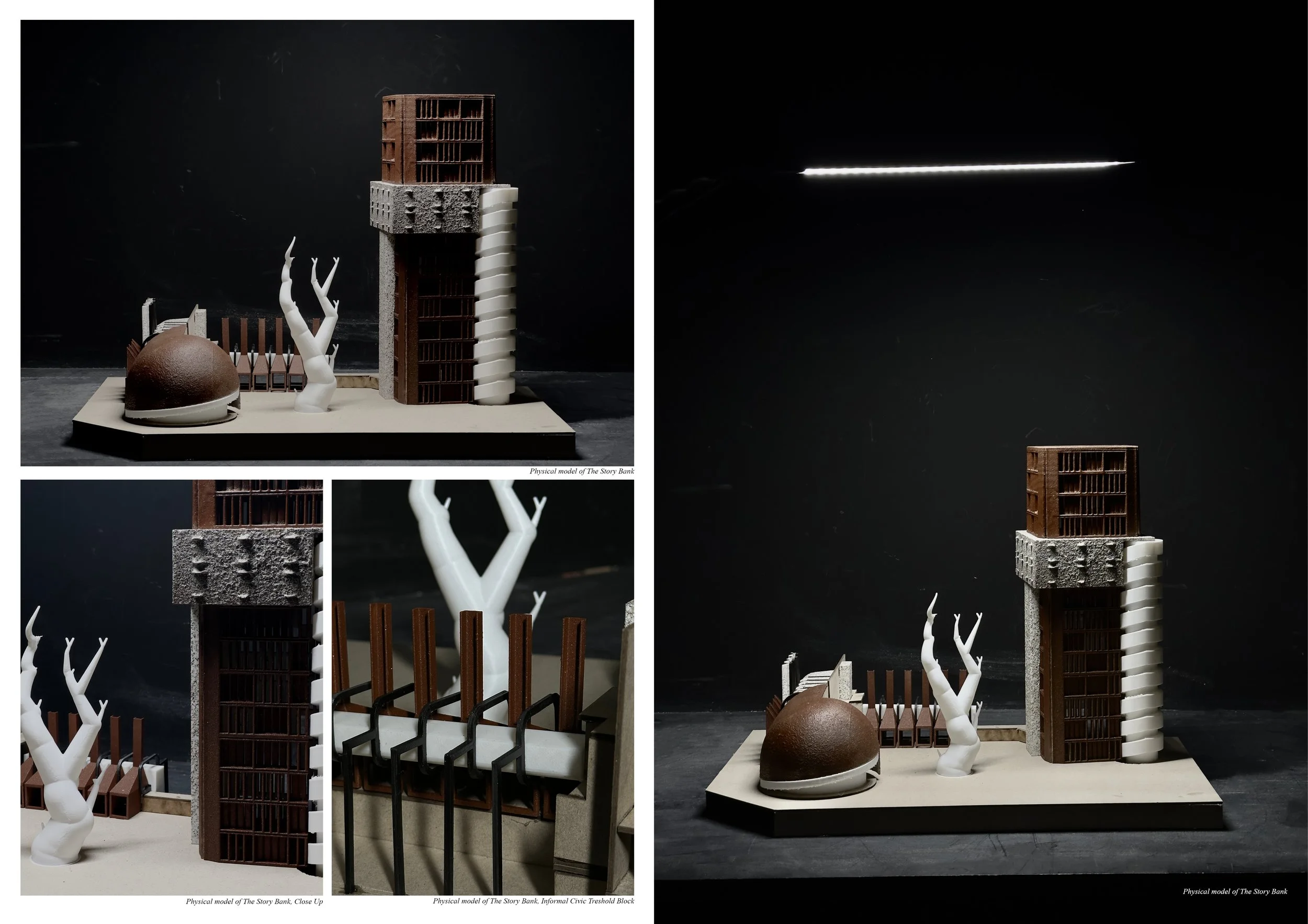
The Story Bank
“The project challenged me to think beyond architecture as a physical object and instead as a civic framework that can support participation, visibility, and collective ownership. Through The Story Bank, I explored how architecture might help create a more equitable representation of everyday histories and provide opportunities for people to actively contribute to the memory of their city.”
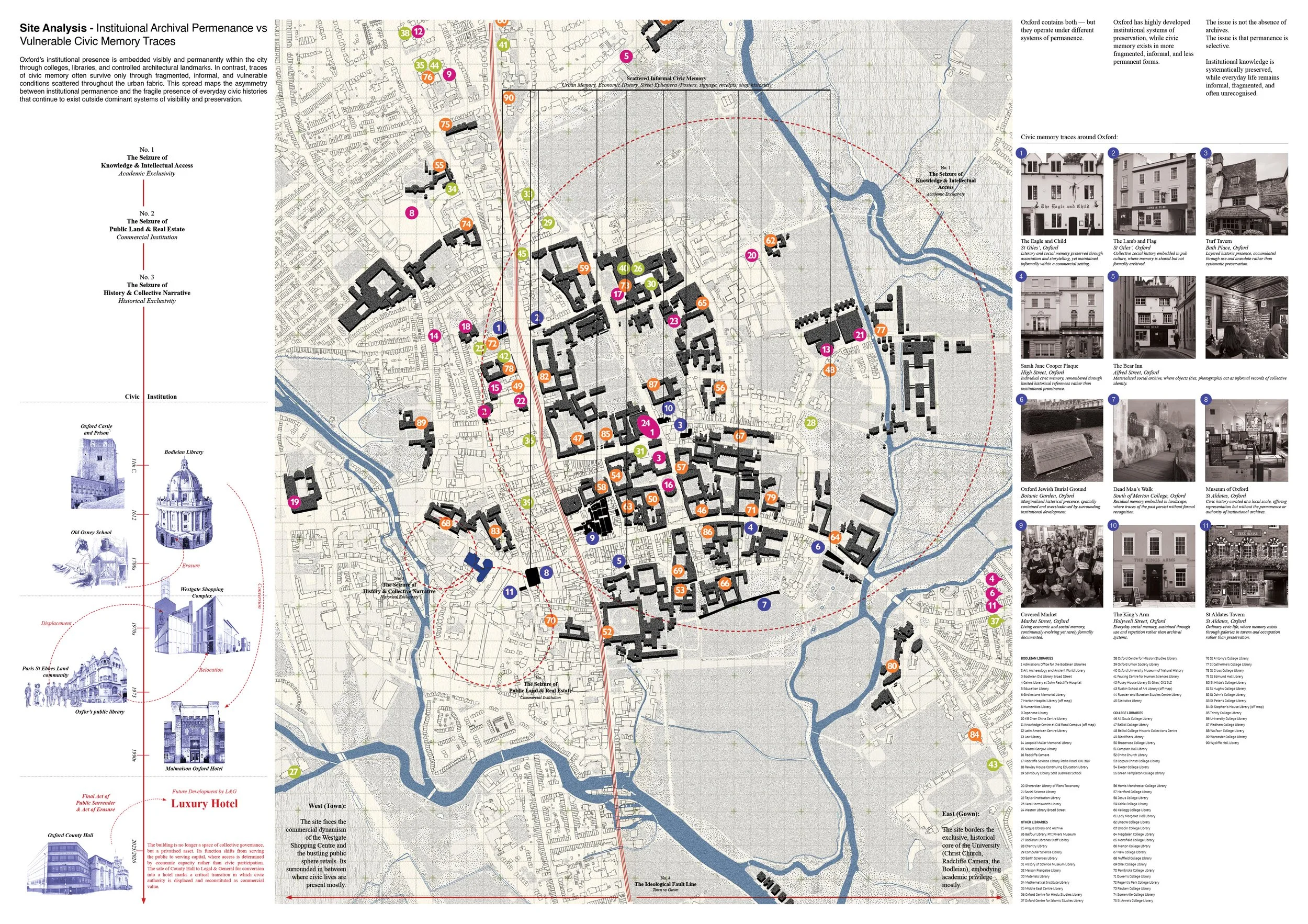
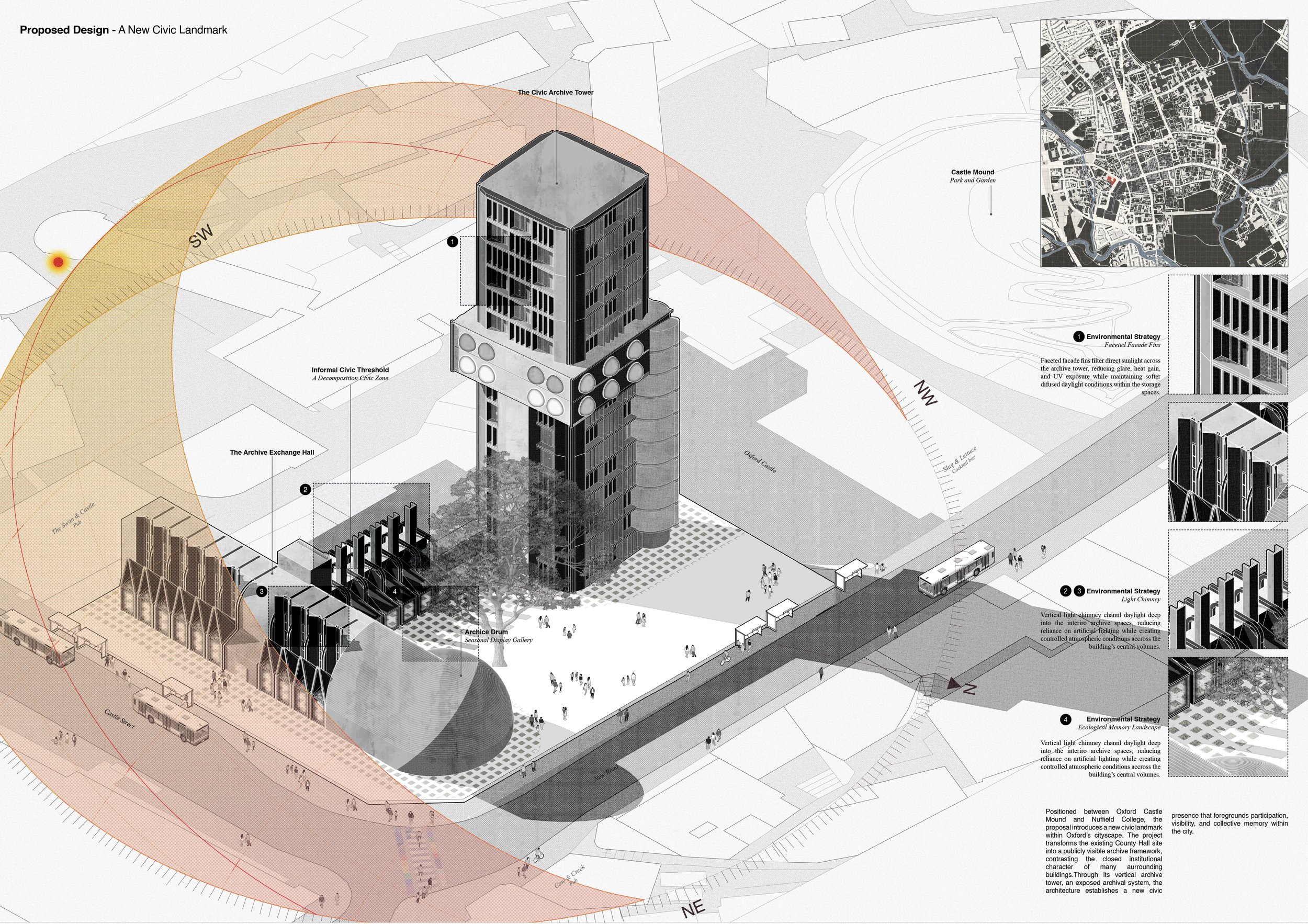
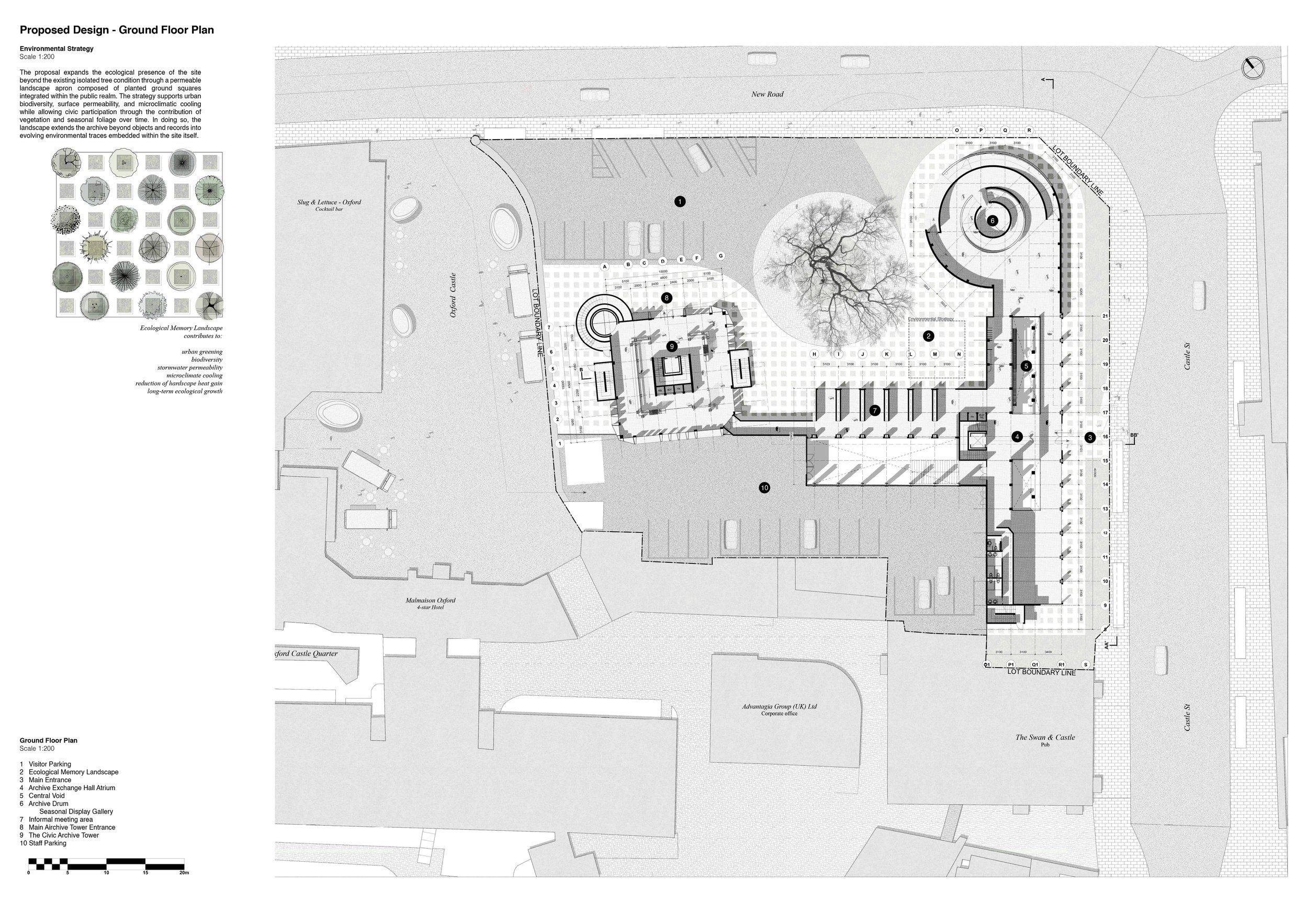
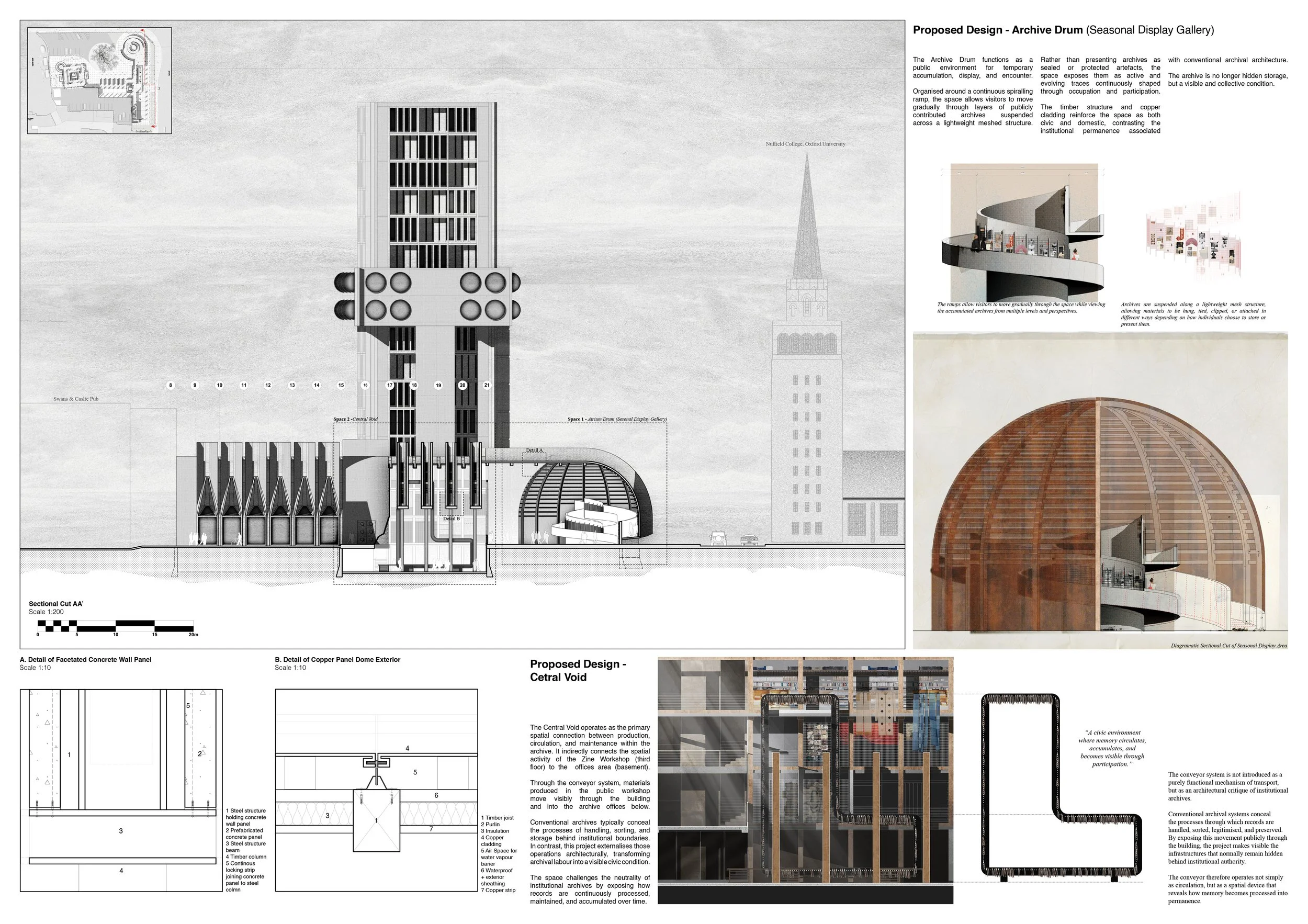
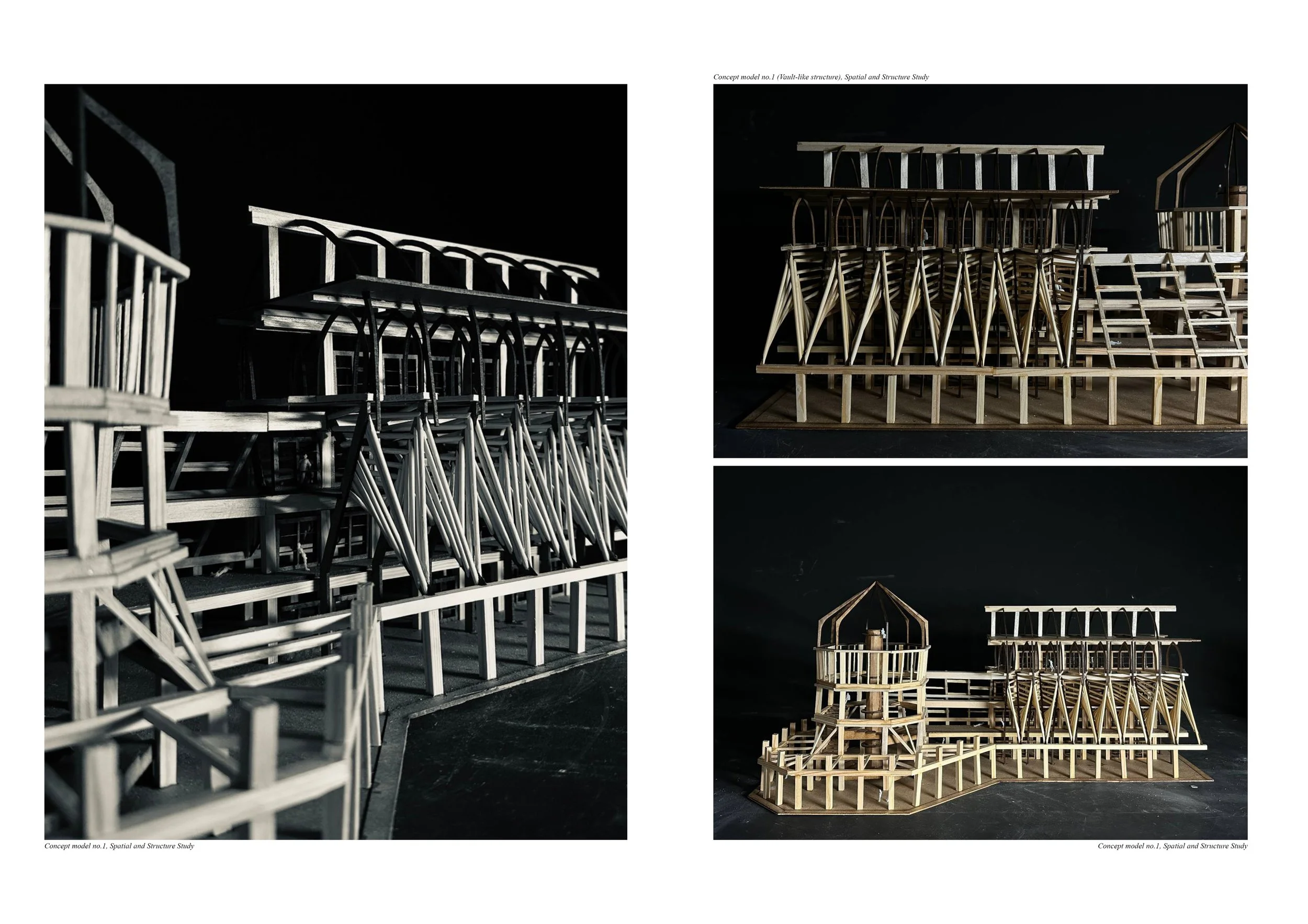
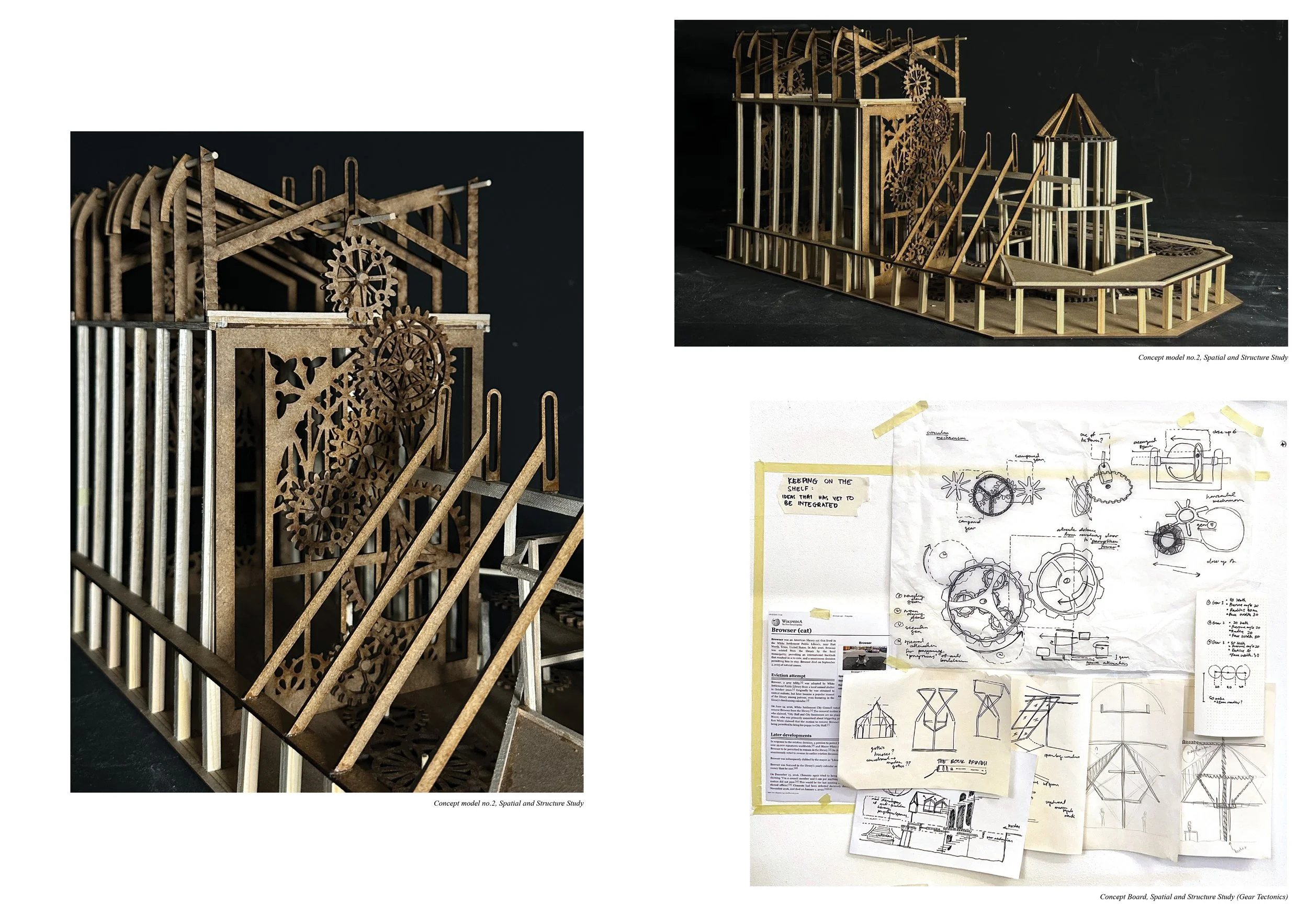
The Story Bank explores the relationship between memory, legitimacy, and civic presence within Oxford. The project began through researching the asymmetry between Oxford’s institutional permanence and the often overlooked traces of everyday civic life scattered throughout the city. Through this investigation, the archive emerged not simply as storage, but as a mechanism that shapes visibility, historical legitimacy, and participation. The project therefore proposes a civic archive framework where memory is produced collectively through contribution, accumulation, and public occupation rather than institutional validation alone. Positioned within the context of Oxford’s Town and Gown condition, the proposal reimagines the archive as an open civic infrastructure embedded within everyday life — allowing the public to actively participate in shaping the city’s evolving memory landscape.